

By
Heather B. Habelka
Growing
Threat
to the Trail’s
Biodiversity
By
Heather B. Habelka
On the Trail, the ATC monitors how non-native invasive species compete with native species for limited natural resources, including sunshine, nutrients and water in the soil, and space for growth. Native pollinators and wildlife may have difficulty using invasive species as food, which further affects the health of the surrounding ecosystem. In most cases, non-native invasive species don’t have natural predators in areas where they have been introduced, and native species have not yet evolved to defend against these invaders. This perfect storm has the power to negatively impact each state’s biodiversity along the Trail.
In response to this invasion, the ATC has added staff dedicated, in full or in part, to non-native invasive species management. In addition to Orlousky, this team includes four natural resource managers. One manager is assigned to each of the ATC’s four regions: New England (NERO), Mid-Atlantic (MARO), Southwest Virginia (VARO), and Southern (SORO). An additional two coordinators work alongside the managers in VARO and SORO.
According to Orlousky, non-native invasive species endanger the health and resiliency of the Trail, making them a critical area of focus for ATC. “We have a small but very skilled team that works to identify, tackle, and prevent the most pressing and severe invasive risks to the A.T.’s resources.”
The ATC will treat 835 ash trees and manage invasives across more than 300 acres.
It is with these formal partners — in concert with academic institutions, communities, and other non-profit organizations — that the ATC is able to protect the Trail from non-native invasive species and perform many other critical maintenance functions. The partnerships with thirty A.T. maintaining clubs are vital to managing invasive species. “Volunteers provide some of the data that helps the ATC and its partners prioritize management of the most threatening invasive species. This information, supplied by club members and A.T. visitors, is also used to identify and track non-native invasive species that are not yet widespread,” Orlousky explains.
Federal funding and staff capacity are constant challenges. However, in 2023, the ATC was awarded a prestigious $515,800 grant from the National Fish and Wildlife Foundation’s America the Beautiful Challenge. The grant is supporting the ATC’s efforts to manage non-native invasives and to protect endangered ash trees in national forests in four of the states the Trail passes through: Georgia, North Carolina, Tennessee, and Virginia. During the three-year grant period, the ATC will treat 835 ash trees and manage invasives across more than 300 acres. “This grant is highly coveted and competitive,” explains Orlousky. “It has allowed us to put additional staff on the ground in the southern portions of the Trail to walk the footpath and A.T. corridor, monitor invasive presence and spread, and look for new and emerging non-native invasive species.”
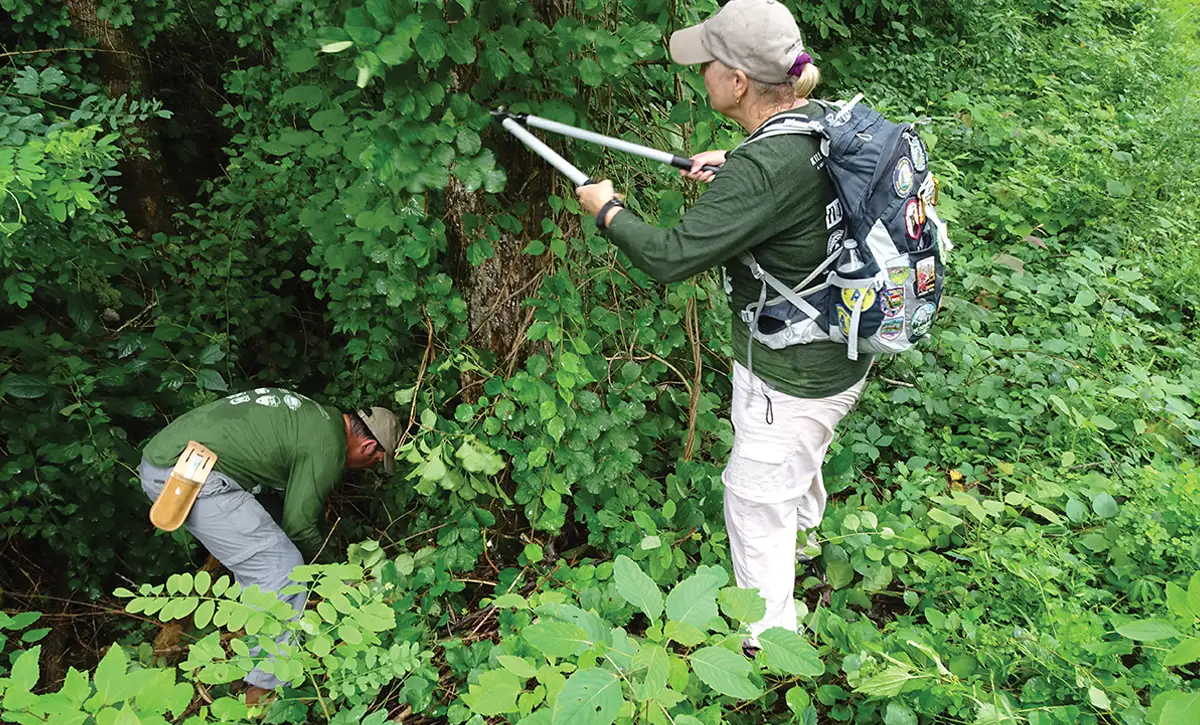
It’s critical to remember that non-native invasives are easily spread by humans and follow pathways of disturbance. This means that when you are hiking it’s best to stay on existing impacted areas. Going off the Trail will create disturbances and invite non-native invasives to come in and take hold.
Clean your gear, clothing, and footwear before leaving the Trail. To clean your boots or shoes, purchase a special hiking boot brush or use a coarse-grain brush, similar to one you’d use to clean car tires. Scrape the soles to remove all debris and mud before getting into your car. Keep the brush in your trunk. If you don’t have a brush on hand, use a stick to scrape the tread of your boots or shoes.
Get to know your backyard, your property, and your neighborhood. By learning about the plants that surround you, you’ll be able to identify non-native invasive species and can begin to manage them. Orlousky recommends plant identification books but understands that many people prefer to use apps.
She urges caution when using an app. “While technology is quickly improving, they are fallible, so it’s best to use them to narrow down an ID to the genus or species level. Colleges and universities in your state can also help identify species and advise on how to best manage them. Try connecting with a cooperative extension in your state for more information,” Orlousky recommends.
Non-native invasive species are easily carried long distances by wind, water, birds, and other animals. Even if you don’t live near the Trail, whenever possible, be sure to add native species that are specific to your region to your gardens, yards, and landscaping. Not only will this help keep non-native invasive species at bay, but you’ll provide shelter and food sources for native plant species, insects, pollinators, and animals. In some states along the A.T. it may be difficult to purchase native species. Orlousky recommends asking your local garden shops and nurseries to special order and stock native plants. “We can create change when more people make the ask,” she stresses.
Surprisingly, another carrier of non-native invasives is decor. For example, the bright red fruit of the Asiatic bittersweet is a popular component of wintertime decorations. The bittersweet vines are often woven into wreaths and centerpieces. Asiatic bittersweet seeds can spread when decorations are thrown into backyards, compost, or disposed of in poorly sealed trash bags. In addition, non-native ornamental grasses are common among the dried floral arrangements at most craft stores. Be sure to select decorations that use local, native species or craft your own.
Since 2015, the ATC and local volunteer groups have prevented over 20,000 pounds of Garlic mustard from setting seed and spreading further along the A.T.
Timing of management activities is also critical and must be done in alignment with the plant’s life cycle. Removing plants when seeds are mature and ready to spread may ultimately increase the population. Some species also have an ideal life stage for removal. For example, there is no need to allocate resources to managing first-year garlic mustard plants. They don’t produce seed until their second year and many of them won’t survive their first winter.
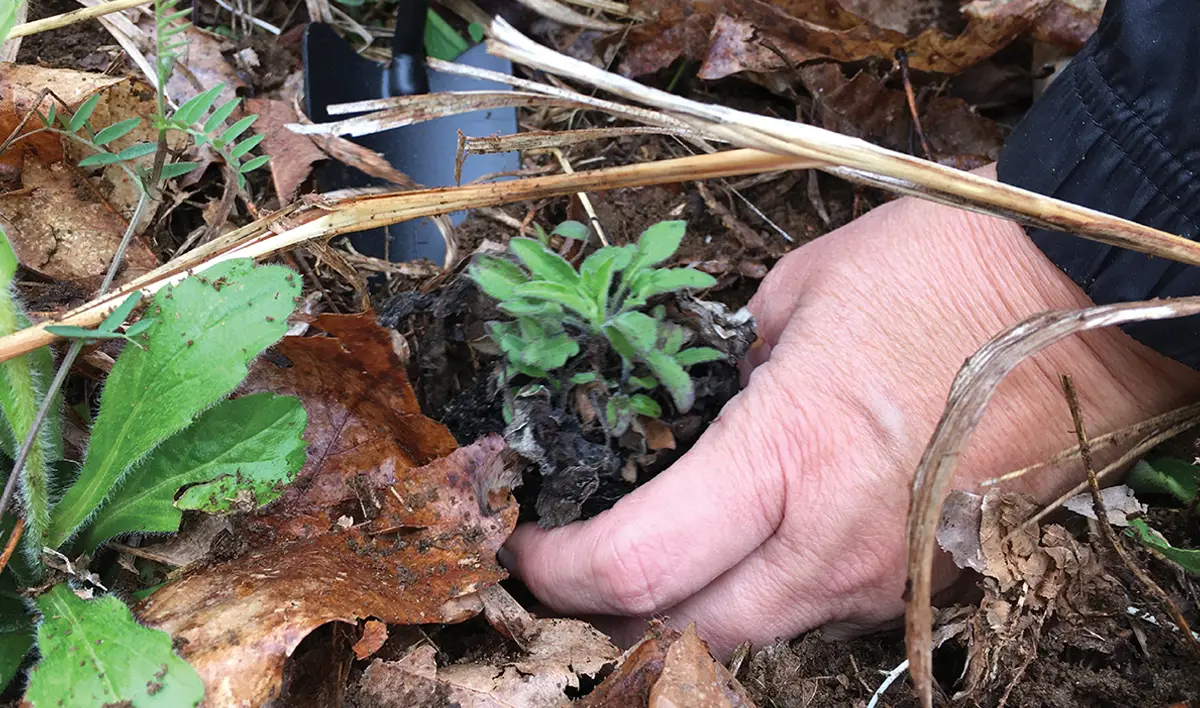
Every spring, the ATC hosts outreach events to educate volunteers about the impact of Garlic mustard in their region. Volunteers then identify, pull, and properly dispose of the blooming plants. Since 2015, the ATC and local volunteer groups have prevented over 20,000 pounds of Garlic mustard from setting seed and spreading further along the A.T.
“The ATC is the sole nonprofit organization responsible for protecting every mile of the A.T.,” says Orlousky. “Just like the Trail, we are resilient and committed to this mission. With our partners, we will continue to adapt and meet the challenges of stewardship.”
From membership to giving societies to planned and corporate giving, donations are essential to the ATC’s work. appalachiantrail.org/give
You can also contact your senators and representatives in Congress and advocate for federal funding to support non-native invasive management.
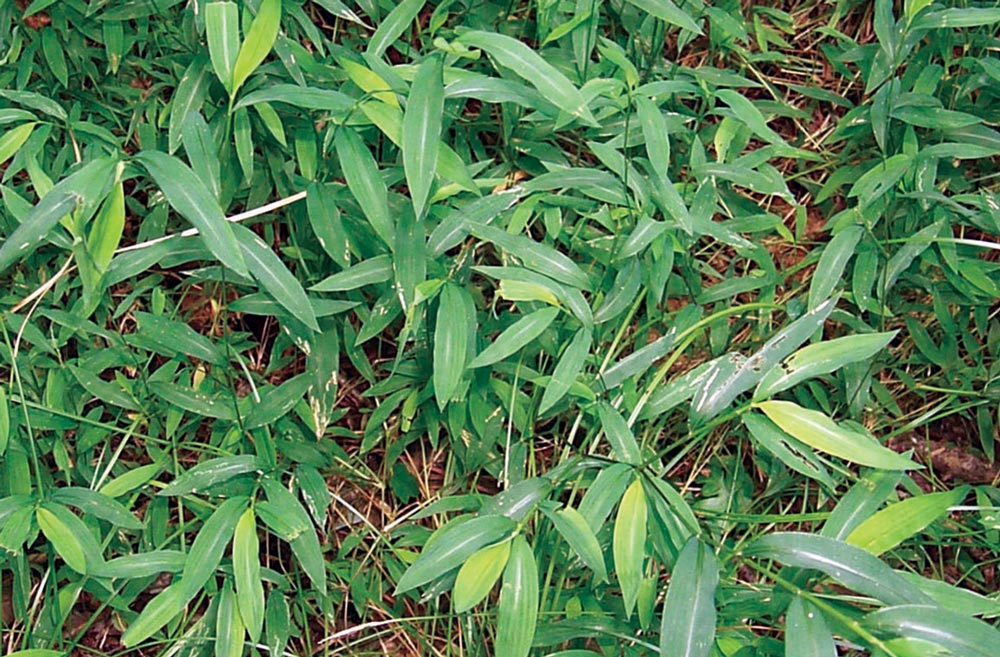






 Japanese stiltgrass (Microstegium vimineum) is one of the most widespread non-native invasive plant species in the continental United States. An annual grass species that crowds out native species, it is found along the entire A.T and is easily moved and spread by hikers. The ATC rarely manages Japanese stiltgrass unless it is threatening a rare species or habitat.
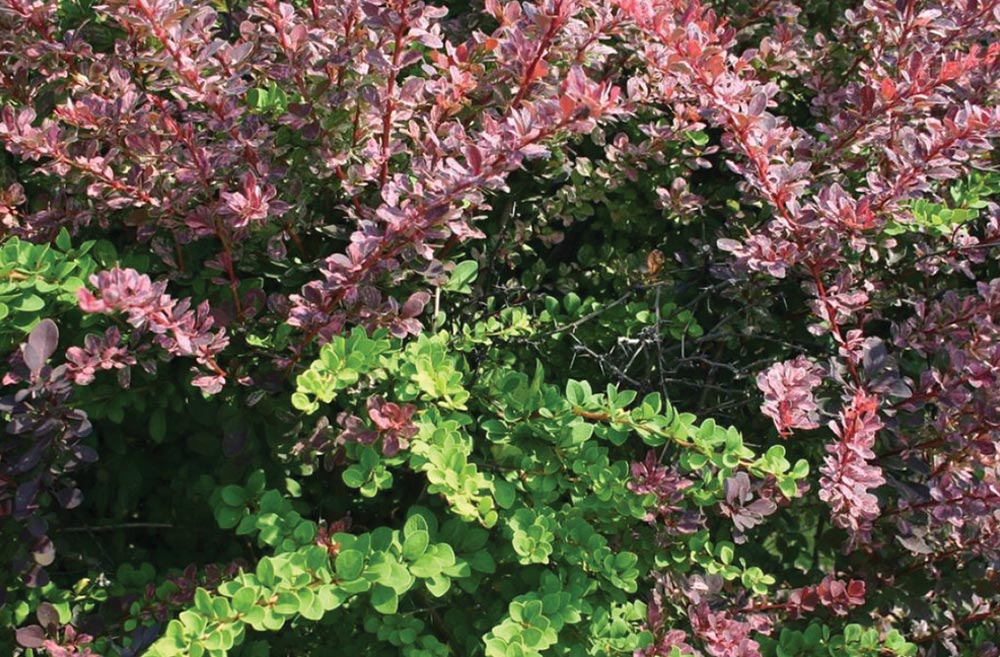
 Japanese barberry (Berberis thunbergii) is a popular, non-native invasive shrub used ornamentally. A perennial, it is widespread along the A.T. The ATC is actively managing Japanese barberry because of its connection to high deer tick densities, which can spread Lyme disease. In 2021, the Pennsylvania Department of Agriculture added Japanese barberry to a list of noxious weeds. This is a list of plants that cannot be legally sold or cultivated in the state.
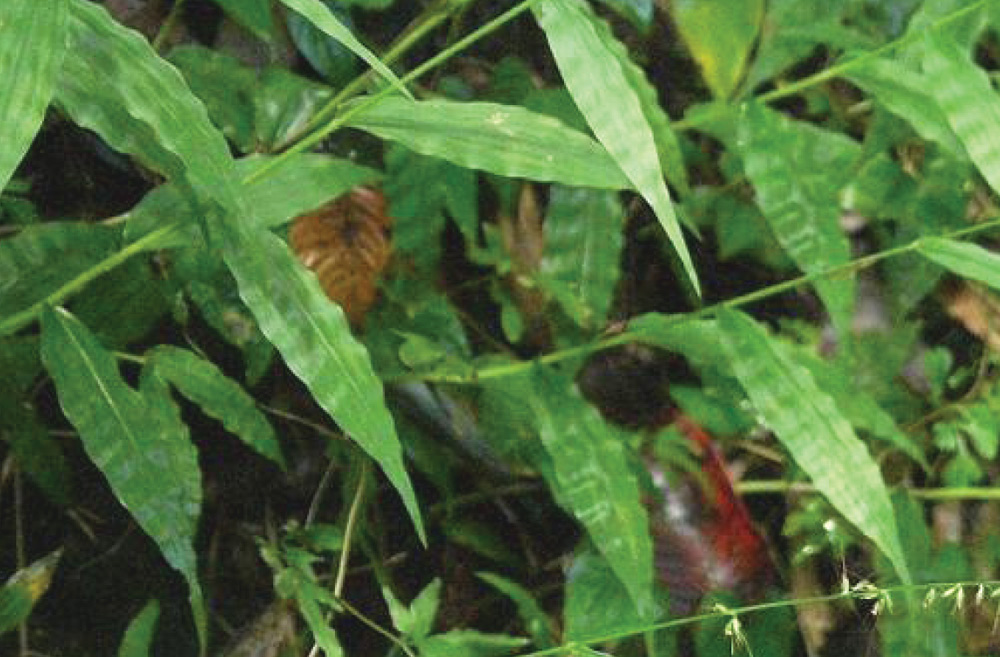
 Wavyleaf basketgrass (Oplismenus undulatifolius) is a non-native invasive perennial grass. Found in the Mid-Atlantic region, it covers the forest floor and chokes out native plant communities. Its sticky seeds are easily moved by hikers and animals. While it is not yet widespread along the A.T., the ATC and its partners are focused on aggressively eradicating it in Maryland and Virginia.
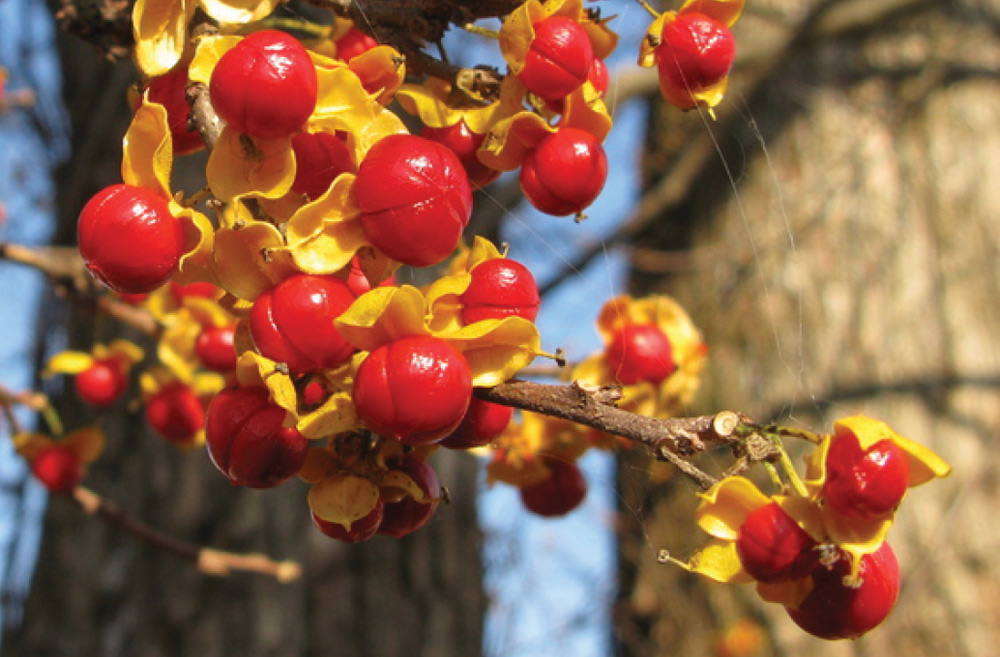
 Asiatic bittersweet (Celastrus orbiculatus) is a woody perennial vine with bright red fruit found across the A.T. A prolific non-native invasive in the Eastern United States, Asiatic bittersweet is a priority for the ATC and its volunteer clubs. It is known for its alarming ability to climb into the canopy and choke adult trees.
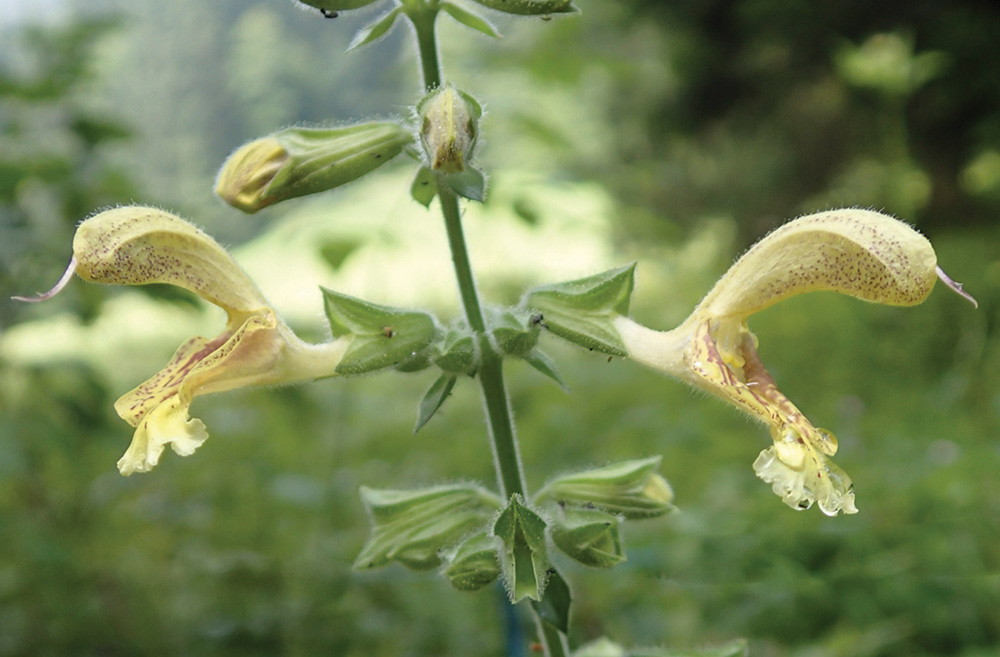
 Sticky sage (Salvia glutinosa) is a perennial found only along the A.T. in New York. A relatively new invader, the impact on the Trail’s biodiversity is not yet fully known. However, the ATC and its partners have been proactively working on removal for the past decade and are aiming for complete eradication from the Trail’s corridor.
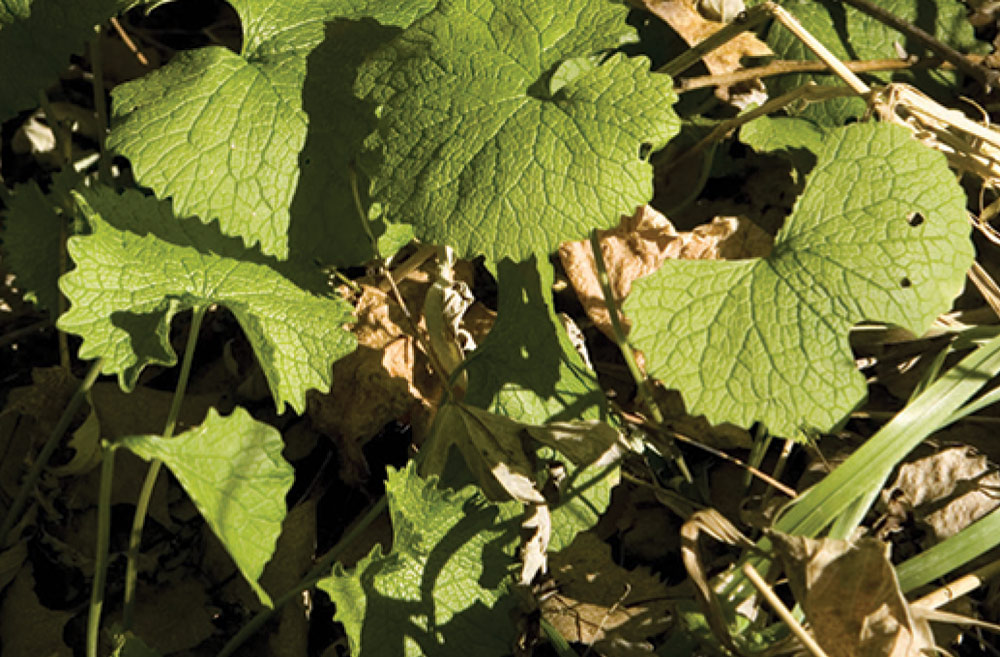
 Garlic mustard (Alliaria petiolata) is a biennial herbaceous species that is widespread across the A.T. Its leaves block much-needed sunlight from other plants, and its roots outcompete fledgling plants for nutrients and moisture in the soil. Chemicals released through its roots can hinder the growth of other plant species. It can even interfere with underground networks of fungi. It is easy to hand pull during its second year of life and before it develops seeds, which makes it excellent for volunteer removals.
keisotyo, CC BY-SA 3.0 via Wikimedia Commons. 4: Qwert1234 via Wikimedia Commons. 5: Andrea Schieber, CC BY-SA 2.0. via flickr. 6: U.S. Fish and Wildlife Service
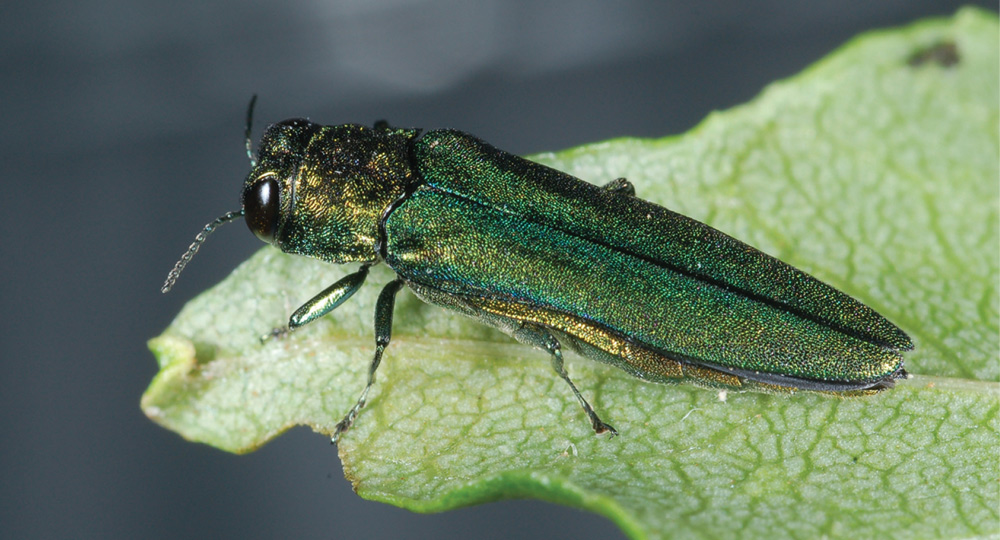
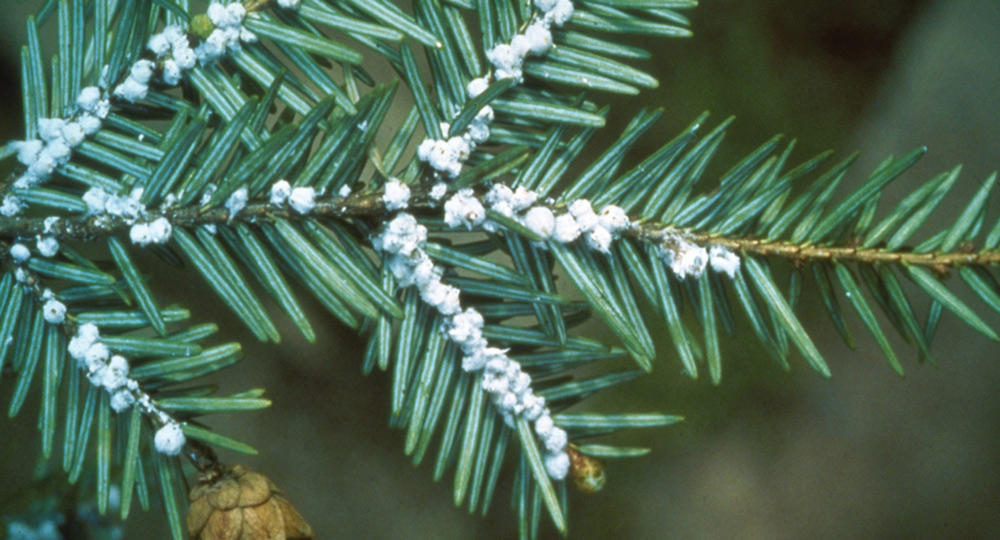
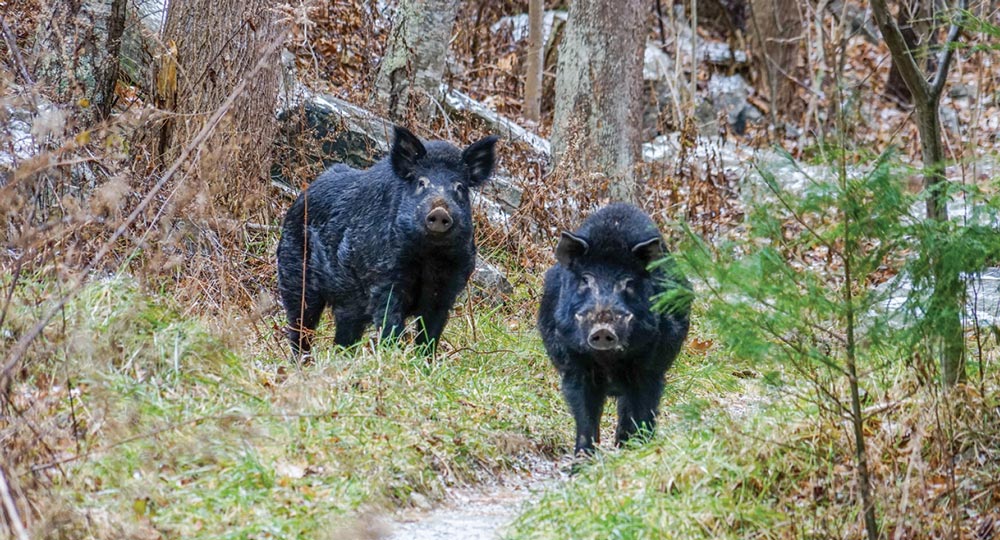
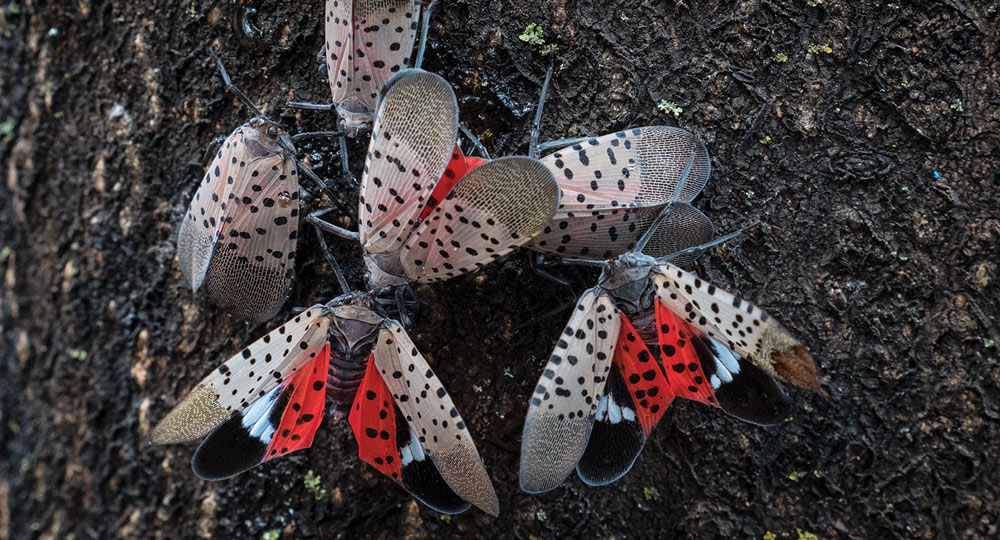 The emerald ash borer (EAB) has destroyed hundreds of millions of ash trees across North America, including thousands along the A.T. A metallic green beetle about the size of a grain of rice, the EAB is aggressive and kills trees within two years. Once infected, an ash tree has less than a 1 percent chance of surviving. A pesticide treatment has proven effective at inoculating ash trees against the EAB, but the cost to save just one tree averages $120. The hemlock woolly adelgid (HWA) is an invasive, aphid-like insect that attacks eastern hemlocks and Carolina hemlocks found along the Trail. Unlike the EAB, the decline of infested hemlocks is slower — between four and ten years — which gives the ATC and its partners time to intervene. Feral swine, which includes wild pigs, wild boars, wild hogs, and razorbacks, are considered a dangerous and destructive non-native invasive species. Found primarily in the Southern Region of the Trail, the ATC is focusing on minimizing their spread northward through selective monitoring and trapping in cooperation with partners. The spotted lanternfly (SLF) is a non-native invasive leafhopper that feeds on the sap of a wide variety of native plants and trees, causing increased vulnerability to disease. When SLF feed, they excrete a sugary substance called honeydew. This results in the growth of a black sooty mold that can impact the health and appearance of native plants and trees. The fly’s impact on the Trail could be profound, but is still yet to be seen. The ATC and its partners focus on treating the tree-of-heaven (Ailanthus altissima) — a non-native invasive and a primary host to the SLF — in order to reduce the spotted lanternfly population.