


Tradition
That Endures
Photo by Ben Earp Photography

Often unseen is the work of stewarding this singular footpath and making it an enriching experience for millions of visitors each year. But there is a remarkable, coordinated system that runs throughout the 2,190-plus miles of the A.T. It’s one that operates year-round, during the prime hiking seasons of late spring and early fall and through the months in between.
Hawk Metheny, Vice President of Trail Management for the Appalachian Trail Conservancy (ATC), describes this shared stewardship approach as “the most practical way to manage a long-distance trail. The collective effort of organizations working across the length of the Trail ensures that it is continuously cared for from one end to the other.”
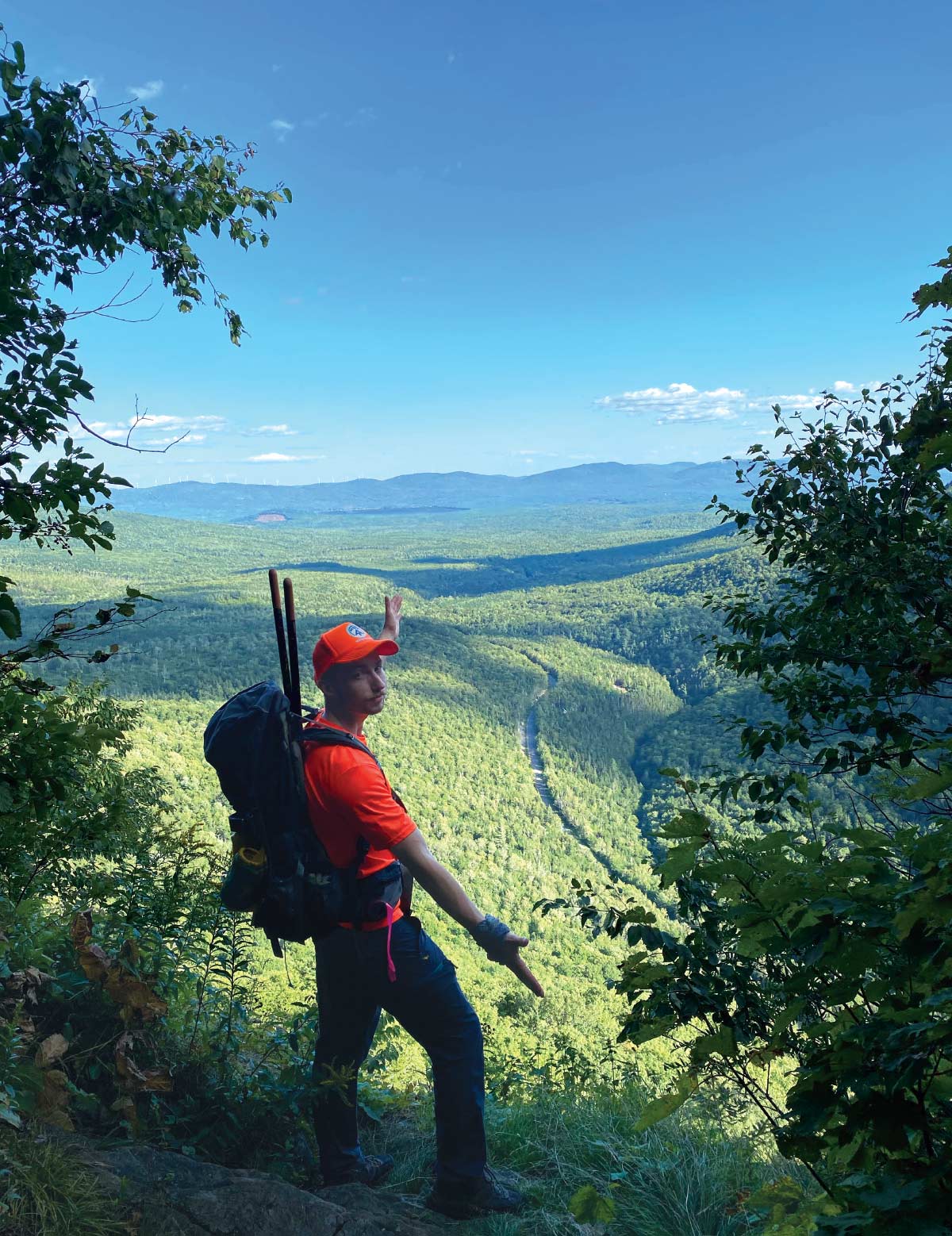
Photo courtesy of the ATC
Since the A.T. is part of the National Park System, the National Park Service (NPS) is the main federal agency. The U.S. Forest Service (USFS) is the primary land manager in many states, along with state and local agencies. The 30 A.T. Clubs handle most of the day-to-day maintenance and management, keeping the A.T. in good condition for visitors. Serving as the convenor between all of these partners is the ATC. Or, as Metheny puts it: “ The Conservancy brings all the pieces together toward a unified goal.”
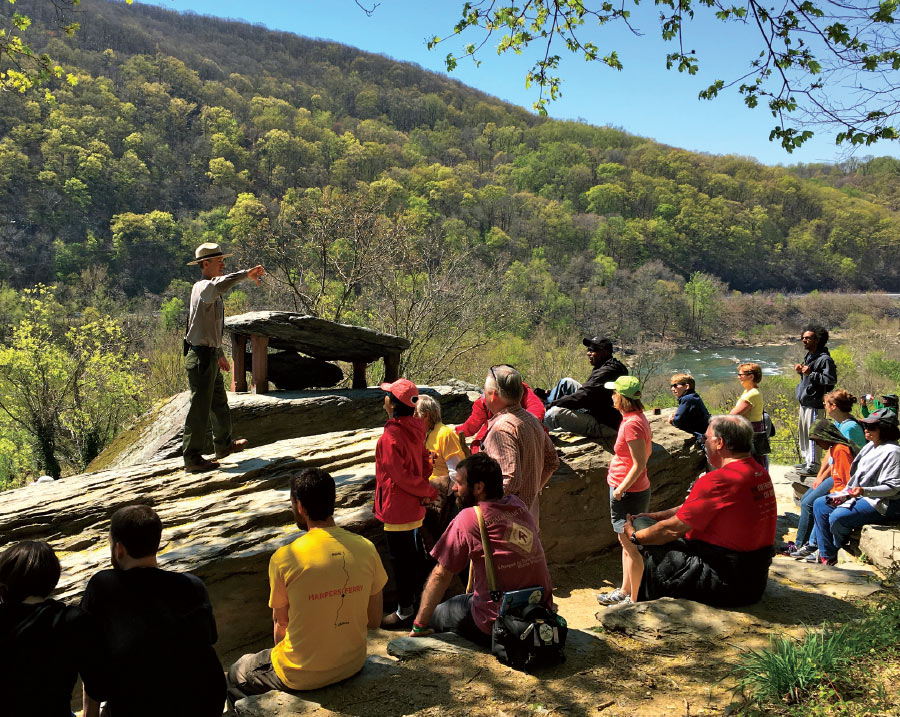
Photo courtesy of the ATC
“Federal land managers, which include the National Park Service and the U.S. Forest Service, have partnered with what is now the Appalachian Trail Conservancy and with local A.T. Clubs from the very beginning,” explains Kurt Speers, NPS Chief Ranger and Acting Superintendent for the Appalachian National Scenic Trail. “Back then, land managers worked with the ATC and the Clubs on everything from route selection to managing the Trail.”
The A.T. (along with the Pacific Crest Trail) became a national scenic trail under the National Trails System Act of 1968. The Act authorized managing agencies to work with states, private organizations, landowners, and other parties to develop and maintain national trail sections through cooperative agreements. This federal law and its 1978 amendments also provided a framework for purchasing land and protecting trail corridors.
A flurry of real estate deals soon followed. Prior to the 1968 Act, more than a third of the A.T. ran through private lands, roads, and other areas not protected as national or state lands. Many of the existing private land agreements were informal, leaving the Trail vulnerable to frequent re-routing and encroaching development.
Adds Speers, “The actual Cooperative Management System was formalized in the Comprehensive Plan in 1981. But that was just the formalization of the cooperation that’s been ongoing since the very first days of the Trail.”
This “boots-on-the-ground” effort is made possible by the Trail’s more than 5,000 volunteers. In 2024, volunteers spent 176,504 hours in service of the Trail, with 83,150 of those hours spent on Trail work.

Photo courtesy of the ATC
For large-scale construction and repair, A.T. Cooperative Management partners collaborate to decide which approach will be used to get work accomplished: Club-led multi-day crews, Conservation Corps, ATC-led multi-day volunteer crews (like Konnarock and Mid-Atlantic Crew), or pro-crews (like Rocky Top).
According to Josh Kloehn, ATC Senior Trail Operations Manager, the Conservancy hires and manages crew leaders, assistant crew leaders, and camp coordinators for Konnarock and Mid-Atlantic Crews. For crew success, the ATC also recruits, registers, and onboards hundreds of volunteers every year that then sign up for five- to eight-day work sessions on one of those crews. The ATC provides all the tools, food, logistics, and training. All of the projects that A.T. crews complete are planned and set up in direct coordination with the A.T. Clubs and the local land managers.

Photo by Ben Earp Photography
Projects often require rigorous planning, especially when on federal land. The Wilderness Act of 1964 prohibits motorized equipment and various forms of mechanical transport in designated wilderness areas. “When we do a trail project out there, we can’t even use a wheelbarrow or fly in a helicopter to drop off all the lumber for a new building,” says Pytlik. “When we get into cutting logs and trees off of the trail through wilderness, you have to do it with hand saws or those old crosscut-type saws.”
“Being a crew member is a very different experience than that of a thru-hiker or a section hiker,” observes Ted Shigley, an ATC and Ohio Buckeye Trail Association volunteer and Leave No Trace educator. “It gives you the opportunity to really take a sense of ownership of that Trail experience.”

Photo courtesy of the ATC
One effective way of bringing in new volunteers is the A.T. Volunteer Engagement Platform (VEP). Launched in 2020, the platform offers an introduction to Clubs by providing a central place to find volunteer opportunities based on different activities and locations. Clubs can reach beyond their existing membership by using the VEP to promote training sessions, upcoming work trips, family-friendly volunteer projects, or ongoing roles that help support the Trail.
“Offering trail maintenance workshops has been a great tool for engaging new volunteers,” says Ashley Luke, ATC Stewardship Council Chair and the Membership Director for the Georgia Appalachian Trail Club. “Teaching people new skills, from building rock steps to learning which trail structures keep water off the trail, helps them gain confidence and feel comfortable when coming out to work with more experienced maintainers.”
Volunteers remain a critical part of the CMS, a point emphasized by ATC Volunteer Program Manager Sara Haxby, “The most important thing about our work and the Cooperative Management System is that the volunteers are equal partners. They are just an incredible resource of passion, skills, and curiosity.”
This view is echoed by the NPS’s Speers, “These Clubs are composed of such dedicated and highly skilled professionals, who are the eyes, ears, and working hands of the Trail. They are how many land managers interface with the Trail on a daily basis. Volunteers are absolutely essential and so appreciated.”
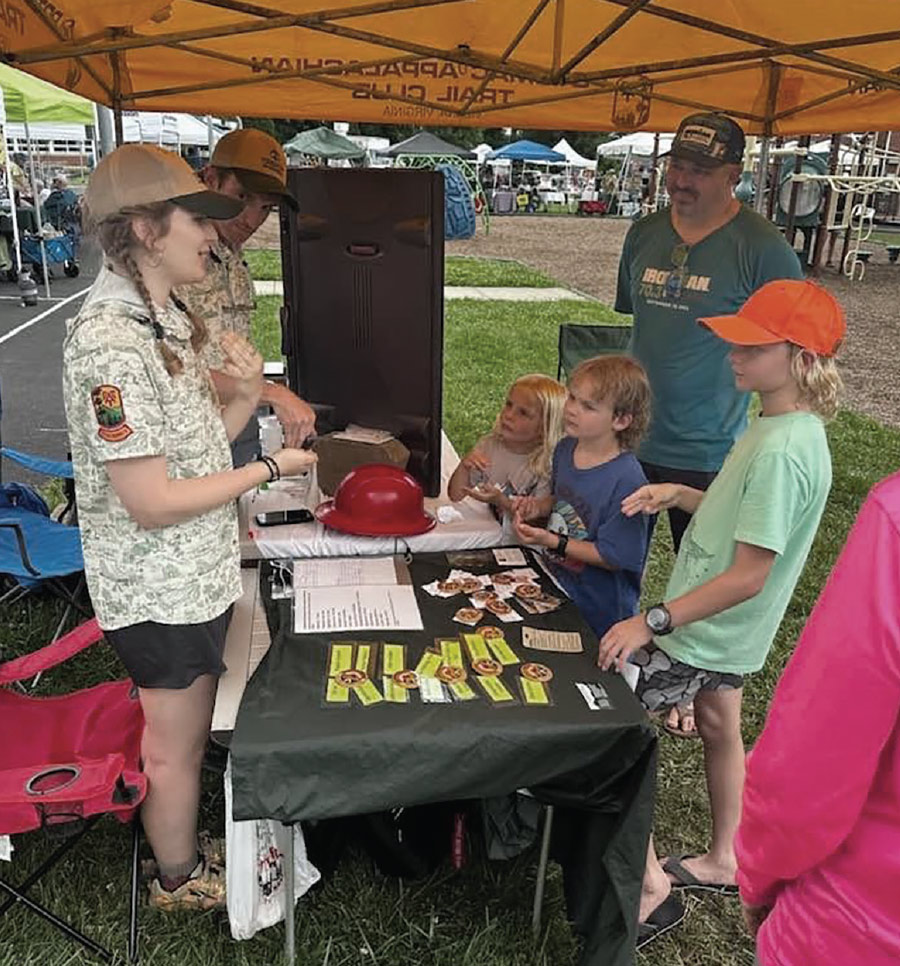

Photos by the ATC (left) and Adriana Barrios (right)
To support the strength of the Appalachian Trail network of partners, the Appalachian Trail Conservancy is actively investing in strategies to sustain the resilience and longevity of A.T. Clubs into the future. Activities include technical assistance for Clubs in volunteer recruitment, training in trail maintenance and field leadership, resources for organizational assessments, and networking with rising leaders through the Next Generation Advisory Council and Emerging Leaders Summit. According to Leanna Joyner, Senior Director, Partnership & Trail Operations, “The Conservancy knows that the viability of the Appalachian Trail rests in the collective hands of thousands, and to ensure its future, we must invest today.”