

The resolution adopted the next day by those 21 men and one woman stated the objective somewhat differently: “to promote and establish the Appalachian Trail as a working, functioning service, as a system of camps and walking trails for rendering accessible to campers and walkers the mountains and wild lands and areas of the eastern United States, such service to be developed as a means for stimulating public interest in the protection, conservation, and best use of the natural resources within such areas.”
That ATC purpose statement was a bit more expansive than a prescient one for the now-social Trail on an unsigned, pre-1925 onionskin paper that more closely reflected MacKaye’s thinking: “The purpose of the Appalachian Trail is to stimulate … an ‘outdoor culture.’ This means the study of nature. And, it means the study of man. It means the study of man’s place in nature.”
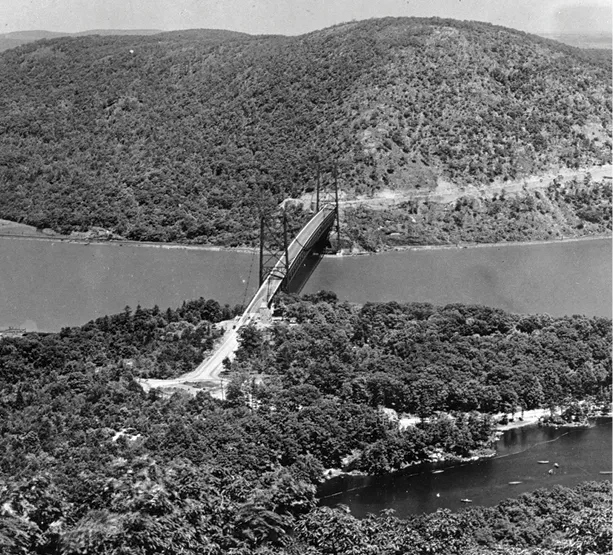
First A.T.-specific sections completed by Raymond Torrey

Appalachian Trail Conference formed as a confederation under Major William Welch
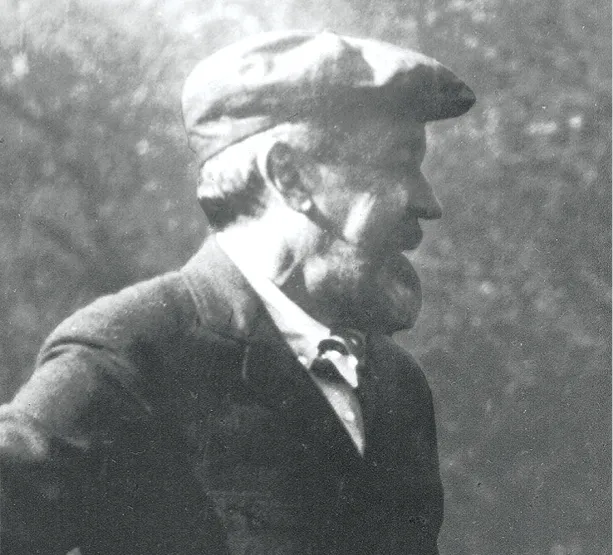
MacKaye speech to New England Trail Conference engages Arthur Perkins to take over ATC

Myron Avery takes over the ATC, accelerates trail-blazing
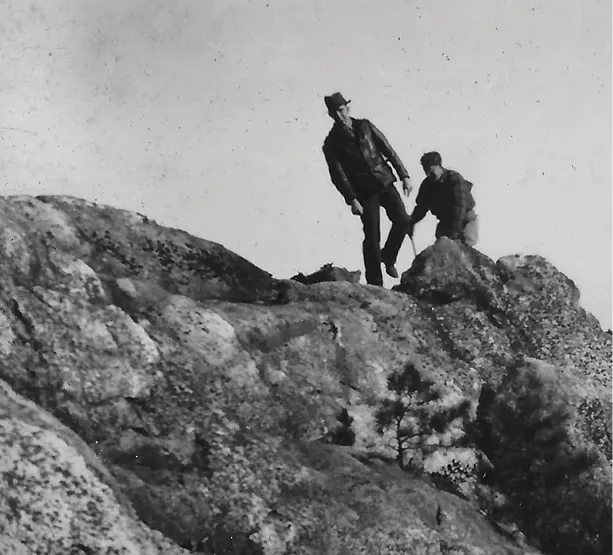
A.T. is fully connected from Maine to Georgia

Appalachian Trailway Agreement among the ATC, NPS, USFS, and states
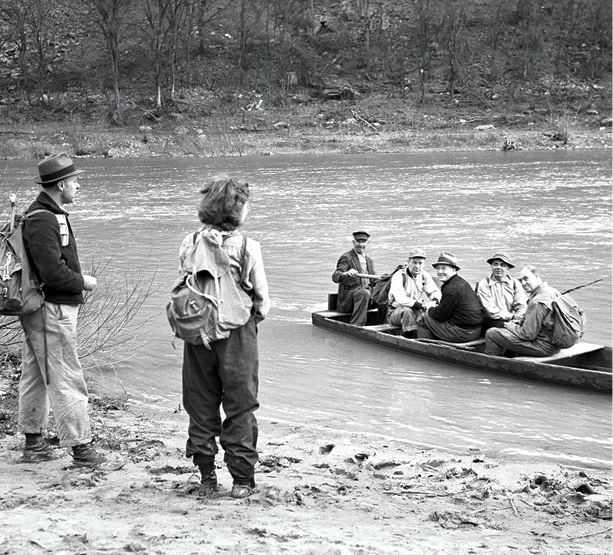
First A.T. protection legislation introduced by Rep. Daniel K. Hoch

National Trails System Act (NTSA) becomes law, the ATC hires first full-time employee

NPS land-acquisition project begins in earnest with 913.7 (map) miles protected by federal agencies and 256.1 miles by states

Ruth Blackburn named first woman ATC chair

Comprehensive Plan for the Protection, Management, Development, and Use of the Appalachian National Scenic Trail approved
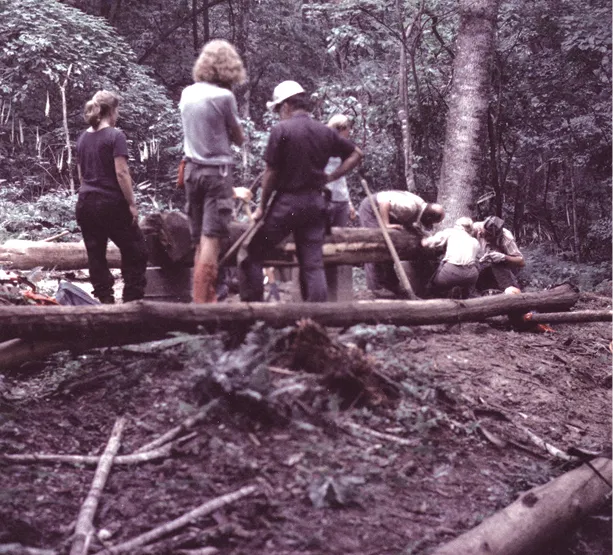
NPS delegates park-management responsibilities to the ATC, beginning land-management obligations

The ATC, Clubs, and new special Trail crews move hundreds of miles of the footpath to optimal, constructed locations; land-acquisition program progresses; the Trust for A.T. Lands saves key tracts; unprecedented bridge projects begin in VA and NJ

U.S. District Judge Charles S. Haight, Jr., broadly interprets the 1968 NTSA National Trails System Act to allow acquisitions for Trail values, not just treadway needs; the ATC facilitates nearly $200 million in annual congressional appropriations for land acquisitions and major protection, initiates natural-resource inventories, expands Stewardship Fund with first $1-million bequest
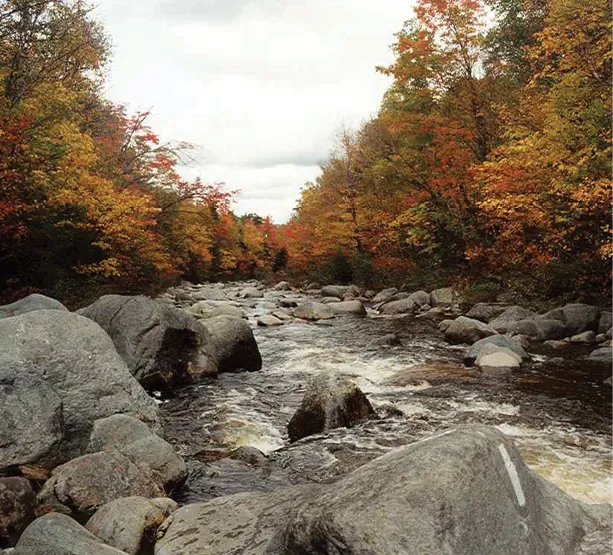
Congress appropriates $15.1 million to carry combined A.T. land acquisition through 2000, with 15 years of tract-based appropriations to follow

Appalachian Trail Conference renames itself Appalachian Trail Conservancy and restructures governance

Last major corridor tract acquired by donated easement; nearly 197,000 acres protected since 1978
Appalachian Trail Landscape Partnership initiated

Hurricane Helene devastates parts of the A.T.

The Appalachian Trail Centennial Act reintroduced as bipartisan bill in Congress
The seeds of an unprecedented, everlasting public-private partnership in the management of public recreational lands were planted, exemplified in the nonprofit-governmental make-up of the first ATC governing body. And there the ATC stood.
MacKaye continued traveling up and down the East Coast soliciting support, until he fully piqued the interest of Connecticut police-court judge and outdoorsman Arthur Perkins at a trail-group meeting in 1927. Within two years, Perkins, 65, chaired the ATC as figurehead Welch bowed out. Perkins had already been contacted by a Navy lawyer in Washington, D.C., Myron H. Avery — who had just started the Potomac Appalachian Trail Club (PATC) to pursue MacKaye’s 1921 vision of a trail connecting camps and communities along the Appalachian Mountain Range. Both emphasized the trail part.
The ATC as an organization effectively began, Avery becoming a dominant figure by the 1928 meeting. Perkins in Hartford prodded Appalachian Mountain Club colleagues in Connecticut and elsewhere. Avery, chair by 1930 and the catalyst for and coordinator of A.T. work until 1952, led work in mid-Atlantic states and literally set up shop.
He pulled together his PATC coworkers and other like-minded hikers, all volunteers, into an after-work office to plan weekend work trips, begin a brand-establishing publications program and parallel archives that lasted 91 years, and set trail standards to be applied as he went about enticing the formation of Clubs from northeastern Pennsylvania to central Georgia.
Avery worked throughout with federal and state agencies. Volunteers flagged and blazed while government crews built, to the extent building was necessary. He pushed through the obvious hurdles of terrain and land ownerships as much as allowed by the Depression (the ATC had no money after Perkins fell ill in 1930) and World War II (leaders were called to active duty).
Avery was joined at the hip with Park Service figures such as Director Arno Cammerer and Field Coordinator Ed Ballard. They produced not only a connected 2,000-mile trail 88 years ago but also the forerunners that year of a chain of overnight shelters and legal partnerships among the ATC, the states, the Park Service (NPS), and the U.S. Forest Service (USFS).
Off the Trail, Avery wrote a series of bylaws and called meetings every one to three years of Clubs, dominated by voting attendance from the two he formed, PATC and the Maine Appalachian Trail Club. His Trail standards, guidebooks, and periodic meetings defined the ATC. With energies exceeded only by the drive to get the Trail on the ground, he and editor/maintainer Jean Stephenson sought publicity far and wide for the Trail to enlist more users, which their federal partners needed to justify expenses.
In 1961, nuclear engineer Stanley A. Murray was elected chair with two foremost goals: increasing membership and securing government ownership of Trail lands, a need both MacKaye and Avery had identified in the 1930s and a former board member, Rep. Daniel K. Hoch, unsuccessfully tried to achieve during his one term in Congress in the 1940s.
Murray sketched plans during an August 1963 backpacking trip in his native Maine with three other ATC leaders and put them in motion on his return to Tennessee, assembling a small Washington group of de facto lobbyists led by Walter Boardman, former head of The Nature Conservancy.
They were, however, effectively preempted in February 1965 by President Lyndon B. Johnson’s directive, proposed by the First Lady’s staff, to the Bureau of Outdoor Recreation (BOR) to develop legislation to create a national trails system that would “copy the great Appalachian Trail in all parts of America.” BOR became the primary force behind the 1968 National Trails System Act, with the Murray/Boardman group working in the shadows with key House of Representative leaders to ensure a place for the ATC’s work and values of its volunteers. The statute did give ATC places on a new advisory council to the interior secretary, while the legislative history gave it on-Trail prominence under NPS administration of this now-publicly owned trail.
The act’s passage meant the ATC needed a daytime Washington presence to coordinate more formally with its longtime federal partners, so it hired its first full-time staff member. The land acquisitions the act envisioned commenced on USFS land and in a few states, while the NPS, which had never managed a long linear “park,” sat idle.
ATC board meetings grew from 30 minutes after general Conference meetings every three years to two weekend-long meetings each year. Board committees implemented new programs and assisted with the volunteer workload. The ATC and the Clubs organized to lay down white strips along their preferred Trail route for a photographic flyover that established the official October 1971 route published in the Federal Register.
And, in 1972, after more than 40 years sharing space with PATC, the ATC moved to a pre-Civil War federal building in Harpers Ferry, West Virginia, for four years, until it bought an 1892 structure nearby.
Individual membership grew to 10,000 in 15 years from only 600 in 1960 and became more energized. Growth in Conference membership and activities went hand-in-hand with an increase in hiking and backpacking throughout the country.
While the 1960s had seen the Conference concentrating on protecting the Trail from incompatible external development, a major threat was added in the first half of the 1970s from Trail users — or, more precisely, overusers. The footpath had not been located, designed, or constructed with the thought of so many boots hitting the erosion-prone tread. More land protections and maintenance resources were needed.
Those tensions, erupting at the 1975 ATC meeting, came to a head, this time with the ATC and its Clubs the primary movers against NPS resistance, complaining to Congress. (The deputy New England regional director, David A. Richie, since that meeting had been quietly working to craft the A.T. project as a vital program within that bureaucracy). The discontent led to an address at the ATC’s 1977 meeting by new Assistant Interior Secretary Robert L. Herbst, who in the strongest of terms promised renewed federal vigor in protecting the A.T.
With the act’s funding and the congressional mandates to NPS, including expansion of the official corridor, land acquisition remained the first priority with 41 percent of the footpath still on private property. Richie formed an A.T. Project Office in Harpers Ferry and initiated a partnership with newly hired David N. Startzell at the ATC, an alliance reminiscent of Avery–Cammerer, to secure the annual appropriations to secure what were then 1,750 tracts of land.
By 1998, when congressional appropriations subcommittees declared their A.T. line-item work complete and shifted to a project focus, more than $200 million had been appropriated.
Simultaneously, policies and infrastructure needed to be implemented, and the staff needed to guide Clubs in sustainable footpath-construction techniques on rerouted treadway. Together, the ATC and NPS staffs wrote policies and the definitive 1981 Comprehensive Plan for the Protection, Management, Development and Use of the Appalachian National Scenic Trail, signed by two Cabinet secretaries and still in force, although under consideration today for updating. It defined partners’ roles, captured in the concept of the Cooperative Management System (left untouched by the U.S. Supreme Court in 2020 in a pipeline case).
Regional offices to bolster ground-level contacts with Clubs and federal staffs opened. The Register, a special volunteer-edited newsletter for maintainers, began publication. Under the umbrella of Ruth Blackburn, the first woman board chair, Executive Director Larry van Meter, and Startzell, the leadership began a decade-long effort to transform the ATC from a collection of affiliates meeting occasionally to a true confederation.
That process of redefining the roles of the partners, with the ATC at the hub, culminated not only in a stronger internal organization and blueprint for the future but also in a 1984 agreement, unique in the annals of American public-land management. It charged the ATC with the management of the NPS lands acquired for the Trail. That periodically revised three-page agreement, grandchild of the 1937 Avery–Ballard A.T. document, became known as “the delegation agreement.” It reaffirmed the leadership role of the private volunteer in the stewardship of the public Trail. And, it authorized NPS’s partially paying the ATC for its Trail work.
Most significantly in spirit, it merged land management with Trail work and Trailway protection to form layered, tripartite priorities for the ATC. That bred by 2005 the change in name to the Appalachian Trail Conservancy, with land management in the face of climate change later becoming the primary priority.
Acquisition and land management as priorities merged into one dimension in late 2015 through the NPS-cosponsored Appalachian Trail Lands Partnership (ATLP), a concerted effort with multiple partners to expand and protect the land surrounding the official corridor. It honored MacKaye’s 1931 insistence that “a realm and not a trail marks the full aim of our effort.” In its first decade, more than 65,000 scenic and sensitive acres have been added to the de facto A.T. experience, if not its official 250,000-acre boundaries.
Challenges remain in the ATC’s 101st year: Funding, as always, and an aging volunteer work force, which had peaked in 2015 and fell more than 19 percent post-pandemic before Hurricane Helene’s devastation drew in many volunteers and recovery-specific funds.
The Helene aftermath illustrated dramatic differences between today and the Trail’s start. The 1938 hurricane that broke the new Trail’s continuity across a few hundred miles — before maintenance-stopping war years — was not fully offset until 1951. Helene’s closures of up to 430 miles were reduced to about five miles in less than a year.
Some of those challenges might be alleviated if the bipartisan Appalachian Trail Centennial Act (ATCA), reintroduced in Congress this year, is enacted to secure funding and stature within the federal estate.
The ATC purpose statement — as it appears in the 2023-amended bylaws — reflects the evolution: “The Conservancy is a volunteer-based organization dedicated to the preservation and management of the Appalachian Trail, ensuring that its vast natural beauty and priceless heritage can be shared and enjoyed today, tomorrow, and for centuries to come.”
At a key era in that history and in his example, Myron Avery got, and others kept, his defined footpath on the ground, marked from his beloved Katahdin south to Georgia. Without suggesting he would ever have been a satisfied man, it is not hard to think he would be pleased that he and his about 250 anonymous volunteers and those who followed had, indeed, created “a distinct contribution to the American recreational system.”
Today, the focus pendulum has swung back toward Benton MacKaye’s little-publicized hopes for this “footpath of the wilderness.”
One of his wilder dreams was that visitors to the Trail would briefly become amateur botanists and geologists in exploring, tracking, and protecting the plants and animals, seeing the Trail as a laboratory and not just a playground. That is real today, as programs through the ATC and its partners, Trail advocates, and committed hikers undertake that profound charge. His idea of an A.T. “realm” is at the forefront.

Brian B. King, a senior staff member at ATC from 1987 to 2022, is the author of The Appalachian Trail: Celebrating America’s Hiking Trail (Rizzoli), a more comprehensive history of the Trail and ATC through 2011