


- issue 97 | MOMENTUM
-
FEATURES
-
Defending the Appalachian Trail and the Trail landscape from non-native invasive species.
-
The restoration of Pennsylvania’s Camp Michaux offers an opportunity to explore the intersection of history, land management, public engagement, and our responsibility to the land.
-
A.T. visitors and volunteers come for various reasons, but leave with a stronger connection to the land and a deeper appreciation for the People’s Trail.
Photo by Max “Bear Bag” Mishkin @mishkin_photo
Contents: Also known as yellow poplars, tulip trees (Liriodendron tulipifera) are found in moist forests along the Appalachian Trail. In the spring, the tall deciduous trees bloom with large tulip-like flowers.
Photo by mtreasure | istock

Our mission is to protect, manage, and advocate for the Appalachian National Scenic Trail.
The Appalachian Trail and its landscape are always protected, resilient, and connected for all.
Cinda M. Waldbuesser | President & CEO
Karen Cronin | Chief Financial and Administrative Officer
Hawk Metheny | Vice President of Regional and Trail Operations
Dan Ryan | Vice President of Conservation and Government Relations
Jeri B. Ward | Chief Growth Officer
Caroline Ralston | Associate Vice President of Marketing & Communications
Genevieve Andress | Relationship Marketing and Membership Director
Karen Ang | Managing Editor
Traci Anfuso-Young | Art Director | Designer
Ann Simonelli | Director of Communications
Michelle Presley | Communications Manager
Maddy Kaniewski | Digital Marketing Specialist
A.T. Journeys is published on matte paper manufactured by Sappi North America mills and distributors that follow responsible forestry practices. It is printed with Soy Seal certified ink in the U.S.A. by Sheridan NH in Hanover, New Hampshire.
A.T. Journeys ( ISSN 1556-2751) is published by the Appalachian Trail Conservancy, 799 Washington Street, Harpers Ferry, WV 25425, (304) 535-6331. Bulk-rate postage paid at Harpers Ferry, West Virginia, and other offices. Postmaster: Send change-of-address Form 3575 to A.T. Journeys, P.O. Box 807, Harpers Ferry, WV 25425.
- Jim LaTorre | Chair
- Lisa Manley | Vice Chair
- Katherine Ross | Treasurer
- Yong Lee | Secretary
- Gregory Merritt | Representative to Stewardship Council
- Cinda M. Waldbuesser | President & CEO
- Renee Alston-Maisonet
- Rich Daileader
- Grant L. Davies
- Eboni Preston Goddard
- Edward R. Guyot
- Bill Holman
- Roger Klein
- Naman Parekh
- Nathan Rogers
- David C. Rose
- Rajinder Singh
- Durrell Smith
- Greg Winchester
- Nicole Wooten
- Chad Wright
A.T. Journeys is published on matte paper manufactured by Sappi North America mills and distributors that follow responsible forestry practices. It is printed with Soy Seal certified ink in the U.S.A. by Sheridan NH in Hanover, New Hampshire.
A.T. Journeys ( ISSN 1556-2751) is published by the Appalachian Trail Conservancy, 799 Washington Street, Harpers Ferry, WV 25425, (304) 535-6331. Bulk-rate postage paid at Harpers Ferry, West Virginia, and other offices. Postmaster: Send change-of-address Form 3575 to A.T. Journeys, P.O. Box 807, Harpers Ferry, WV 25425.
-

Elizabeth Choi is a writer, editor, and marketing consultant who has worked on magazine and commercial projects relating to conservation, land stewardship, ESG (Environmental, Social, and Governance), artificial intelligence, technology, and corporate compliance. She has written several feature articles for A.T. Journeys. Previously, she worked for several publishing houses, including Merrell Publishers and Antique Collectors Club. Living in Brooklyn, New York, allows Elizabeth to reach the A.T. solely by public transportation. -

Jason Clemmons lives with his wife, Jesica, at the foot of Blood Mountain, the highest point on the Appalachian Trail in Georgia. Together they own and run Sunrise Grocery, which has been a supporter of the A.T. for many years.For Jason, professional photography has given him a different perspective of and appreciation for the Trail. Woodland photography is his favorite type
of landscape work, though it is one of the most difficult forms of landscape photography. Making sense of the chaos so it translates into a photograph is a challenge he enjoys.Jason’s work is currently on display at Hartsfield-Jackson Atlanta International Airport and has been exhibited at the Georgia State Capitol. He was part of the first season of the Emmy-nominated TV show View Finders, which he started with fellow photographer Chris Greer.
“I don’t get out as much as I’d like,” Jason shares. “But when I do, I love hitting the Trail with Jesica and simply experiencing the beauty that nature offers.”
-

Lindsey Oldt is a Litigation Paralegal, writer, and avid environmental volunteer living in Raleigh, North Carolina. She is a graduate of the University of North Carolina at Chapel Hill with a B.A. in English and Comparative Literature and Political Science. Lindsey serves as a member of the ATC’s Next Generation Advisory Council and as the Council’s liaison to the Partnership Coordinating Committee. She has been enjoying weekend hikes of the Appalachian Trail in North Carolina, Tennessee, and Virginia since 2023, and thru-hiking takes up the number one spot on her bucket list. In her writing, Lindsey focuses on the intersection of history, place, culture, and promoting outdoor recreation access for all, balancing reflection on the past with hope for the future. In her spare time, she can be found rock climbing, doing yoga, leading outings for the local Sierra Club group, and exploring new trails.

One of the first aspects of my new role that I was eager to experience firsthand was the A.T. Cooperative Management System. While I came in with a strong understanding of the model from the National Park Service side, I had not yet experienced it from the ATC or volunteer perspective.
It may not sound glamorous, but it is the backbone of how we care for and protect the Appalachian Trail. This model of public-private collaboration — where the ATC serves as convener, facilitator, and unifier — is what allows this extraordinary 14-state grassroots effort to thrive.
In my home state of Pennsylvania, for example, the A.T. winds through the South Mountain landscape, a region of nearly half a million acres of forested ridges and fertile valleys. I’ve had the opportunity to spend meaningful time working in this region during my years with the National Park Service, which deepened my appreciation for both its natural beauty and the communities that steward it. Protecting an area of this scale requires a broad coalition of support from local governments, land trusts, state agencies, and many others. Recognizing this, the Pennsylvania Department of Conservation and Natural Resources designated the region as a Conservation Landscape and partnered with the ATC to create the South Mountain Partnership.
This unique public-private partnership meets twice a year. I was lucky enough to attend our winter gathering in January, which brought together roughly 130 regional stakeholders including the Keystone Trails Association, Appalachian Mountain Club, representatives from state and local government, and conservation organizations all committed to safeguarding the A.T. experience and the natural beauty, biodiversity, and resilience of the region. It was inspiring to see the Cooperative Management System doing what it was designed to do, and to witness how collaboration across such a large landscape strengthens communities, conservation, and the Trail itself.
In February, I headed south to the ATC’s Damascus Trail Center in Virginia to participate in an important Hurricane Helene recovery meeting. It was one of my first opportunities to see the ATC team in action. Staff from every division of the ATC came together in one room as a seamless team to tackle the next phase of response to the largest natural disaster in the Trail’s history.
After three days of productive meetings and workshops, I left feeling energized. Together, we identified remaining needs and challenges, agreed on solutions, and aligned resources to support A.T. Clubs and volunteers — supported in part by newly available federal disaster relief funding. We also discussed how to scale the successful recovery efforts already underway, thanks to the crucial efforts of thirteen different A.T. Clubs and generous contributions to the ATC’s A.T. Resiliency Fund.
What struck me most was the mindset in the room. Everyone approached the work thoughtfully and strategically, with a shared commitment to being excellent stewards of the funding entrusted to us. Decisions were guided by data, best practices, and our collective expertise as we planned restoration projects across this expansive landscape. Our goal is not only to repair damage, but to prepare for the next storm — to ensure the Trail and its surrounding landscape are more resilient for generations to come.
That spirit of optimism carried into my visit to Amicalola Falls State Park in Georgia for A.T. Gateways, an annual gathering hosted by the Georgia Appalachian Trail Club at the start of the thru-hiking season. It was a phenomenal opportunity to meet with Club leadership, Trail maintainers, and connect with hikers from every imaginable background. Some were setting out on their first thru-hike, others had recently completed all 2,000+ miles, and a few had summited back in the 1970s.
Experiencing the kindness and camaraderie of the A.T. community firsthand is powerful. Everyone had a story worth hearing. I met former Ridgerunners who now volunteer with local A.T. Clubs and maintain their own sections of Trail. As they reminisced about past seasons, I could see the joy in their eyes and hear it in their voices. The Trail is their lifelong commitment; one they continue to honor today.
Everyone I spoke with seemed to come to the Trail for different reasons, at different stages in their lives, and travel it for different distances at a time. Yet they all walk away changed — finding clarity, strength, or a new path forward.
Across each of these meetings, I found myself wanting to recognize the ATC staff for their passion, thoughtfulness, and the meaningful impact they make alongside our many partners and volunteers.
I have a deep appreciation for our staff, partners, and volunteers. I’m confident that together, we can meet any challenge. We have already proven that — and now is the time to build on the positive momentum created over the past 101 years and counting. The ATC, standing side by side with volunteers and partners, is how we will keep the Trail alive.
I hope you enjoy the following pages, which bring to life the stories of how we protect, manage, and advocate for this extraordinary resource. Thanks for reading.


This spring, the ATC, in collaboration with the National Park Service (NPS), announced new data confirming the Appalachian National Scenic Trail had 16.9 million recreation visits and was the ninth most visited national park unit in 2025.
“For the first time, we can truly see how popular and meaningful the Appalachian Trail and its landscape are to millions of people,” said Cinda Waldbuesser, the ATC’s president and CEO. “We are very proud of our work in partnership with the National Park Service on a methodology that enables us to accurately understand how people use the footpath, what sections see the most visitation, and how to better support local communities so the Trail remains an iconic destination for generations to come. This data will inform A.T. management and conservation decisions and help us continuously improve the Trail experience for all visitors.”
The ATC and NPS calculated 2025 visitation to the A.T. using aggregated, anonymized mobile location data combined with trail counters and field observations to confirm patterns and accuracy. The ATC partnered with Placer.ai, a location analytics platform, to apply visitor location data to the A.T.


The methodology used for the A.T. will serve as a model for other National Scenic and Historic Trails, ensuring other trail systems have the most accurate visitation numbers and data to improve management and visitor experience.
This is also the first time the Appalachian Trail is included in the National Park Service’s Annual Park Ranking Report, which ranks visitation of national park units specifically on lands managed by the NPS. Approximately one-third of the A.T. is on NPS lands, and those sections of the Trail experienced 6.2 million visits in 2025, making it the ninth most visited national park in the 2025 NPS report. (The rest of the A.T. is on USDA Forest Service land and public lands managed by state agencies and local townships.)
“For more than a century, the Appalachian Trail has been a destination for millions of people from around the world to experience adventure, solace, and community while reconnecting with nature,” said Kurt Speers, chief ranger and former acting superintendent of the Appalachian National Scenic Trail. “We are grateful for the dedication of the Appalachian Trail Conservancy and the continued collaboration with the A.T. Clubs and the Trail’s many partners, as we use this new data to enhance visitor experience.”

Butterflies depicts the wing patterns of the Spicebush Swallowtail butterfly, a species that Mallory noticed as she was traveling through Georgia and North Carolina at the beginning of her hike. Both objects are components that will be integrated into a larger piece of jewelry or sculpture. One is made from titanium, using the process of electrolytic anodizing to color the surface of the metal; the other is made with chainmail using colored aluminum links to depict a pattern in the weave of the links.
For another piece called In the Blaze — made from titanium, nickel, leather, and thread — Mallory was inspired by a metal sign that a tree had grown around. “It hints at a near-glacial time scale, that this object has existed in proximity for so long,” she shares. “The slow creep of growth, only millimeters per year, has lent the wood a viscosity and plasticity that allows it to morph around what was once a foreign body.”
Mallory will continue as the ATC’s Artist in Residence through 2026 and will focus on additional pieces inspired by her hike. She will also host a workshop at the Damascus Trail Center during Trail Days (May 15-17) and be in residence at Monson Arts in Maine later in the year.

The one-mile War Spur relocation moved the footpath from a steep, half-mile fall-line route to a more sustainable grade. (A fall-line route is one where the footpath goes straight up an incline, allowing water to flow directly down the path, eventually eroding the Trail into a rocky gully.) The gentler grade of the relocation will help the footpath in this section last longer. The new A.T. route also winds through some interesting rock features.
This multi-year project was completed by the ATC’s Konnarock Trail Crew, volunteers with the Roanoke Appalachian Trail Club (RATC), and crews with the Southern Appalachian Wilderness Stewards (SAWS), with support from the USDA Forest Service.
Four temporary detours are in place but not included in the 2026 official mileage. In New Hampshire, the Great Gulf Detour reroutes hikers around the Madison Gulf Bridge, closed due to structural failure.
The three remaining detours stem from Hurricane Helene damage: at Iron Mountain Gap on the North Carolina–Tennessee border, at the destroyed Nolichucky River road bridge near Erwin, Tennessee, and north of Damascus, Virginia, where sections of the Virginia Creeper Trail used by or near the A.T. are closed for repairs.

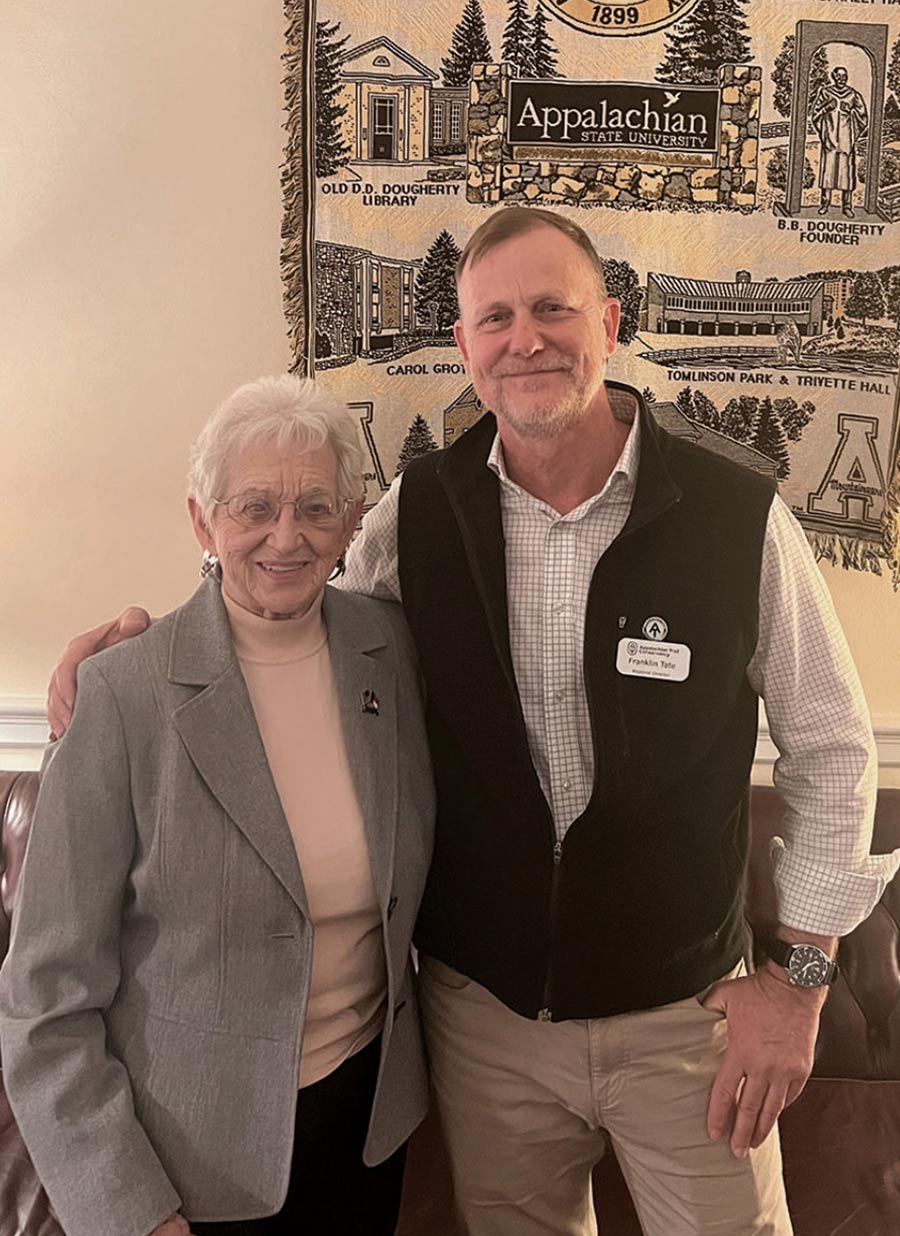
Photos courtesy of the ATC
The ATC team shared updates on Hurricane Helene recovery and repair efforts, explained the Trail’s effective Cooperative Management System and the importance of state and local collaboration to maintaining the Trail experience, as well as discussed key proposed legislation, including the America the Beautiful Act and the Appalachian Trail Centennial Act and their benefits to the A.T.
“Hike the Hill is an important opportunity for ATC staff to share information on A.T. needs directly with Members of Congress and their staff as well as to connect with partners who cooperatively manage other National Scenic and Historic Trails (NSHTs),” shares Brendan Mysliwiec, the ATC’s Director of Federal Policy. “Just as the A.T. community is strongest with one voice, when all 32 NSHTs speak together, we are our strongest as a system.”
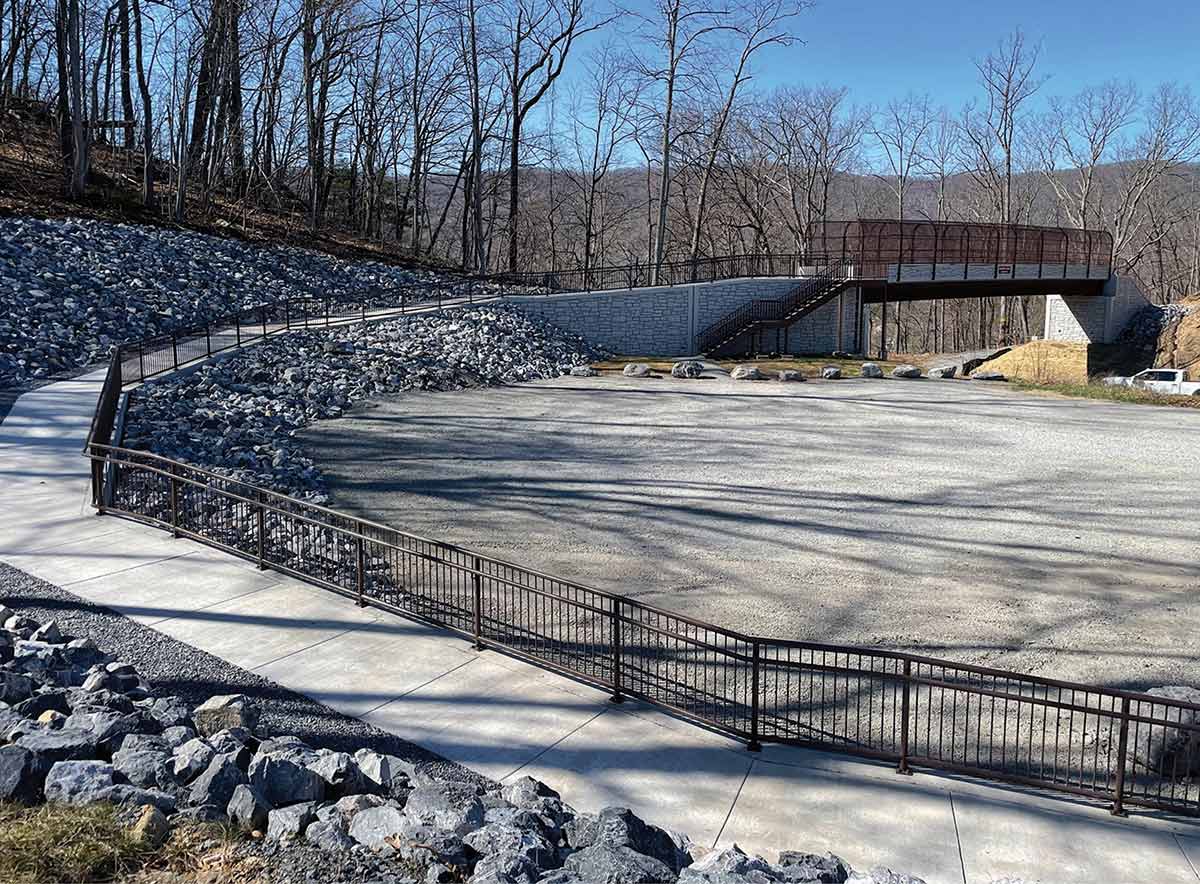
For several years, the ATC has been working with Roanoke County, the National Park Service, Roanoke Appalachian Trail Club (RATC), along with 29 federal, state, regional, and local partners on a funding request to advance parking and transit access improvements. Thanks to the support of U.S. Senators Tim Kaine and Mark Warner, congressionally directed funding was secured to improve parking at the trailhead, a key recommendation of the 2024 Appalachian Trail Triple Crown Visitor Use Management Plan.
Planned upgrades include paved and expanded parking with ADA-accessible spaces, a permanent shuttle stop shelter, waterless restrooms, improved signage, and improved pedestrian connections to the new Appalachian Trail bridge over Route 311. The National Park Service will oversee project design and construction.
“This project reflects strong partnerships and continued investment in preserving a world-class hiking experience,” said Kathryn Herndon-Powell, the ATC’s Regional Director for the Virginias. “It highlights our shared commitment to protecting McAfee Knob and the Virginia Triple Crown through the dedication of volunteers and local partners, including Roanoke County.”
“Building infrastructure on a mountainside is no small task, so we’re excited this funding has been approved,” said Linda Shannon Mulheren, President of the Roanoke Appalachian Trail Club. “These upgrades will make the area easier to maintain, add restroom facilities, and provide a safer, more enjoyable parking experience for visitors and volunteers alike.”
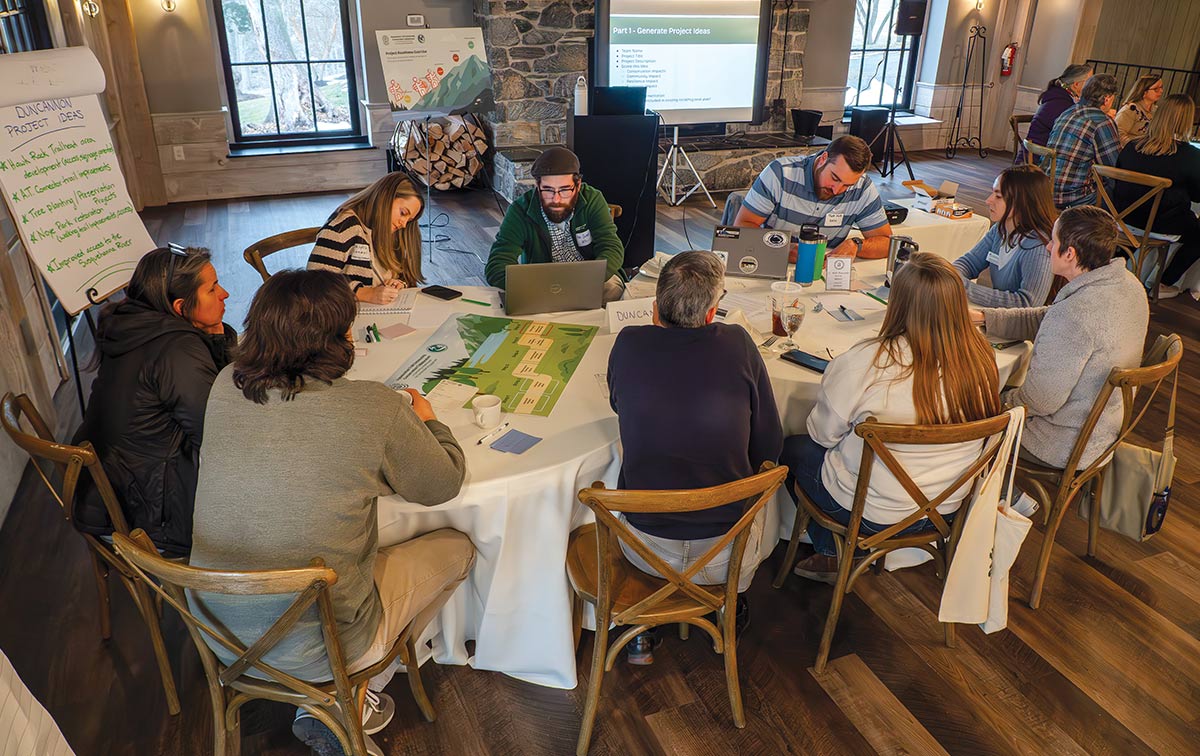
Photo by 2085 Media Productions
Six community teams were selected for the inaugural Appalachian Trail Community Conservation Collaborative (ATCCC): Duncannon, Port Clinton, Shippensburg, Boiling Springs / South Middleton Township, Berks / Schuylkill Counties, and Stroud Township. Two Community Conservation Impact & Innovation Workshops were offered in February. Each community team convened during one of the two regional workshops. Through interactive sessions focused on scenario planning, funding pathways, and conservation strategies, participants exchanged ideas, built relationships, and developed practical project concepts that align goals for conservation, economic vitality, and sense of place.
The ATCCC builds on more than a century of trusted partnerships stewarding the Appalachian Trail. Drawing inspiration from programs such as the A.T. Community™ Program and the South Mountain Partnership, the ATCCC centers local voices and supports community-led projects that protect natural resources, enhance outdoor recreation economies, and sustain the character and identity of communities across the Appalachian Trail landscape.
The February workshops mark the beginning of a longer-term collaborative effort. Following the workshop, each community will receive targeted technical assistance to advance its action plan for the conservation projects developed by each community team. The ATC will continue convening partners and communities toward a future Vision to Action Summit in fall 2026, designed to accelerate implementation and investment.

Much of the recovery work in Helene-impacted areas throughout 2025 was made possible thanks to donations to the ATC’s A.T. Resiliency Fund and through the tireless work of the local Clubs and volunteers, local land management personnel, and ATC Staff. Now in year two, efforts to repair and rebuild more sustainable trail features will continue thanks to federal disaster relief funding for the A.T. from the USDA Forest Service and National Park Service.
The attendees of the ATC’s three-day workshop focused on identifying remaining challenges to the Helene recovery work, planning short- to long-term goals, and establishing ways to scale the successful efforts already underway.
We know that donors, members, and partners entrust the ATC to use private and public funds thoughtfully in ways that most benefit the Trail and surrounding lands.

Photo courtesy of the ATC
Photo courtesy of the ATC


If you, or someone you know, are interested in serving on the ATC Board, we welcome your nomination. The Nominating Committee considers many criteria when reviewing nominations. Candidates should have a passion for the ATC’s mission of protecting, managing, and advocating for the Appalachian Trail, along with a commitment to its values of land protection, volunteerism, inclusion, and community engagement. As stewards of this national treasure, the Board aspires to represent all people who use the Trail now and in perpetuity.
In honor of the ATC’s 100th anniversary, the Conservancy launched an exciting Centennial Campaign to keep the Trail alive and lay the financial foundation to protect and manage the A.T. for the next 100 years. Candidates with capital campaign experience and those who are able to take an active role in fundraising are encouraged to highlight this in their nomination.
As an all-volunteer-working Board supporting a professional staff, we require a significant time commitment, including attendance at four Board meetings each year, service on two Board committees (which maintain regular meeting schedules), and work assignments in between.
All nominations must be received by May 18, 2026.
Nominations should be sent to [email protected] and contain:
- Names of the nominee and the nominator
- Mailing address, telephone number, and e-mail address for both the nominee and nominator
- The nominee’s relevant experience, skills, and attributes, with an emphasis on the criteria above
- A bio or resume
We take every nomination seriously, and we appreciate the time you put into the nomination and the nominating process. The Nominating Committee’s slate will be announced publicly on the ATC website this summer.

Last year, seventeen conservation organizations in eight Trail states received grants to advance projects that will protect over 80,000 acres of land, supporting recreational access, scenic views, climate-resilient lands, and cultural resources. Grants were also provided to advance conservation planning and community resilience efforts across the Appalachian Trail corridor.
“The Appalachian Trail is more than a footpath — it is the backbone of one of the most cherished and ecologically important landscapes in the country,” said Katie Allen, ATC’s Director of Landscape Conservation. “Through the Wild East Action Fund, we’re proud to support the local partners whose work strengthens community connections to nature, protects climate-resilient lands, and ensures this iconic wilderness corridor remains a thriving landscape for generations to come.”
Since 2018, the ATC has contributed over $2.5 million to more than 100 conservation planning and land protection projects across fourteen states through the WEAF. These grants provide initial funding that gives conservation projects credibility or critical dollars needed to bring projects to completion. In 2025, the ATC received the largest philanthropic gift in the organization’s history: a $5 million contribution to the Wild East Action Fund from the Dunleavy Foundation (see page 50 for more details).
This spring, the ATC will begin accepting proposals for the 2026 Wild East Action Fund grants for land protection support, conservation planning, and community resiliency projects.

Photo by Rachel Lettre/ATC
2025 participant Katie Frawley shared what the program meant for her career: “I’m going to be a Conservation Services Crew Member at NorthWoods Stewardship Center in Island Pond, Vermont. I am thrilled to begin my transition into the environmental conservation field, and I absolutely owe my success in landing a position in part to the ELS. The 2025 ELS really kick-started my career transition with practical tips for success in this field, growing my network with new connections, and building my confidence and motivation to take the leap into a new career path!



Northbound MILE 241.1

Photo by Genevieve Andress

Today, Tyler — now thirty-six — considers the outdoors home and is on track to complete hiking’s “triple crown.” He completed his A.T. thru-hike in 2025, will hike the Pacific Crest Trail this spring, and plans to complete the Continental Divide by the end of next year.
His obsession with hiking and commitment to stewarding the A.T. developed later in life but early on in his sobriety journey. “I started drinking when I was fifteen. I was an addict my entire adult life,” he explains. “By thirty-three my liver and kidneys were failing. I would seize in my sleep from withdrawals and had to keep a bottle of vodka next to my bed.”
It was at this point in his addiction that he took part in a five-day detox to ease these symptoms. “The staff, who were recovering addicts, told me I was one of the worst cases they’d ever seen and that I shouldn’t be dying in my early thirties. They urged me to apply for a thirty-five-day rehab program,” Tyler shares. “It took me one week into those thirty-five days to realize what I was doing and what was happening. I was going to drink myself to death.”
Upon successful completion of the program, Tyler attended Alcoholics Anonymous meetings three times a day for nine months. But he struggled, “During my first year of sobriety I was a dry drunk. I was sober, but I was bored and miserable. Drugs and alcohol were my entire life. As a musician I couldn’t be in dive bars.”
Searching for direction and a sense of identity, Tyler turned to the internet. He asked what sober people do. The answer he found? They hike.
So he ventured out onto an 18-mile section of the A.T. just ten minutes from his home in Tennessee. “I couldn’t read a map. I packed only a 12-ounce bottle of water, but I went out alone and completed the section. I didn’t know I had to turn around to get back to my car and had to call my dad to pick me up,” he says. “I couldn’t walk the next day, but I thought it was the best thing ever. Since that day, I’ve never stopped hiking.”


Tyler chronicled his hiking adventures on his Instagram account (@cave_depression) and caught the attention of Scotty Bowman, Tennessee Program Manager and Lead Trainer with Southern Appalachian Wilderness Stewards (SAWS). “He’d seen my attempted hike from Indian Grave Gap to Damascus in 13-degree weather, with snow up to my ankles,” Tyler laughs. “Scotty messaged me saying he knew that section of Trail and asked if I wanted a job.”
Tyler continues, “For many reasons I’m grateful Scotty took a chance on me. I didn’t have a squeaky clean background. While I was obsessed with hiking and already planning to hike the A.T., I didn’t even know anything, not even what Leave No Trace meant.”
For Tyler, being on trail supports his sobriety. “I’m good at trail work and hiking. I’m stubborn. I stick things out. I’ve learned patience and perseverance. When I’m on the Trail I know it’s never going to go fully my way, but I know I can always figure out a solution. Hiking makes me more comfortable in my sobriety,” he explains.
Being on the Trail also makes him more comfortable with his purpose. “It’s not all sunshine and rainbows how I got here,” he muses. “I’m an open book and I shared my story throughout my entire thru-hike. So many people are facing the darkness of severe alcohol and drug addiction. These trails helped me get sober. If I can help one person by keeping them open and maintained, it’s worth it for me. The Trail saved my life.”
jmcartisticphotography.com
The Appalachian Trail takes you right through the heart of it, and I’m blessed to live so close. I observe the landscape until something creates an emotional response. Even if I don’t get a photograph, it’s always great to be in nature. When you leave, you’re often in a better place than when you entered — and I’m not talking about the trailhead! The woods, the mountains, and the Trail affect moods, emotions, and a person’s outlook on life. It’s deeply moving to experience the power of these important spaces.



Non-native invasive plants can quickly take over an area, outcompeting native plants for resources and wreaking havoc on entire ecosystems. Dan Ryan, ATC’s Vice President of Conservation and Government Relations, calls non-native invasive species “one of the fastest ways to permanently change the A.T. landscape.”
The Southern Appalachians are no stranger to the scourge of non-native invasive plants, but Hurricane Helene has made it a more urgent problem. The massive losses of tree canopy and native vegetation, along with extensive terrain damage, have created an opening for troublesome plant species to flourish. NASA satellite data measuring “greenness” of vegetation shows that Helene transformed 81,500 acres of the Appalachian Trail (an area the size of Philadelphia).
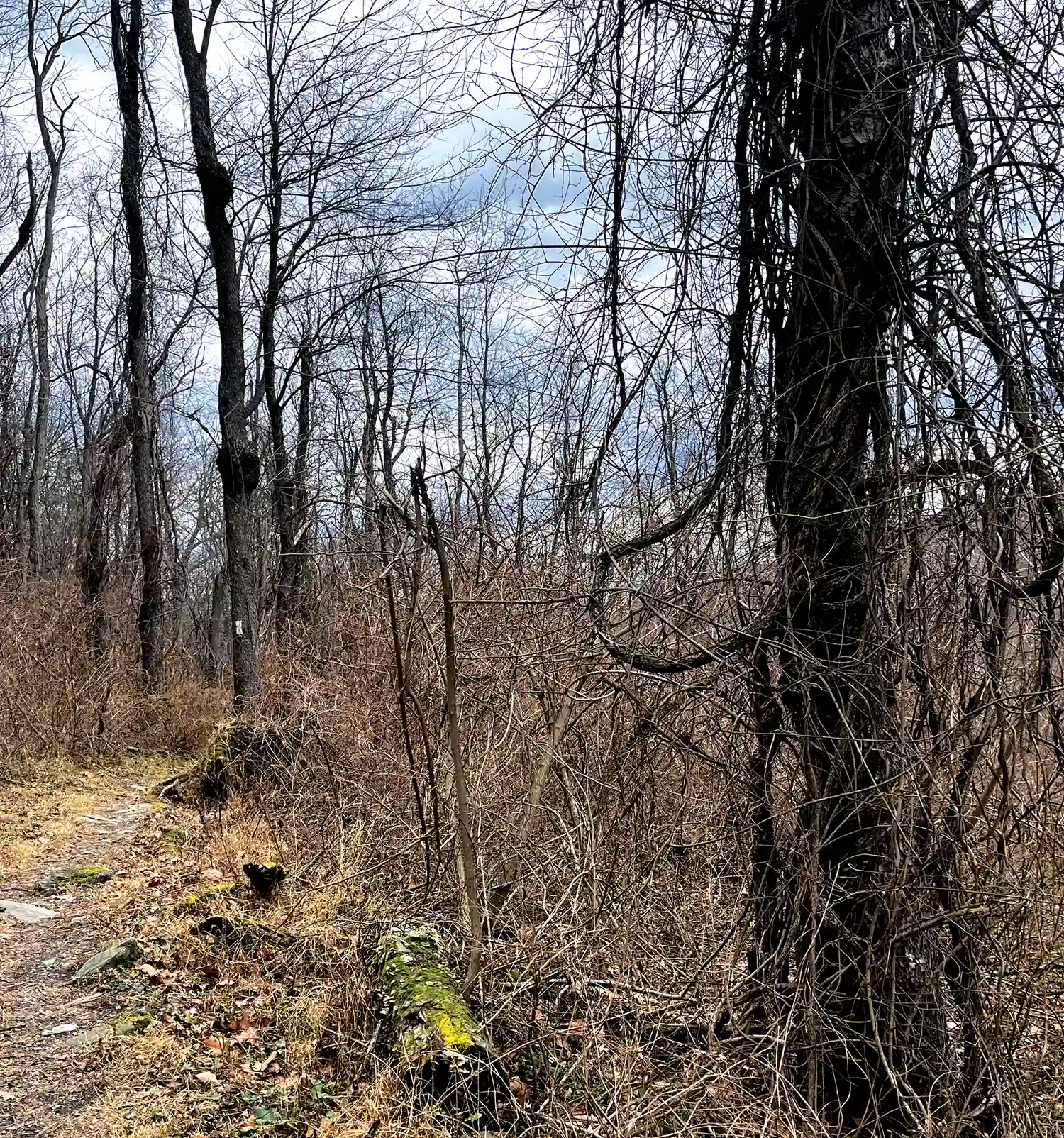

The A.T. used to run through Camp Michaux for about a third of a mile, but in 2010, the Trail was moved and now crosses the area north of the former farm and camp. Even with the hard work of Trail maintainers and volunteers, this portion of the A.T. is dominated by non-native invasive species. Photo by Marian Orlousky/ATC Inset: German prisoner Heinrich Bachaus painted this hillside view of Camp Michaux when it was used as a POW camp. Courtesy of the Cumberland County Historical Society
Beginning in 1787, this now-forested landscape was a family-operated farm of approximately 250 acres called Bunker Hill Farm. Owned by Pine Grove Furnace from the late 1700s to the late 1800s to support the nearby ironmaking community, farming continued into the 1920s after the state of Pennsylvania bought the land in 1913. The Great Depression was responsible for the site’s resurrection in 1933, when it became the site of the first Civilian Conservation Corps (CCC) camp established on state-owned land in Pennsylvania. Until 1942, the CCC worked on the surrounding landscape, constructing roads, installing telephone lines, and planting trees to restore approximately 60 square miles of forest.

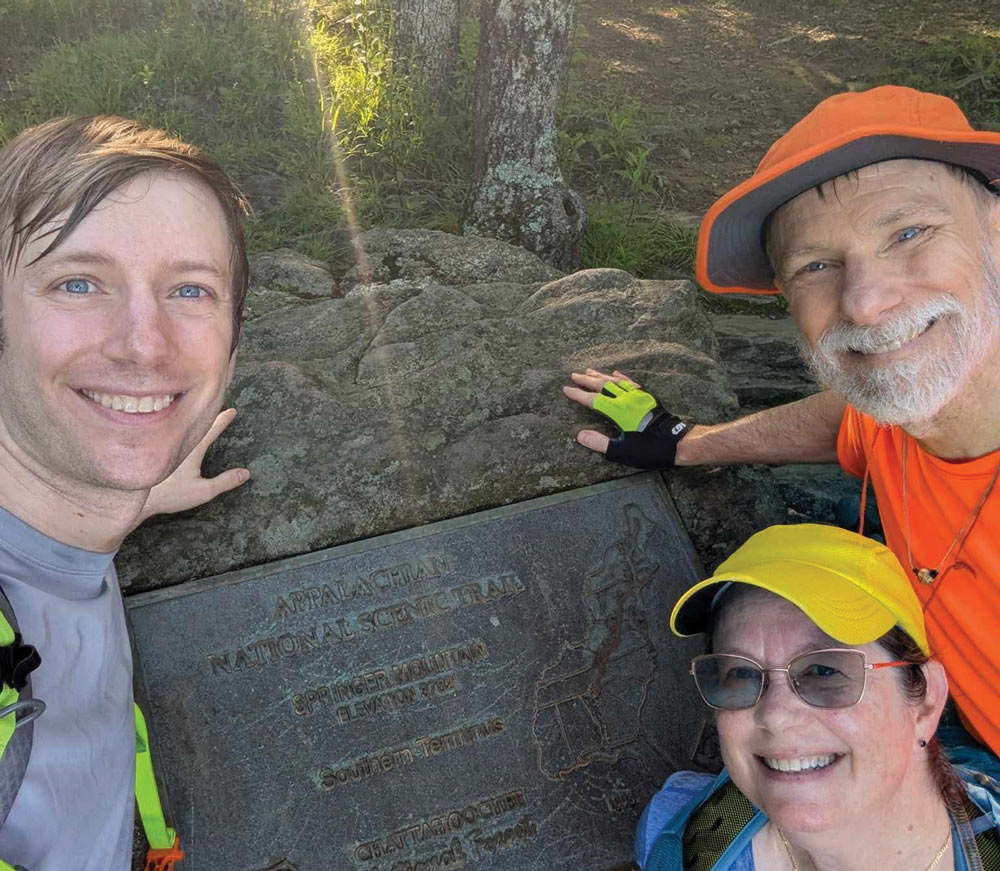


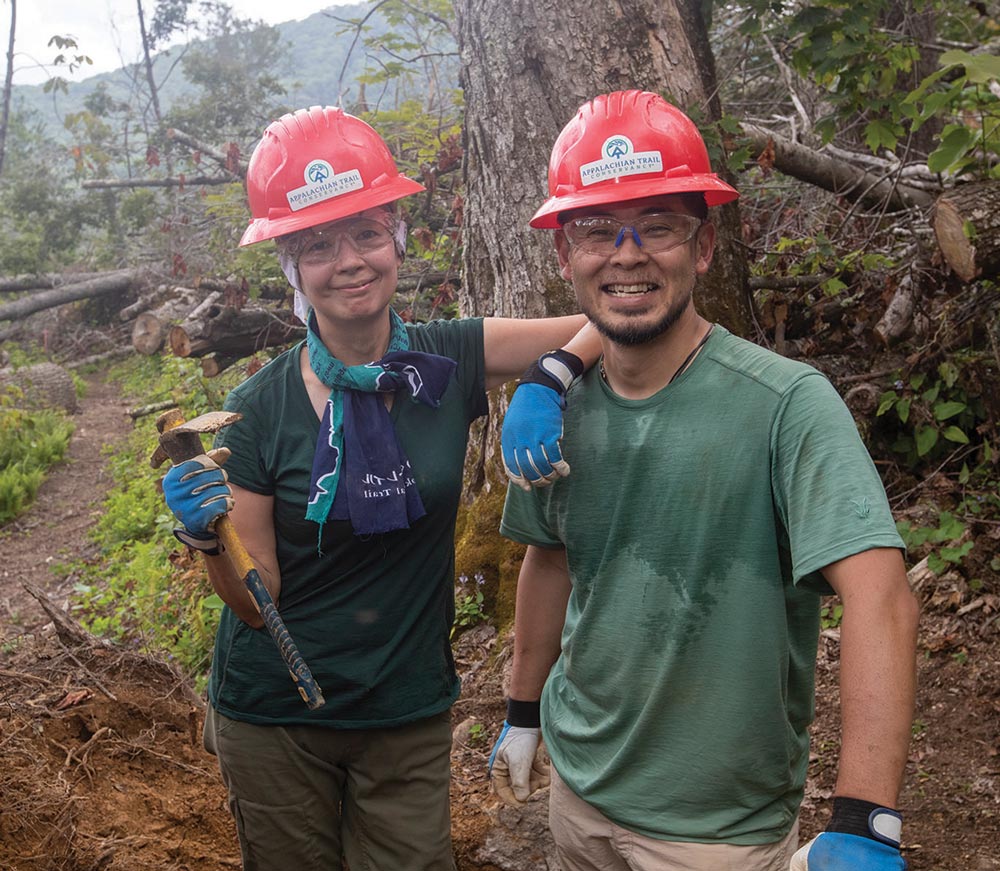


Celebrating the 2025



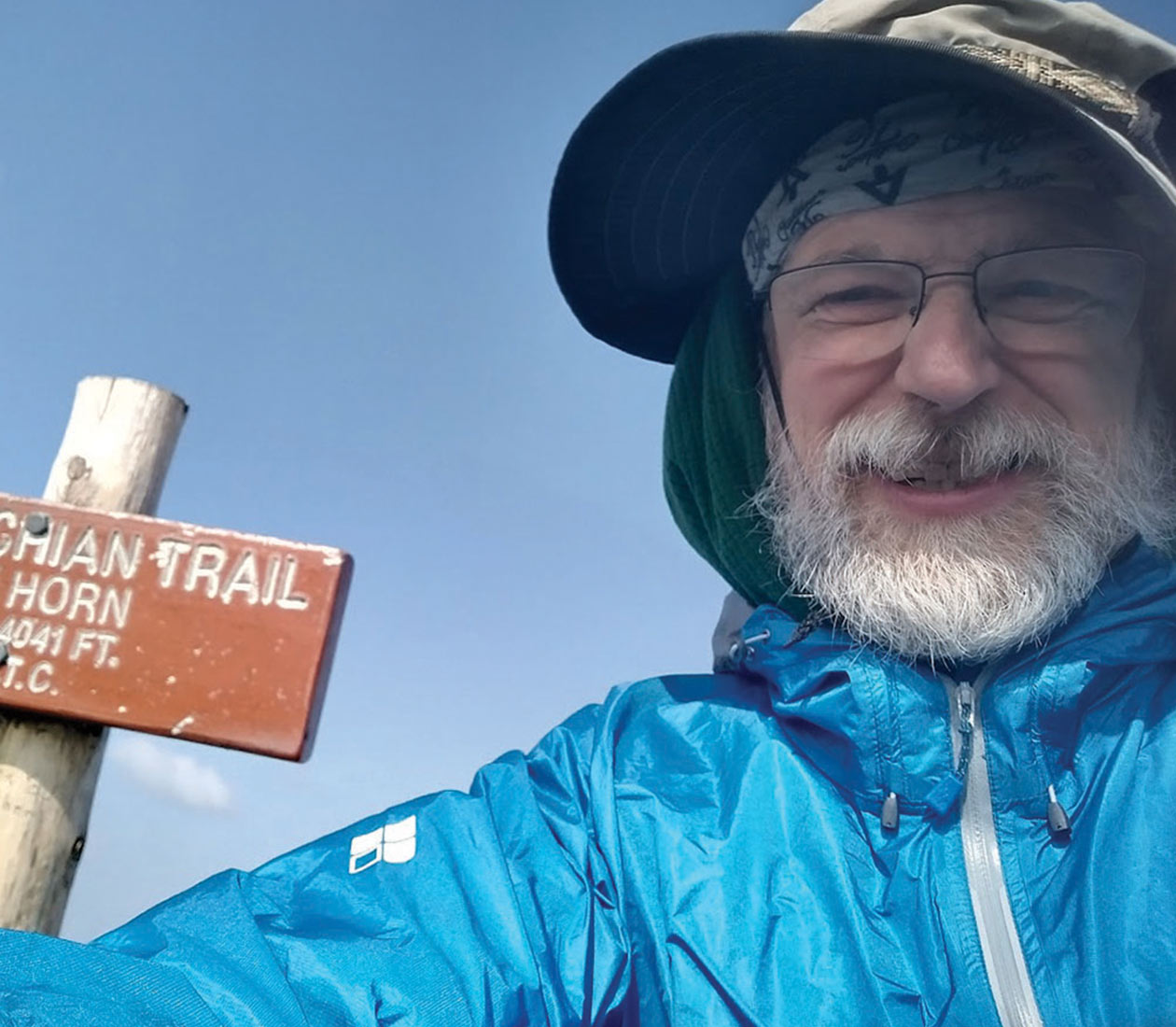


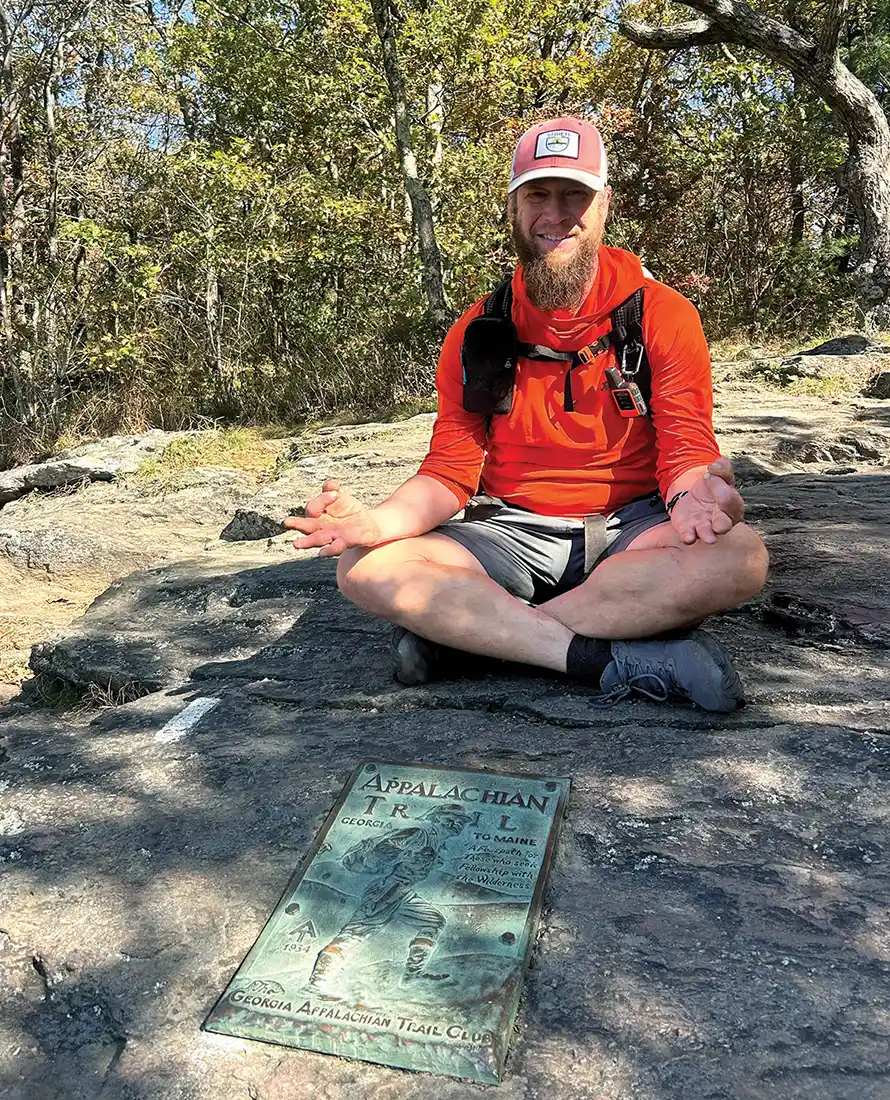
Planning to embark on your own 2,000-mile journey? Register your section- or thru-hike with the ATC at
appalachiantrail.org/RegisterYourHike
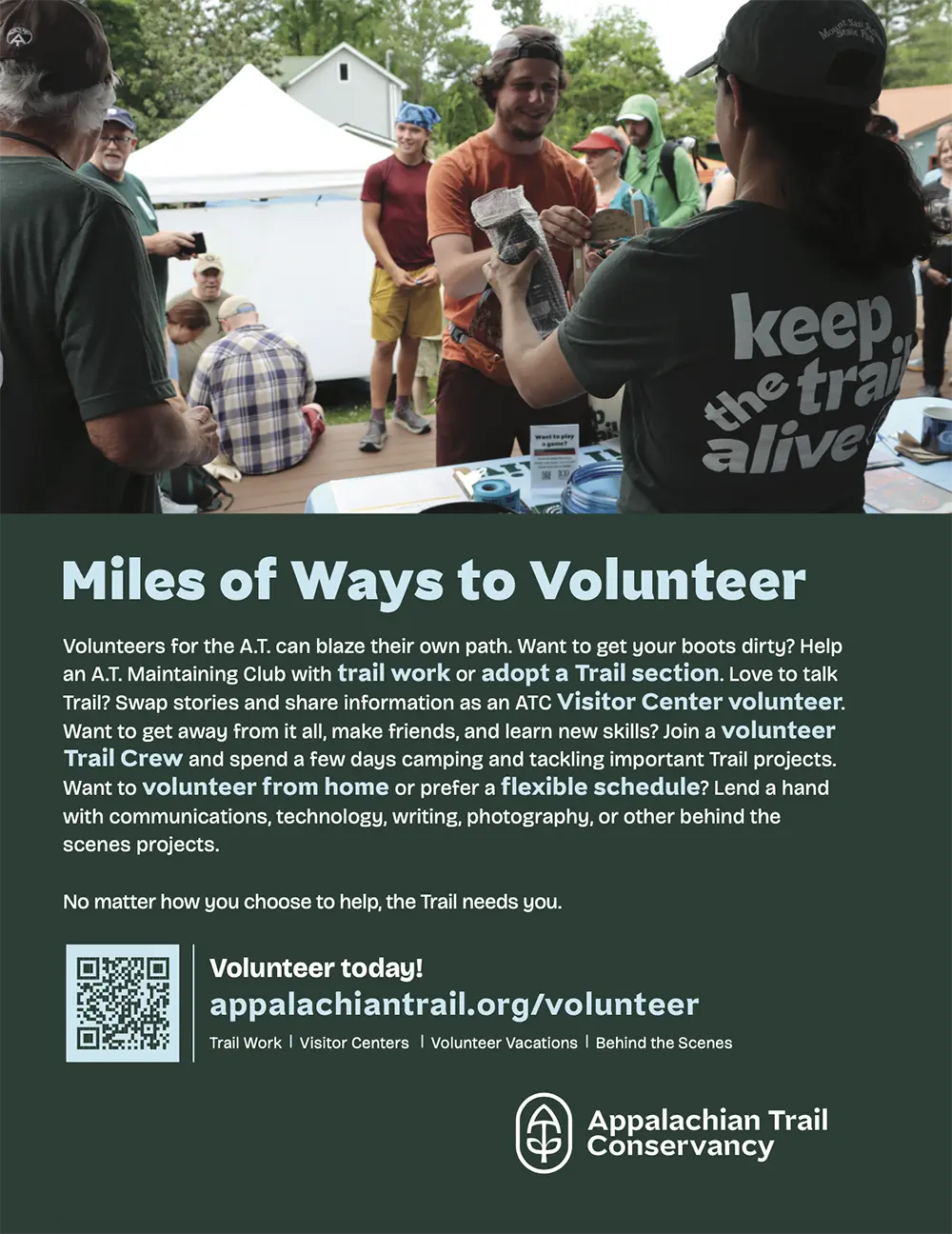
PHOTO COURTESY OF UNSPLASH

This generous gift to ATC’s Centennial Campaign will advance local projects and support conservation partners in collectively protecting over 200,000 acres of the Appalachian Trail landscape. The initiative focuses on protecting clean water, wildlife habitat, working farms, and treasured outdoor spaces while strengthening local communities and long-term regional resilience. It includes acquiring and conserving land along the Trail and within its federally protected corridor, ensuring the landscape remains healthy, connected, and resilient so future generations can continue to experience its transformative power.
The Dunleavy Foundation, founded by Dr. Keith Dunleavy and Dr. Katherine Kirby Dunleavy, is a private foundation focused on investment in organizations, people, and ideas that promote sense of purpose, self-reliance, impactful leadership, and a lasting benefit to society. Keith’s love for the Appalachian Trail began on countless hikes during his years in the Boy Scouts and later at Dartmouth College, with the Dartmouth Outing Club, an A.T. Club. Katherine grew up in the Blue Ridge Mountains of Western North Carolina near the A.T. For her the Trail represents not only a landscape to discover, but one that shaped her earliest sense of place, purpose, and home.
As part of the ATC’s Centennial Campaign, this gift will amplify the commitment to protect, manage, and advocate for the Appalachian Trail and its landscape so it can remain a place of life-changing discovery.
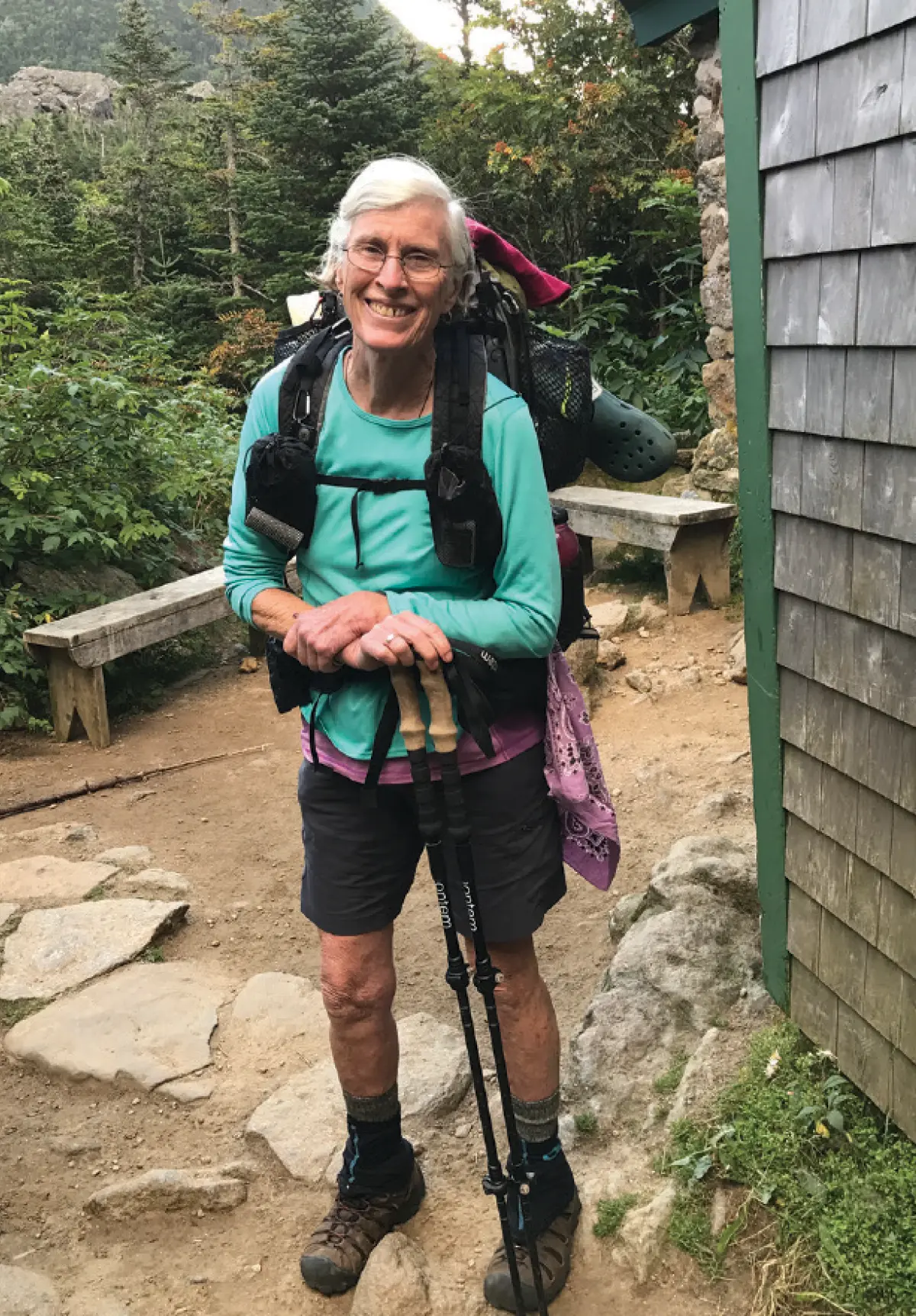


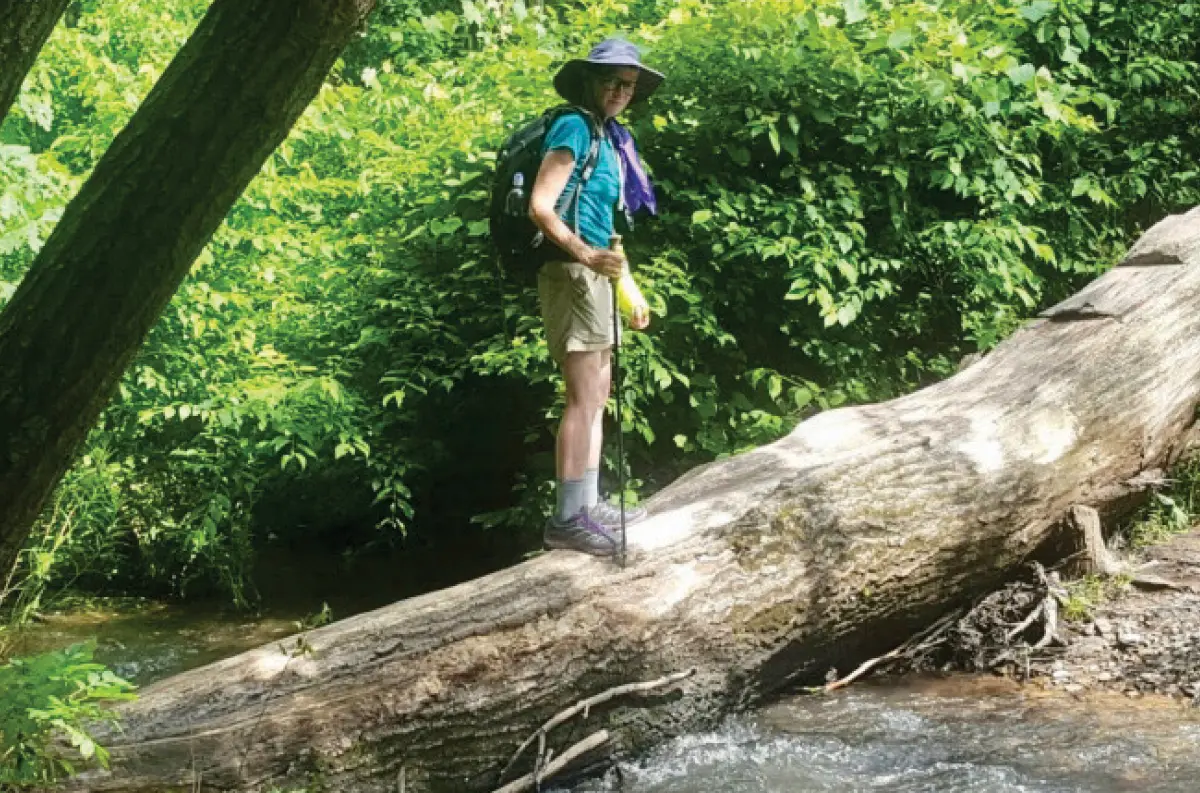
In January 2021, I was diagnosed with pancreatic cancer. Like many people facing that diagnosis, I had to confront the high likelihood that I would be dead in six months.
But I held onto the lessons from the Trail. The mindset of strength and determination, knowing that I could persevere, helped carry me through treatment. During my thru-hike, I learned that courage doesn’t mean you aren’t afraid. It means continuing forward even when you are.
I also learned that my mind could ask my body to do incredibly difficult things…and it would. I had hiked all 2,000+ miles of the Appalachian Trail at age 67. I had crossed rivers, broken my wrist, walked for hours in the rain, and pushed through exhaustion and fear.
So, when I faced months of brutal chemotherapy and major surgery, I reminded myself of something simple: If I could hike the Appalachian Trail, I could endure this, too.”


Yes, there was a lot of ‘Type II’ fun – scaling vertical rock faces, falling into bogs, crossing swollen rivers, facing down a pack of very curious mountain goats – but I found that traveling at two miles per hour I became much more attuned to small joys: the way the morning light played through the trees, a symphony of bird song on a cliff, the first signs of spring, and dry clothes and hot soup after a long, tough, wet hike.
I also learned to admire the power of raw persistence. Of water and ice slowly sculpting the mountains over eons; of my fellow thru-hikers marching forward each day cold, wet, or cold and wet, and always hungry; of discovering that there was no mountain I couldn’t summit as long as I put one foot in front of the other.”

This rare expanse of connected, undeveloped land faces constant pressure from development and a changing climate, which have negative impacts on biodiversity and ecological integrity throughout the A.T. landscape. To help address these threats, Protect includes six high-impact initiatives.
A.T. Community™ Program was established in 2009 to assist trailside communities with sustainable economic development through tourism and outdoor recreation. To date, 56 communities have joined the program, and this growing network needs increased regional collaboration, access to funding, and planning resources.
GIS Mapping Capacity Building, a pilot program in Pennsylvania, provides partners with fast and reliable conservation and recreation data to inform their land management and protection decisions. Funding will allow the ATC to expand access to more Trail states.
Landscape Conservation Program, led by the ATC, is an ongoing effort to build trust and engagement with conservation partners from Georgia to Maine. Continued funding for this program will allow us to identify and act on opportunities that arise to expand the protected land surrounding the Trail.
Natural Resource Stewardship throughout this landscape, and at this scale, requires a unifying entity like the ATC to be successful. We seek to accelerate the pace and scale of this critical work to keep up with the changing environment.
Scenic View Protection involves documenting and assessing every view along the Trail to create a comprehensive inventory. Additional funding is needed to complete the first inventory of views.
Wild East Action Fund has enabled the protection of more than 88,000 acres in all 14 states that the A.T. traverses. (See Trailhead page 16 for information on 2025 recipients and page 50 for details on a recent transformational gift.)
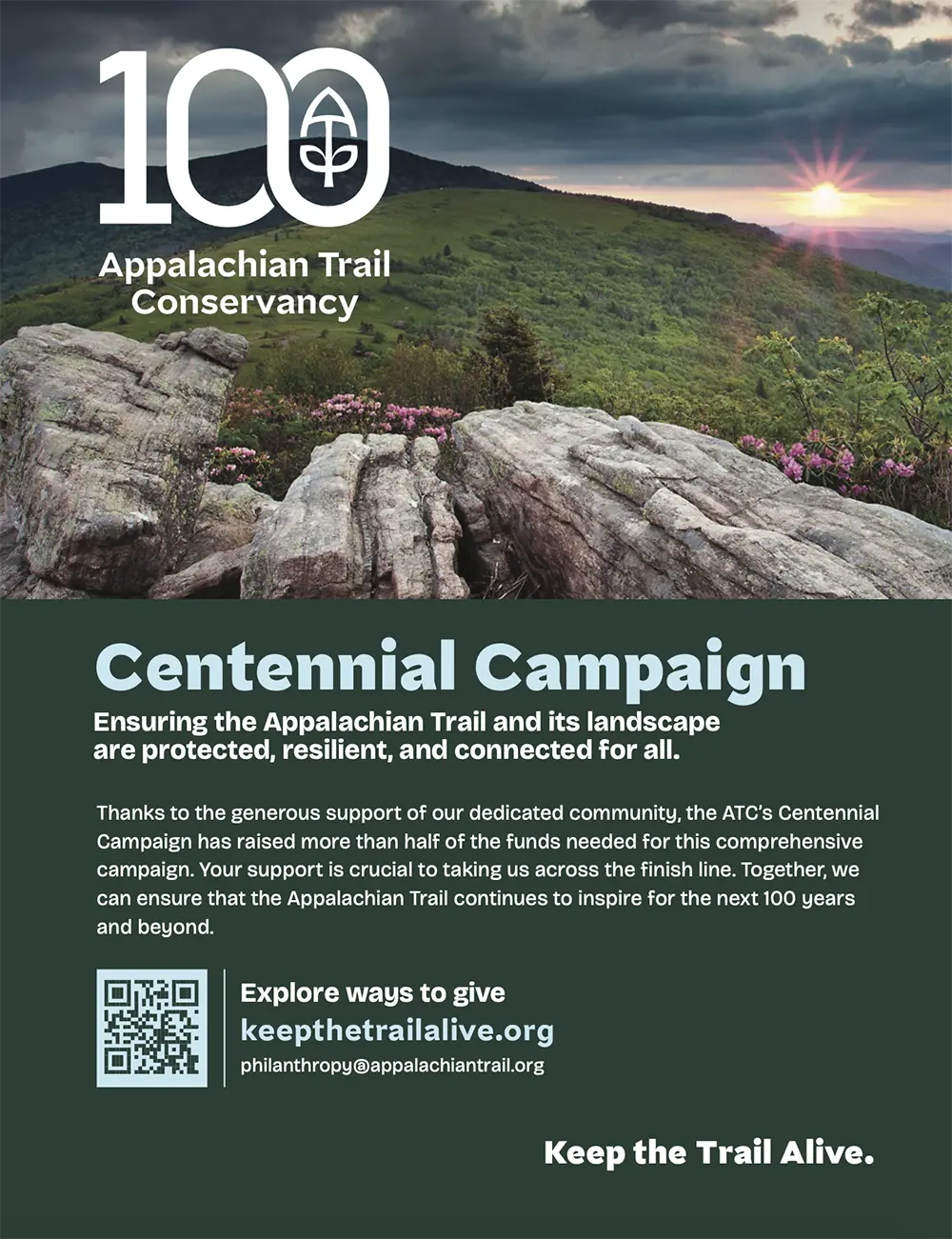
The ATC’s Centennial Campaign is a comprehensive, five-year $50 million fundraising campaign. It includes areas of greatest need, like ongoing operations and mission fulfillment, as well as program expansion and growth opportunities, like the high-impact initiatives mentioned above.

Photo by Eliza McGraw
For me, that connection began as a hiker. While hiking the 100 Mile Wilderness, I came to appreciate not only the beauty of the landscape, but also the Trail communities and the countless volunteer hours required to care for it. The Appalachian Trail is far more than a footpath — it offers perspective, challenges individual limits, and creates a profound sense of belonging.
As the Appalachian Trail Conservancy (ATC) enters its second century, the Trail stands as a powerful example of enduring public–private partnership. Federal and state agencies — including the National Park Service, the USDA Forest Service, and state partners across the Trail corridor — play a critical role in protecting the land and ensuring the Trail’s safety and long-term viability for its 16.9 million annual visitors. Their support is especially vital in times of need, such as the rebuilding and restoration efforts following Hurricane Helene.
Yet public support alone is not enough. Private philanthropy is what sustains and elevates the broader Trail experience. From advancing conservation across the Appalachian landscape to supporting education, volunteer programs, and long-term stewardship, private giving fills the essential gaps that public funding cannot. This balance — public investment to protect the land, paired with private philanthropy to strengthen and sustain the mission — is what keeps the Trail alive.
When I joined the ATC’s Board of Directors, I deepened my commitment by becoming part of the A.T. Trailblazers through leadership giving. Philanthropy is one of the most meaningful ways we can give back to a place that has shaped and enriched so many lives, and it reflects a shared belief in the Trail’s future. We are mindful of the trust placed in us by our members, donors, volunteers, and public partners, and we strive to lead by example.
Generous private giving has already made meaningful impacts. Since the public launch of the Centennial Campaign, supporters have helped raise $41 million toward a $50 million goal to safeguard the Trail and its surrounding landscapes for the next century. Transformational gifts — from the Dunleavy Foundation’s $5 million commitment to expand the Wild East Action Fund, to the Winchester Family Foundation’s endowment supporting sustainable overnight sites, initiated by my fellow ATC Board Member Greg Winchester — are helping ensure that the Trail endures for generations.
Equally essential are the volunteers, whose dedication brings the Trail to life each day. Thousands contribute hundreds of thousands of hours annually to maintain the footpath, care for shelters, and preserve the Trail’s unique character.
Today, more than 30,000 members and supporters, thousands of volunteers, and hundreds of partners sustain the Appalachian Trail. This shared commitment — public and private, institutional and individual — ensures that the Trail endures.
The Appalachian Trail has thrived for more than a century because people have come together to protect it. Looking ahead, the ATC Board of Directors remains committed to stewarding this irreplaceable resource with care, vision, and accountability.
Above all, we are deeply grateful. Together, we will continue to Keep the Trail Alive.

From the very beginning, volunteers have been essential to the creation and stewardship of a national treasure unlike any other. The A.T. requires approximately 200,000 hours of work each year to ensure the Trail, its features, and access points are open, connected, and maintained. Each volunteer’s work has a ripple effect that inspires a connection with nature by the millions of people who step foot on the Trail every year.
To learn more about volunteer opportunities visit: appalachiantrail.org/volunteer
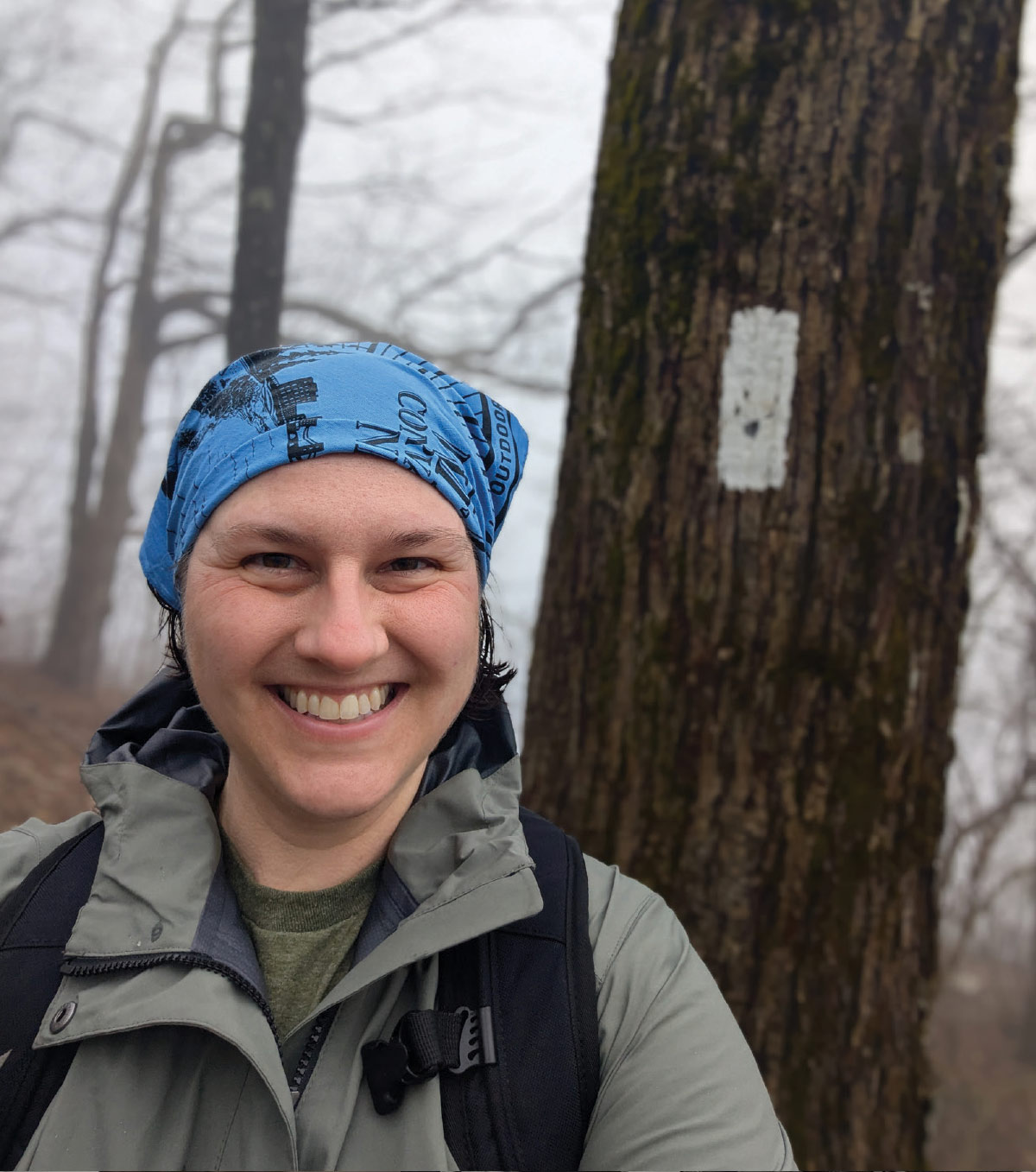
Photo courtesy of Monica Mogilewsky
But VUM work is not simply a matter of numbers. It’s also helping people to understand important concepts, such as how more visitors does not always equal more impact to the Trail and the A.T. experience. The choices of individuals matter a lot! For example, a group of ten hikers that chooses to hike in the center of a muddy trail causes less damage than an individual hiker who chooses to avoid the mud and hike on the Trail edge or off-Trail. The many small choices individual visitors make really add up — for good and for bad. Diligently practicing Leave No Trace principles truly protects the Trail and other visitors’ Trail experience.

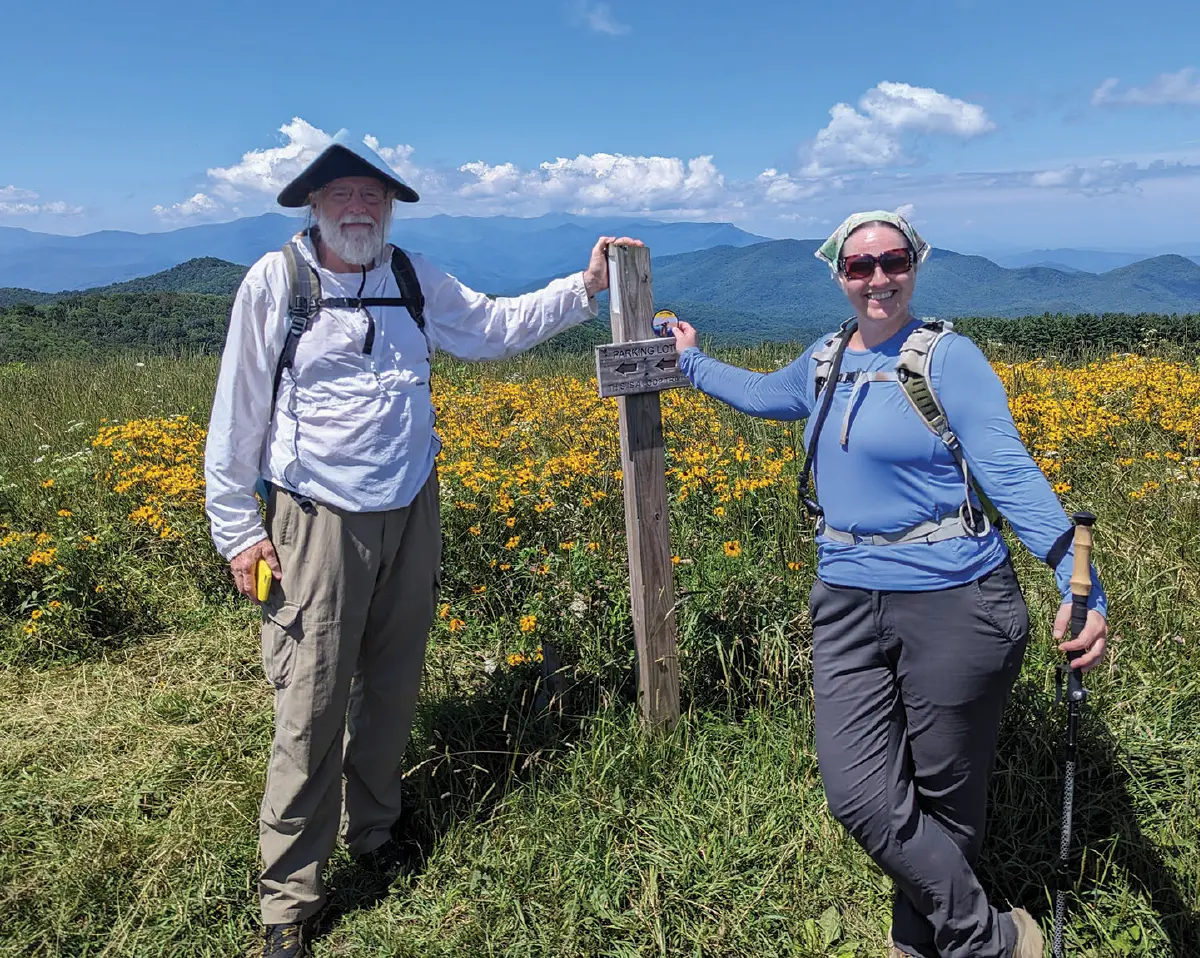
Photos courtesy of Monica Mogilewsky
It turns out that doing research with lemurs in Madagascar provided me with a lot of skills applicable to work on the A.T.! I work with great folks from many different cultures and regions (spend half an hour with a Trail advocate from Georgia and one from Connecticut, and you’ll see what I mean!). Trail conditions often limit what and how data can be collected, with no electricity, limited or no connectivity, challenging terrain, and the constant uncertainty of the weather. In Madagascar, I learned how to maintain data quality when conditions are harsh and communicate results despite differences in background and sometimes differences in language! These skills are just as applicable and important for my work at ATC. A part of my heart will always live on the A.T., and conserving the Trail is meaningful, rewarding work.

In Georgia, I meet the Trail in its most anticipatory form. Spring brings northbounders with fresh gear, big hopes, and packs that are often heavier than they need to be. Many are still carrying the version of themselves they had at home, along with too much food, too many clothes, and expectations they have not yet had to test. Their questions sound practical enough. How far to the next water source? How hard is the next climb? Where should I camp tonight?
But beneath those practical questions, there is often another one, even when it goes unspoken: Am I ready?
That question lingers in the air throughout Georgia. You hear it in nervous laughter. You see it when people study maps, retighten straps, or pause to ask one last question. The southern end of the Trail buzzes with unmistakable energy, hopeful, uncertain, and alive with momentum.
There is a certain look people get near the end, shaped by fatigue, pride, and disbelief. Katahdin is close enough to feel real, and that changes a person. Some hikers grow reflective. Others get restless. Some begin to hurry without realizing it. They can sense the finish line, and the pull of that ending can make them less attentive than they were weeks before.
Southbounders reveal the contrast even more clearly. In Maine, they are just beginning, strong and prepared, yet still untested by what the months ahead will ask of them. In Georgia, they are near the end of something large and difficult, and often move with more care, aware of what a bad decision can cost.
That is what working both ends of the Trail has given me. I get to see the same footpath at completely different moments in a hiker’s story. One stands at the edge of the unknown. Another stands near the edge of completion. One wonders how far they have to go. Another wonders how much longer they get to live this way. The Appalachian Trail is never just one story; it’s thousands of stories moving at once.
Many people assume Ridgerunners are out there to enforce rules. My experience has been different. At its heart, the job is about care, education, and stewardship. It’s about noticing problems early and addressing them in a way that helps both the hiker and the Trail.

In Maine, the lessons shift, but the stakes remain. For northbounders, it’s often about guarding against complacency in the final stretch. For southbounders, it’s about setting the tone from the very beginning. The northern miles have a way of humbling even the strongest hikers.
This work has made me pay closer attention not only to hikers, but to the Trail itself. The A.T. can seem permanent when you are standing on it, but it’s more fragile than many people realize. Its condition is shaped by ordinary choices that matter: where we camp, how we wash, whether we step through mud or around it, whether we leave a shelter better than we found it. Any one of those choices may seem small, but repeated over time, they leave a mark. What one person does casually, thousands of others inherit.
What I love most about the Appalachian Trail is that it asks something of you. It demands your attention and participation. Mile after mile, it reminds you that this place has been cared for by people who may never meet, yet still take part in the same long act of stewardship. That is what I have come to admire most. Not only the endurance of hikers, though there is plenty of that. Not only the beauty of the landscape, though that remains immense. What stays with me is the shared responsibility. The understanding that this place endures only if people continue to show up for it.
If I could offer any advice to someone stepping onto the Trail, it would be simple. Start slower than you think you need to. Ask questions. Accept help when it’s offered. Give help when you can. Learn Leave No Trace not as a list of rules, but as a way of showing respect. And remember that giving back does not have to be a grand gesture. It can be as small as picking up what is not yours, gently sharing what you know, or making the next person’s day a little easier.
I don’t think of Springer Mountain and the 100-Mile Wilderness as simple opposites. What interests me is how both places magnify a hiker’s state of mind. I have watched people pass through them in opposite directions, at the beginning of something and again near the end, and each time the Trail seems to bring something hidden closer to the surface. That, to me, is the gift of the work. I get to watch the Trail strip things down until what remains is harder to hide. In the end, what comes forward is often the part of a person that was there all along.
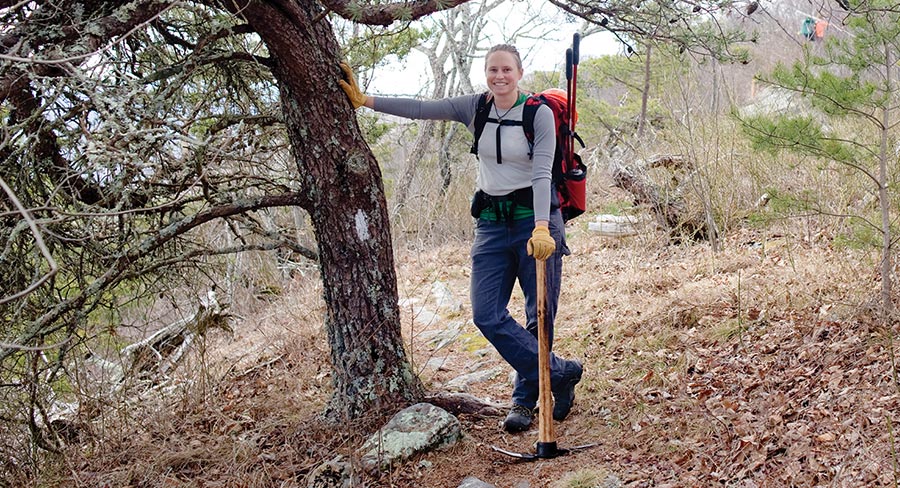
That performative feeling isn’t always so dramatic, but every long-distance hiker gets used to being an object of curiosity to the (generally kind) people they meet along the way. You can anticipate the questions — pack weight, daily mileage, have you seen any bears? As a recent college grad, at the age of 23, there was one question I really didn’t like: Why?
The problem was that I met people every day with inspiring answers to this question. They were hiking the A.T. because they had just survived cancer and had taken a fresh look at their bucket list. They were veterans, walking off the war after a tour of duty in Afghanistan. They were celebrating — 20 years of sobriety or retirement from a distinguished career. They were grieving the loss of a loved one or the end of a marriage.
Not only was I a privileged young person, blatantly putting off the commitments of adulthood, but the thru-hike wasn’t even my idea. My best friend Margaret “Hellbender” Worthington announced in eighth grade that we would hike the Appalachian Trail together when we were grown. I agreed to that plan, and eight years later, there we were.
My standard answer to the question started as a dodge, but rang truer with each step on the Trail, and I still come back to it today. I would say, “I don’t think it matters as much why you start, as why you keep going.”
This gave me a way to talk about all the things I was learning along the way. During my thru-hike, the simplest pleasures felt like exquisite luxuries. It wasn’t hard to connect with folks of all ages and backgrounds when you met them on the Trail. The kindness of strangers restored my faith in humanity again and again. Over time, I felt more at home in the forest than in town, as if I might belong in nature rather than merely visiting it.
I did not know that I was also discovering a calling and how much deeper my connection with the A.T. could grow. This spring marks 20 years since I embarked from Amicalola Falls State Park, and 15 years since I was first hired by the ATC as an Assistant Crew Leader on the Konnarock Trail Crew. “Dinosaur” from the Class of 2006 could not have guessed that it was even possible to build a career protecting the trail she walked on, nor could she have fathomed the complexities of managing that “simple footpath.”
While it’s fun to reminisce, I still prefer to answer the more interesting question of why I keep going. My answer is still about what I’m discovering along the way: The staggering collective power of a motivated and capable volunteer community. What the Trail means to people near and far and how it can bring us together in spite of our differences. The satisfaction of completing a project that was dreamed of for decades, whether that’s a trail relocation or a bridge or land conservation to protect a treasured view.
I’m a parent now, with the typical anxieties about what kind of world we’re leaving my children and their classmates. One antidote is the joy I find in bringing them to my favorite places. And I know the long, white-blazed trail will always be there to welcome them into the forest.