


The sheer magnitude of historical events converging with the A.T. challenged me to find the common thread of the mountains and gaps as barrier, passage, and life source

THE DRIVE FROM MARYLAND INTO WEST VIRGINIA — OVER THE Potomac and then Shenandoah rivers — is my singular favorite stretch of road. Not just because it is where I used to play, float lazily on innertubes, and attempt to kayak when the rapids were low in the summers of my college years, but for the sheer magnificence of the views and the deep reverence I feel for the history surrounding the area. History flows like a river along the length of the A.T. In some areas, like the confluence of the Shenandoah and Potomac in Harpers Ferry, it flows quite literally. U.S. history and culture are intertwined inextricably in so many places along the Trail that it is easy to liken the footpath to a portal for time travel. In this ancient but somehow ageless Appalachian mountain range, time loops from past to future and back again revealing old and new messages — of the significance of dazzling scenic views, the stories behind some of the oldest historical places in the U.S., and the importance of cultural diversity in the outdoor-loving recreational community.
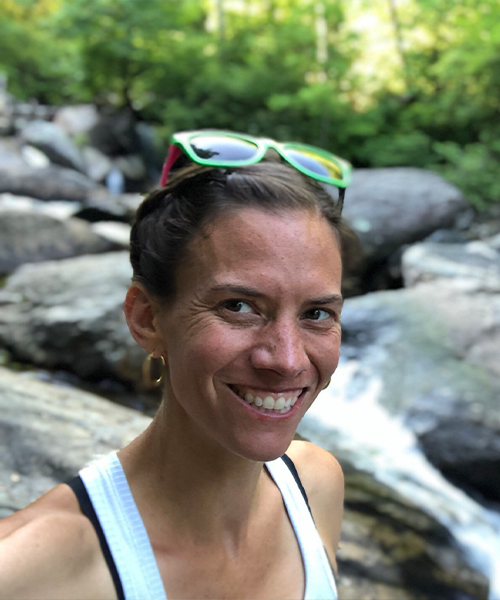
Jennifer Pharr Davis
Jennifer Pharr Davis is a hiker, author, and speaker who has hiked more than 14,000 miles and traversed the Appalachian Trail three times. In 2011, she set the overall unofficial speed record on the A.T. (averaging 47 miles per day for 46 days). She has also logged over 600 miles pregnant and over 1,000 miles while nursing. She founded the Blue Ridge Hiking Company — a premier guiding service in the southeastern U.S., which recently launched a lightweight hiking and backpacking boutique in Asheville and a bunkhouse on the A.T. in Hot Springs, North Carolina. “It was a joy to write this piece because the scenic views along the Appalachian Trail are the first place where I felt fully beautiful, self-assured, and a part of the natural environment,” she says. Jennifer is also the author several critically acclaimed books, including Becoming Odyssa and The Pursuit of Endurance.

Audrey Peterman
Audrey Peterman grew up in the proverbial “village” that it takes to raise a child. Free to roam the lush Jamaican countryside with a host of village children, she feasted on mangoes, guavas, and limitless fruits and sat on the riverbanks observing life in the water while doing her homework.
"When I migrated to the United States and discovered the National Park System, I was shocked to find the disparity in visitorship and employment along racial lines,” she says. She and her husband Frank have been striving to remedy this situation through consulting, writing, speaking, and physically introducing people to the parks. She served five three-year terms on the Board of Trustees for the National Parks Conservation Association and is co-founder of the Diverse Environmental Leaders Speakers Bureau.

Tim Bower is an illustrator living and working in eastern Pennsylvania. Over the last three decades, his editorial work has been commissioned by major U.S. newspapers, magazines, and book publishers, and has been recognized by the illustration/design industry. He has also produced artwork for advertising campaigns, annual reports, and character design for film for clients including: Sony, Nike, Volkswagen, Red Bull, ESPN, Major League Baseball and Blue Sky Studios. Tim has served on the faculty of several college illustration programs, most currently the University of the Arts in Philadelphia. “As an editorial illustrator I’m offered assignments on current events most frequently, so the occasional historical or fictional themes are always welcome and have become preferred,” he says. “This article, with its substantial conceptual heft was a pleasure to dig into, not only for its interesting imagery but for its historical and cultural significance.”
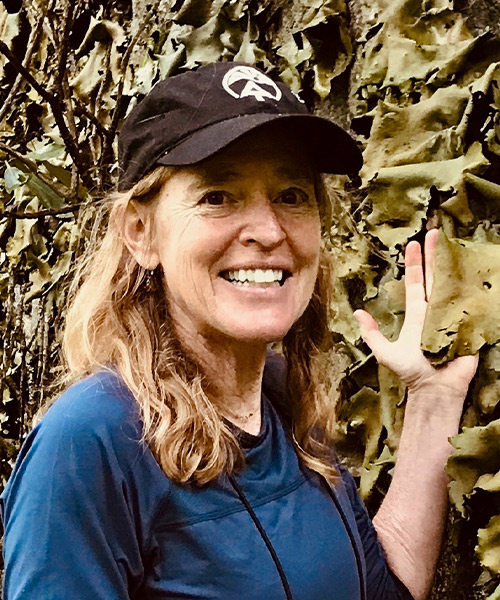
After a deep dive into history, Marina Richie has a piece of advice for fellow hikers: If you want to time travel, pause to touch a boulder and feel the passage of human history grounded in geology and shaped by the north-south mountain range.
Marina often writes about the confluence of nature and culture, and authored the winter 2019 feature, “Wild Skyway.” “Researching this piece offered new and often emotional insights into the Cherokee Trail of Tears, and those who traversed the Underground Railroad, as well as stories from the Revolutionary and Civil wars, and the CCC-era,” she says. “The sheer magnitude of historical events converging with the A.T. challenged me to find the common thread of the mountains and gaps as barrier, passage, and life source."