



- issue 98 | PARTNERSHIP
-
FEATURES
-
After a visit to the Keffer Oak in Virginia, A.T. historian Mills Kelly contemplates the importance of trees — iconic and otherwise — along the Trail and our relationship to them.
-
Alongside ATC staff, A.T. Club volunteers, and A.T. Ridgerunners, the equestrian community helps with vital Trail management during the chainsaw window in the Great Smoky Mountains National Park.
-
A retiring Committee Chair implements effective succession planning and a new leader steps forward, ensuring that the essential relationships among the ATC, its partners, and committed A.T. advocates stay strong to help keep the Trail alive.
PHOTO BY mark olsen / unsplash
Contents: The sheathed woodtuft (Kuehneromyces mutabilis) is an important decomposer found in forest habitats in the Appalachians.
photo by Melinda Fawver / unsplash

Our mission is to protect, manage, and advocate for the Appalachian National Scenic Trail.
The Appalachian Trail and its landscape are always protected, resilient, and connected for all.
Cinda M. Waldbuesser | President & CEO
Karen Cronin | Chief Financial and Administrative Officer
Hawk Metheny | Vice President of Regional and Trail Operations
Dan Ryan | Vice President of Conservation and Government Relations
Jeri B. Ward | Chief Growth Officer
Caroline Ralston | Associate Vice President of Marketing & Communications
Genevieve Andress | Relationship Marketing and Membership Director
Karen Ang | Managing Editor
Traci Anfuso-Young | Art Director | Designer
Ann Simonelli | Director of Communications
Michelle Presley | Communications Manager
Maddy Kaniewski | Digital Marketing Specialist
Luke Weir | Media Relations Specialist
A.T. Journeys is published on matte paper manufactured by Sappi North America mills and distributors that follow responsible forestry practices. It is printed with Soy Seal certified ink in the U.S.A. by Sheridan NH in Hanover, New Hampshire.
A.T. Journeys ( ISSN 1556-2751) is published by the Appalachian Trail Conservancy, 799 Washington Street, Harpers Ferry, WV 25425, (304) 535-6331. Bulk-rate postage paid at Harpers Ferry, West Virginia, and other offices. Postmaster: Send change-of-address Form 3575 to A.T. Journeys, P.O. Box 807, Harpers Ferry, WV 25425.
- Jim LaTorre | Chair
- Lisa Manley | Vice Chair
- Rich Daileader | Treasurer
- Yong Lee | Secretary
- Gregory Merritt | Representative to Stewardship Council
- Cinda M. Waldbuesser | President & CEO
- Renee Alston-Maisonet
- Grant L. Davies
- Eboni Preston Goddard
- Edward R. Guyot
- Bill Holman
- Roger Klein
- Naman Parekh
- Nathan Rogers
- David C. Rose
- Katherine Ross
- Rajinder Singh
- Greg Winchester
- Nicole Wooten
- Chad Wright
A.T. Journeys is published on matte paper manufactured by Sappi North America mills and distributors that follow responsible forestry practices. It is printed with Soy Seal certified ink in the U.S.A. by Sheridan NH in Hanover, New Hampshire.
A.T. Journeys ( ISSN 1556-2751) is published by the Appalachian Trail Conservancy, 799 Washington Street, Harpers Ferry, WV 25425, (304) 535-6331. Bulk-rate postage paid at Harpers Ferry, West Virginia, and other offices. Postmaster: Send change-of-address Form 3575 to A.T. Journeys, P.O. Box 807, Harpers Ferry, WV 25425.
-

Jeffrey Donahoe grew up in the Finger Lakes region of New York, which gave him a deep appreciation for summers of blue skies and lakes and densely wooded hills. Throughout his youth, he heard about the Appalachian Trail, as the Delaware Water Gap National Recreation Area was near his grandparent’s dairy farm in northwestern New Jersey. Since moving to Washington, D.C., 40 years ago, Donahoe has done a considerable amount of day hiking in nearby areas, including the A.T. at Harpers Ferry. Other favorite hiking spots include the Adirondacks, California, and in England’s Lake District. His dream U.S. hiking trips are Zion and Bryce Canyon National Parks.Donahoe is a freelance writer with a portfolio of nonprofit, mission-driven organizations. He’s also a volunteer interviewer for an ongoing oral history archive focused on the LGBTQ experience in Washington. His self-described “geek outs” are detective shows and plant- and night sky-identifier apps.
-

Heather B. Habelka is a freelance features writer with specialized training in motivational interviewing. Her bylines include A.T. Journeys, The Encyclopedia of Appalachia, Connecticut Magazine, Costco Connection, Natural Awakenings Magazine, The Boston Globe, Hartford Courant, Connecticut Post, and New Haven Register. A graduate of Southern Connecticut State University’s journalism program, Heather is a member of the American Society of Journalists and Authors (ASJA), the Society for Features Journalism, and the Women’s Media Group. She is currently writing her first work of fiction — a classic beach read. -
Mills Kelly is a lifetime A.T. Section Hiker, author, adventurer, and historian. His most recent book is A Hiker’s History of the Appalachian Trail, which tells the story of 100 years of hiking on the A.T. He is also the author of Virginia’s Lost Appalachian Trail, a deep dive into the many ways the A.T. changed the lives of people in Southwest Virginia and the single biggest re-route in the Trail’s history. He is currently hard at work on a biography of the first person to hike from Maine to Georgia (in sections) in the 1930s.When he’s not writing about the Appalachian Trail, Mills travels the world with his camera documenting the impacts of climate change on the natural world and local communities. His most recent expeditions have been to the Southern Ocean and Vietnam. Mills is a board member of the Appalachian Trail Museum and chair of the board of the Handmade Music School in Floyd, Virginia.
-

cynthia viola grew up in the mountains of North Carolina, regularly spending time hiking, mountain biking, and four-wheeling her way through the woods behind her home. She first section-hiked the A.T. when she asked a friend to teach her how to backpack, and instantly fell in love — despite her very ill-suited first attempts at packing entirely too much. From there, she accomplished her first official 125-mile section solo, acquiring her trail name “Brave Heart” from another hiker she befriended along the way. Beginning at Amicalola Falls, she has since hit small sections through the years (both solo and with friends) accomplishing about 600 miles so far. Cynthia has been a wedding and portrait photographer for 20 years and combines both loves regularly, taking her clients on adventure sessions through the mountains. You can learn more about her work at cynthiaviola.com.
It takes a Cooperative Management System with the ATC serving as a critical convener and connector among partners. We often talk about the three-legged stool: the ATC, the federal and state agency partners, and the Clubs and volunteers, all of whom are essential to the Trail’s stewardship and success. During my time with the National Park Service, including serving as superintendent of multiple parks, I learned firsthand that partnerships are essential to the success of parks.
The management of the A.T. is one of the best examples of a successful public-private partnership. It goes beyond one agency or organization working together. It’s a network of partners that stretches across 14 states.
We saw this in action after Hurricane Helene severely damaged a significant portion of the southern section of the Trail in 2024. The joint efforts of Clubs and volunteers, the National Park Service, the USDA Forest Service, the ATC, and the communities surrounding the affected sections meant the Trail was repaired and reopened much more quickly than if only one entity was managing it. It’s a success story amid the devastation Helene brought. And I believe that the importance of our partnerships is something we should strengthen as we continue to care for and enjoy the Trail.
Whether you are a day hiker, section hiker, or thru-hiker, you know there are countless reasons to love the Appalachian Trail. It offers time to slow down and quiet the noise of the world. It’s an opportunity to experience pastoral views of a working farm, hear the birdsong in a shady forest, or feel the refreshing coolness of a rushing stream. And we can do this in solitude or in the company of fellow hikers, even if it’s only a brief conversation with someone whose path we may never cross again.
The A.T. is a place to build and foster relationships. Growing up, I hiked a lot with my dad, and in each part of my life there was something different about walking the Trail with him. When I was younger, we’d find a new trail or historical marker together. Later, we had conversations while we hiked, helping us get to know each other as adults.

Photo courtesy of the ATC
With that notion in mind, I’m pleased to present our summer edition of A.T. Journeys. From a meditation on the trees along the A.T. to the unique collaboration needed to keep the Trail and shelters accessible in the Great Smoky Mountains National Park to the important roles that legacy and commitment play in A.T. Clubs, this issue explores the partnerships that keep the Trail alive. We’ve also included our annual Impact Report, which serves as a testament to the importance of our partnership with you — the supporters of the ATC.
Wishing you Happy Trails this summer.



PHOTOS COURTESY OF THE ATC
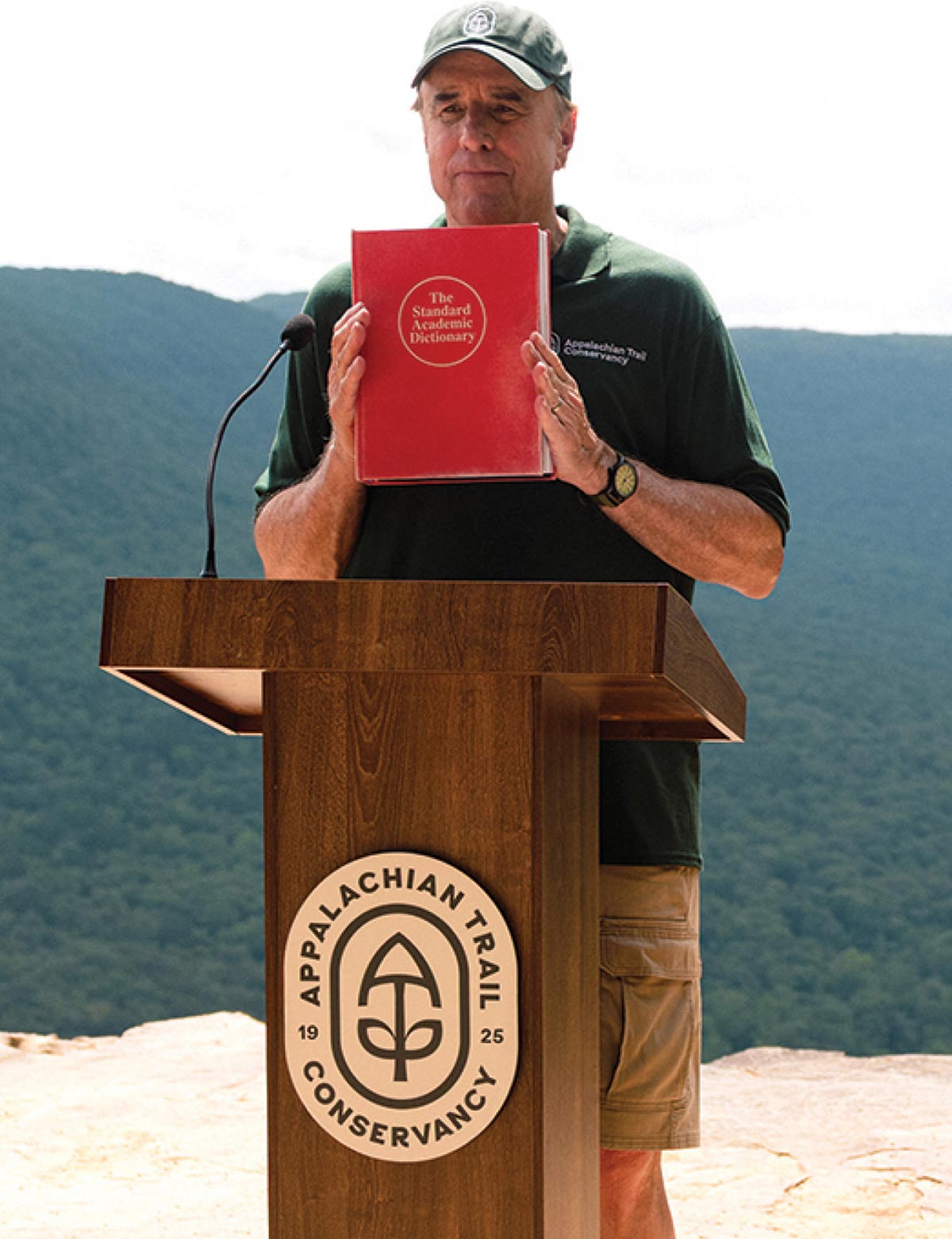
Photo courtesy of the ATC
The concept has caught on nationally, earning major press coverage, more than 30,000 petition signatures, and new awareness for the A.T. and the dedicated work of the ATC in keeping the Trail alive.
Now through August, outdoor brand Mammut will donate $1 (up to $15,000) for every signature in support of changing the definition.

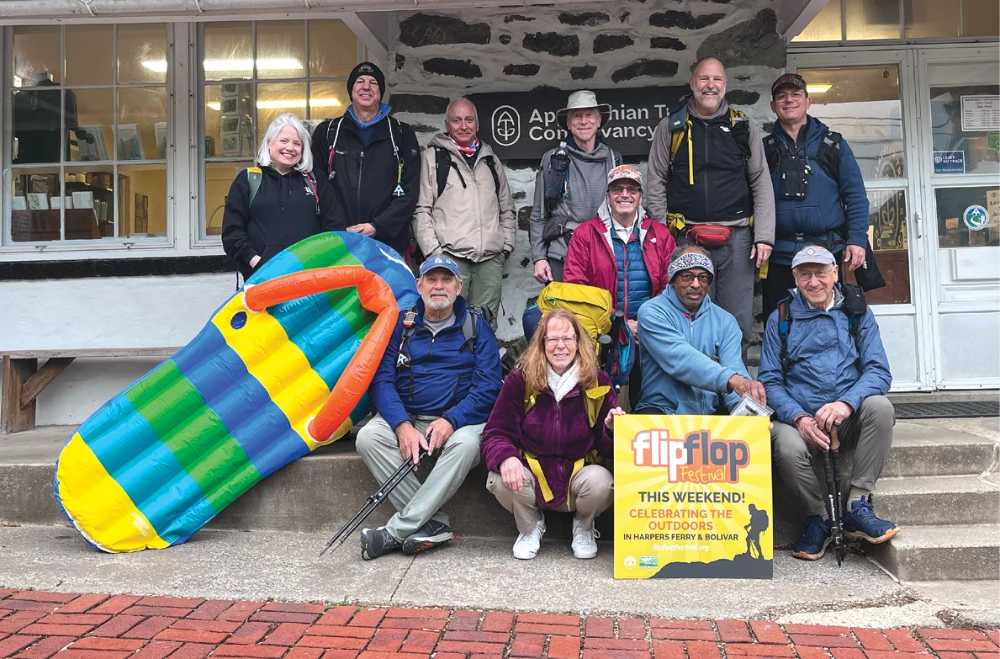
Raffles, hands-on demonstrations, and informal conversations spilled out onto the lawn, creating a welcoming space for both seasoned thru-hikers and first-time visitors. Even Mildred, the ATC’s beloved squirrel mascot, made the rounds and helped gather more than 850 “Take a Hike” petition signatures. It was a weekend that celebrated everything that makes the Trail community special, and the weather could not have been better.
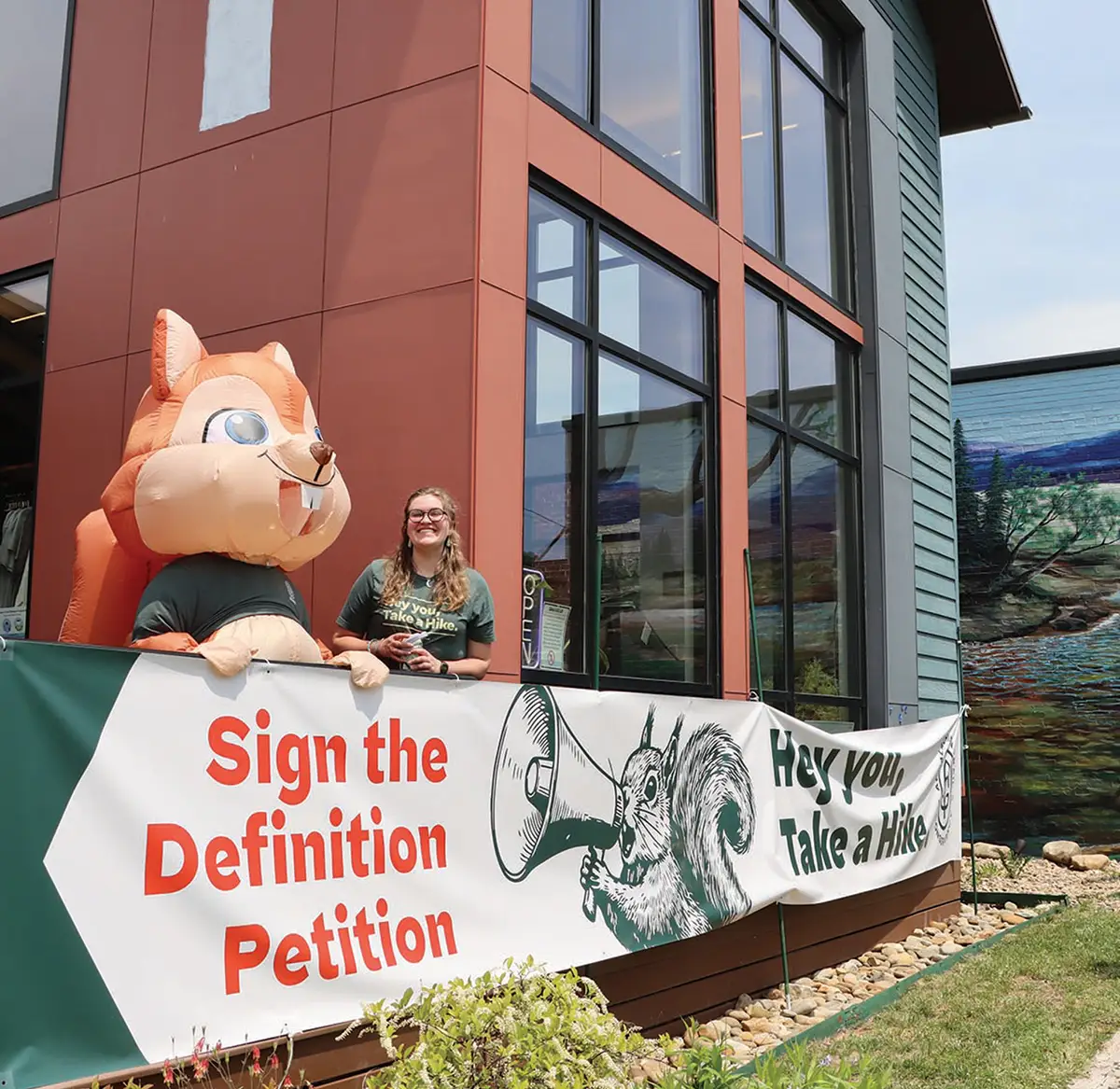
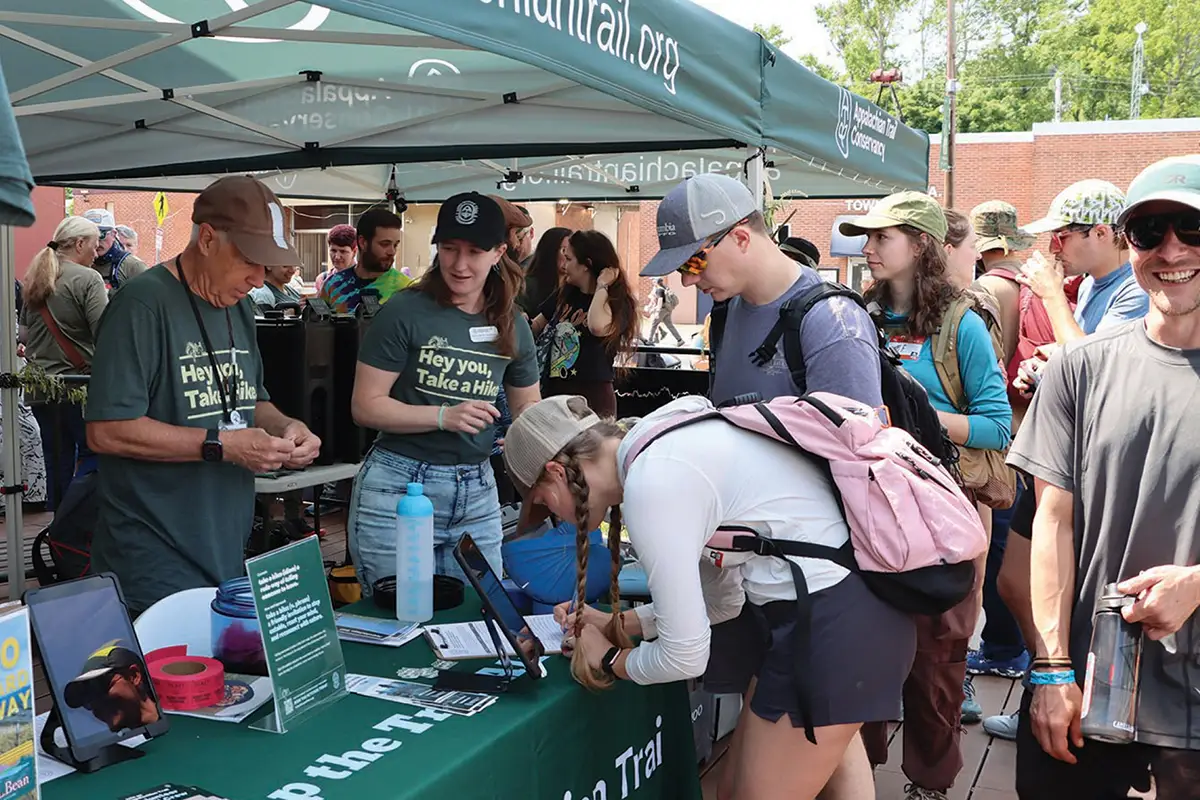
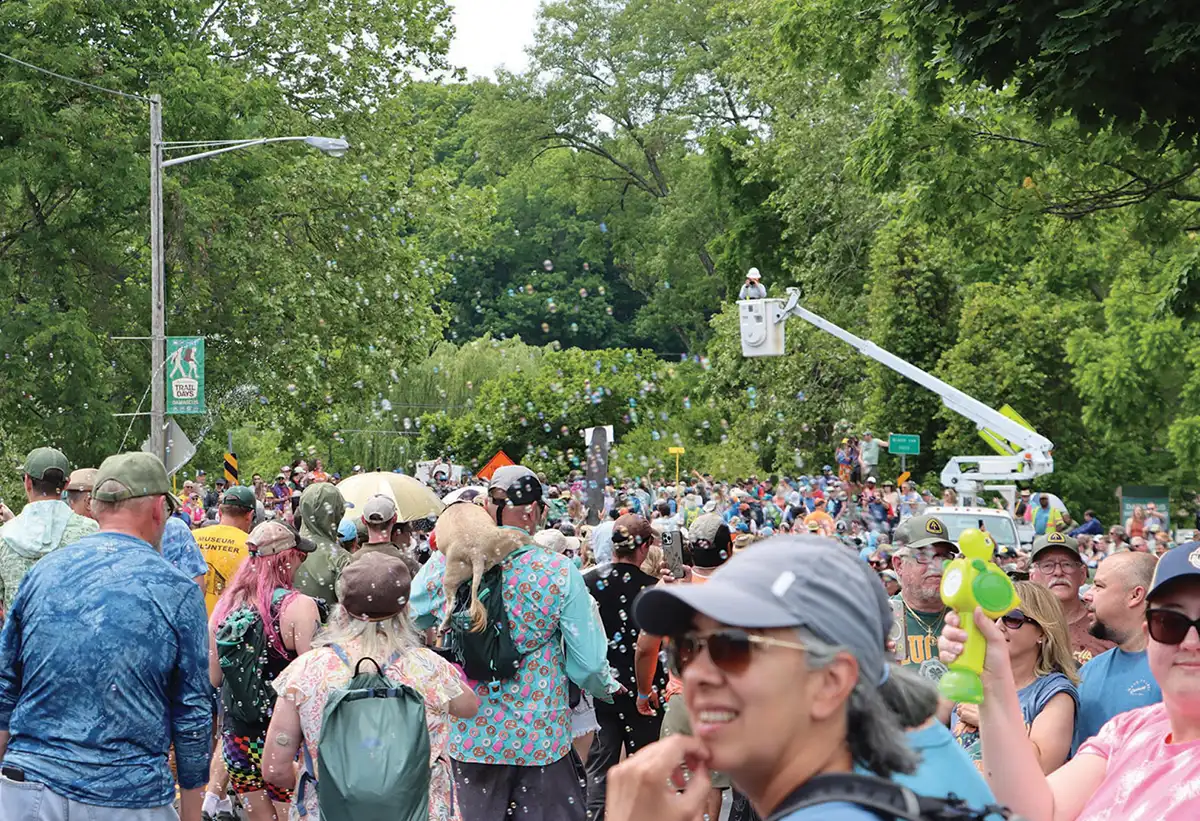



photo COURTESY OF THE USDA FOREST SERVICE
One of a few routes hikers take to summit Blood Mountain — the tallest mountain on the A.T. in Georgia — the 1.4 miles of newly blazed trail near Flatrock Gap is designed to better align with wilderness standards, improve long-term sustainability, and enhance visitor experience. It features a narrower tread and minimal constructed features.
The project required more than a decade of planning and started construction in 2023. Volunteers with the Georgia Appalachian Trail Club and the Appalachian Trail Conservancy’s Konnarock Trail Crew used traditional methods consistent with wilderness stewardship to replace the existing trail that had become degraded.
The previous route will be re-naturalized to reflect and preserve wilderness values.
Waldbuesser also highlighted the Appalachian Trail Centennial Act, the extension of the Legacy Restoration Fund, and the value of surface transportation policy to public land recreation, access, and connectivity — including trailhead design, roads to trailheads, culverts, and wildlife bridges.
The ATC’s engagement in policy is essential for the continued success of the A.T., in part because of the numerous federal laws that touch the Trail. Waldbuesser was eager to share the ATC’s priorities and fight for more attention to the A.T. and its Congressionally-identified natural, scenic, historic, cultural, and recreational values.
The Trail’s impact on recreation, economic development, wildlife conservation, and natural resource management cannot be understated. Contact your Members of Congress to advocate for the A.T.!
The results of the 2026 Board of Directors election will also be announced at the meeting. The slate of candidates will be published on the ATC website prior to the meeting, and all members whose membership is current as of August 1, 2026, are eligible to vote. Members will receive an email to cast their ballot online.
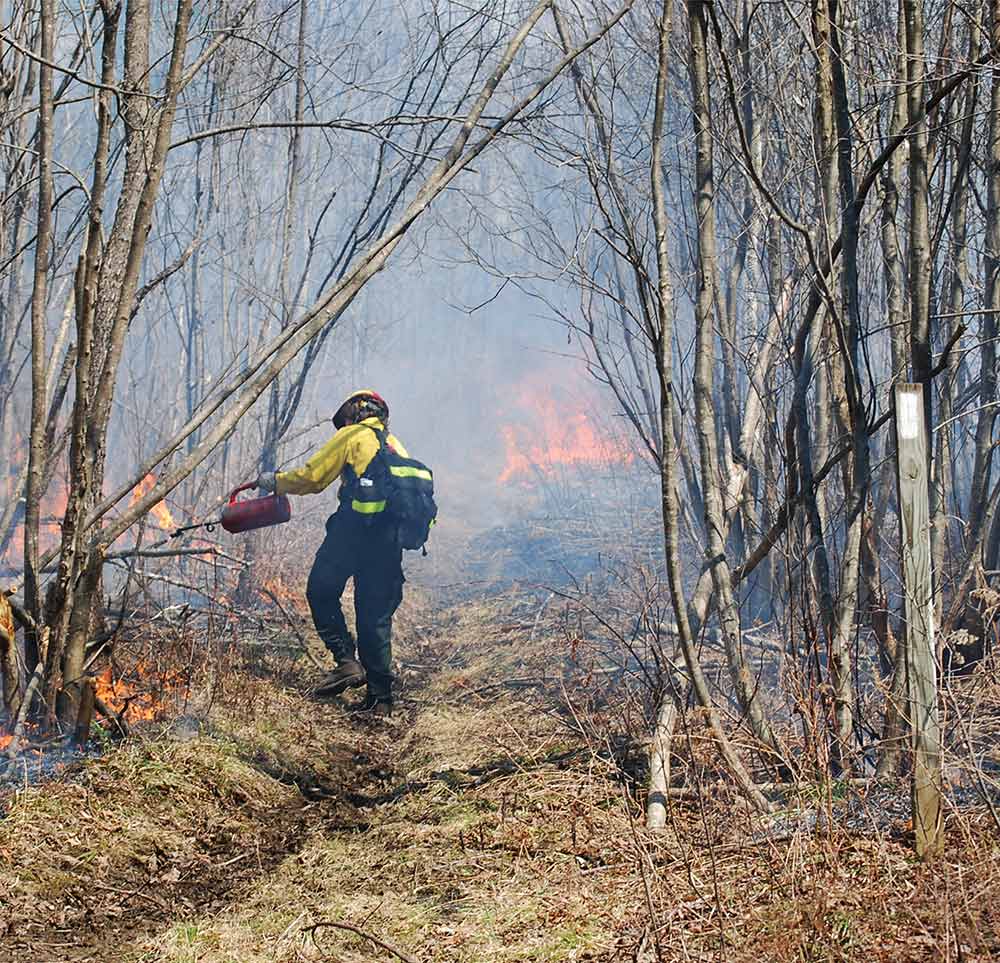
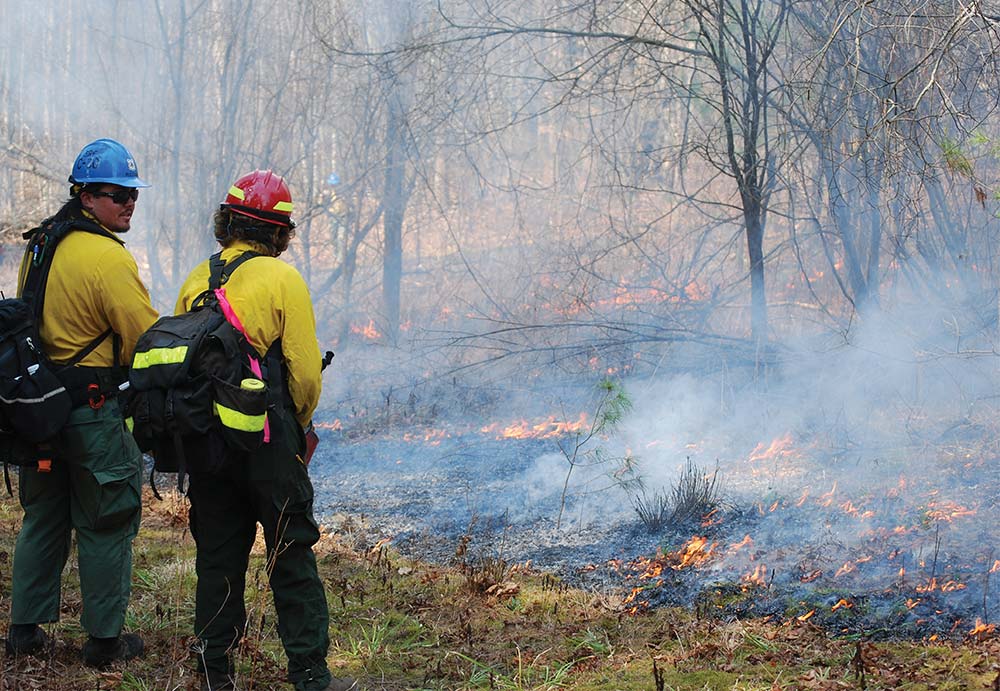
Controlled burns are an effective way to maintain and establish grassy habitat, recycle nutrients in the soil, and reduce wildfire risk. They are also an ideal management approach for grasslands because they remove thatch build up — which mowing alone can’t accomplish — and help create early successional habitat for a variety of species. Grassland birds and other wildlife make their homes in the lush green grass that begins to grow very soon after the area is burned.
All prescribed fires require significant training and expert coordination, and weather conditions must be within safe limits for the burns to take place. The neighboring properties were notified ahead of the burn, and the public was kept out of the burn area for their safety.
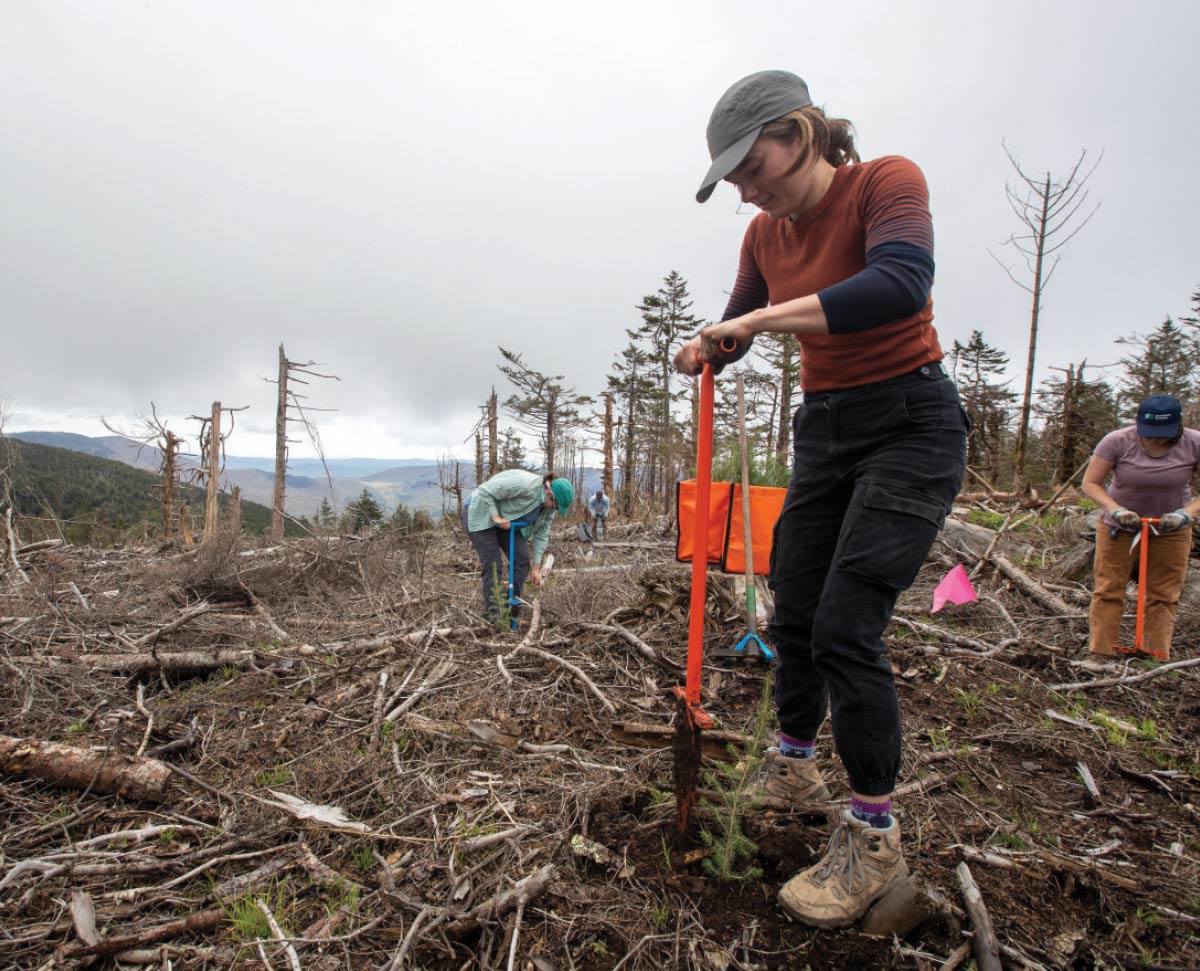
In all, about 70 people participated in the early May planting efforts, including ATC staff, federal partners, fellow nonprofits, and dedicated volunteers. Work continued throughout the month, establishing thousands of feet of fencing to keep deer from foraging the fresh foliage. However, not all the newly planted spruce trees will be protected from deer browsing. The ATC is partnering with Clemson University and the USDA Forest Service to gather data about tree survival rates when exposed versus enclosed.
Hungry deer and drought are early obstacles this new generation of red spruce trees must overcome. “They’ll hold,” says Drury. “Nobody’s really doing this. We’re pioneering the process. It’s hard work, and we’re figuring it out. I’m confident that it will be successful.”

❚ Unlock surprise challenges
❚ Share your progress
❚ Complete at least 25 items by September 7
Bucket list submissions open August 24. You will receive a special form by email to log your completed activities and enter to win. Get started today.


Whether you’re approaching the Kennebec River from the north or the south, the most important thing to know is that it’s the one unbridged body of water on the Trail that should never be forded, regardless of weather conditions. Dam releases upstream can cause sudden and rapid changes in current. The ATC provides a free ferry service for hikers, and it’s the official route of the A.T. across the Kennebec River.
When using the ferry, it’s recommended that you arrive early within the ferry’s service hours to ensure a safe and enjoyable crossing. If the ferry operator decides the river or weather conditions make the crossing dangerous, ferry service will be paused until conditions improve. In order to use the ferry, hikers are required to complete and sign a release form, wear a life jacket, and follow instructions. If you are traveling in a group of six or more, you must call or email the ferry operator to schedule a crossing.
Kennebec River Ferry
Northbound MILE: 2,037.6

July 1 – September 30, 9 a.m. – 2 p.m.
Ferry operator: Maine Guide, LLC
207.858.3627 / [email protected]
You can check in at an ATC visitor center or visit the ATC’s Trail Updates webpage to get up-to-date information on Trail conditions. Overnight hikers can also register on ATCamp.org to receive urgent Trail alerts, including about high water. Other platforms with crowd-sourced information such as FarOut and AllTrails may also have updated condition reports from users.
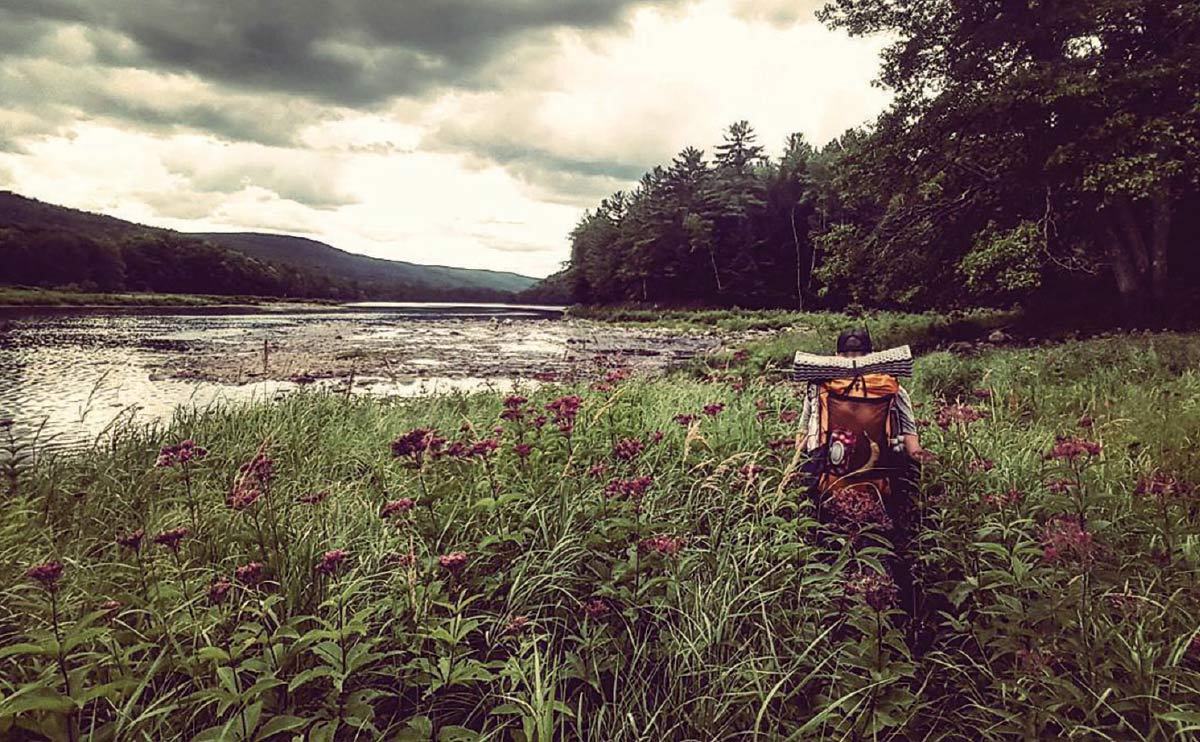
photo by Justin “2Taps” Helmkamp
❚ Always check the weather before starting a hike. Be prepared for the consequences of severe weather: high water, temperature changes, blowdowns, and similar issues. Consider postponing your hike if severe weather is in the forecast.
❚ Study a map of the area before leaving and always pack a map and compass so you can see if there are public road walks or side trail alternatives to unbridged crossings.
❚ Pack extra food and supplies so you can be prepared to turn around or wait if necessary.
❚ Add a buffer or emergency fund to your hike budget so you can afford to stay in town an extra day or two if needed or to pay for a shuttle around dangerous crossings.
❚ Parts of Maine, particularly the 100-Mile Wilderness, are surrounded by private land or are bisected by private logging roads. Do not wander onto private land or roads that are closed to the public. Only take designated alternatives (these will be signed and/or blazed).
❚ Be cautious about using any ropes suspended above the stream. These are not official installations and are often left by well-intentioned hikers with varying levels of skill in choosing placement and tying knots. Do not tie yourself to these ropes, other hikers, trees, or rocks — this can drown you if you lose your footing.
❚ When in doubt about the safety of a river crossing on the A.T., wait for the water to go down, turn around, or take alternate routes. Crossing in dangerous conditions is not worth the risk — hikers have died in stream crossings along the Trail during major rainstorms. If a section of the Appalachian Trail is closed or presents a serious safety hazard, hikers may take a designated alternate route or skip those sections entirely and still be eligible for the ATC’s 2,000-miler program.


Photo by Genevieve Andress
While the Appalachian Trail isn’t home to any tree as old as our local cypress, hikers know that it does have its fair share of massive and very old trees that also managed to avoid being logged off or burned down in a forest fire. Some of those trees have names — the Keffer Oak, the Dover Oak — but most are just really big trees we look at in amazement.
Over the years we’ve given these sorts of trees impressive names like “champion trees” or “witness trees.” But those names don’t really encompass the way such trees make us feel when we’re in their presence. Witness trees are especially important to Indigenous and Black history in the Appalachian region, because they stand as living archives of the experiences of people whose histories have been filled with injustice and lack the fullness of the archival record of European settlement. For example, anthropologists seeking evidence of the Indigenous presence in the Appalachian Mountains often look for groves of walnut or hickory trees that shouldn’t otherwise be there. (It’s important to note that the term “witness tree” is also used extensively in A.T. management. These trees are marked with yellow boundary paint at measured distances from survey monuments and are used to locate the protected property boundary of the A.T.)


Despite committed efforts by the ATC, its partners, and volunteers to keep the Trail clear, those hikers are probably detouring around or climbing over toppled trees and branches that snarl this section of the Trail after winter. Winter blowdowns happen along all of the A.T., even after a mild season. But clearing the Trail in the Great Smoky Mountains National Park is always especially difficult due to its remote nature.
It’s become even harder since 2024 when more than 800 miles of trail in Virginia, Tennessee, North Carolina, and Georgia were impacted by Hurricane Helene. To compound the devastation caused by Helene, the winter that immediately followed was hard, causing higher numbers of trees and branches to come down, further eroding the landscape, and weakening tree root systems. In the spring of 2025, volunteers clearing the winter blowdowns estimate that it took teams days to clear just one-tenth of a mile of trail.


To that end, the A.T. Committee of the Appalachian Mountain Club’s Connecticut Chapter (AMC-CT) recently navigated a significant leadership transition with the retirement of long-time volunteer Chair Dave Boone, and the election of new volunteer Chair Adam Lippman.

Photo courtesy of Marilynn Borkowski
That connection deepened after Marilynn and her husband settled in Fairfax, Virginia, while he served in the U.S. Army. Marilynn had never been involved in Girl Scouts and admits she became a troop leader somewhat reluctantly when her oldest daughter joined as a Brownie. “I was coerced into being a leader,” she recalls with a laugh, “even though I cannot sing, am not good at crafts, and had never camped.” As her daughters grew, however, so did her confidence outdoors. After taking Girl Scout camping and backpacking classes alongside supportive mentors and fellow parents, she began leading hikes and overnight trips for young scouts. On her fortieth birthday, she enrolled in a Girl Scout backpacking course and first learned about hikers who completed all 40-plus miles of the A.T. in Maryland. Her reaction at the time was memorable: “Forty-some miles — anyone who does that has to be crazy!”
Before long, however, Marilynn and her troop were hiking sections of the Trail across Maryland, northern Virginia, Shenandoah National Park, and Pennsylvania. What began as short outings evolved into monthly backpacking adventures introducing countless young people — from Girl Scout and Boy Scout groups — to the beauty of the outdoors.
Marilynn’s commitment to protecting the Appalachian Trail also grew alongside her experiences on it. She became an Appalachian Trail Conservancy member nearly 40 years ago, making her first contribution to the ATC on November 1, 1985. Since then, her support has remained steadfast, reflecting a lifelong dedication to the Trail community and the landscapes she loves. “I want to protect all of these special places, plants, and animals and encourage others to hike and to give,” Marilynn shared. “Take youth out on hikes!”
That passion for sharing the Trail with others became one of the defining themes of Marilynn’s life. When life changes eventually made it difficult for that original group of Girl Scout friends and parents to continue hiking together regularly, Marilynn worried she might never finish the Trail herself. Then she came across an ad in A.T. Journeys from a 75-year-old woman from Ohio searching for companions to hike south from Monson, Maine, at a slower pace. By then, Marilynn had already completed Katahdin and the 100-Mile Wilderness, but she joined the group anyway. “Five of us, each from a different state, met and started hiking,” she recalled. “At 67 years old, I was the youngest.”
Those friendships became an important part of her A.T. journey. Together, they encouraged one another toward completion mile by mile. Marilynn ultimately finished the Appalachian Trail near Lee, Massachusetts, surrounded by friends from the many hiking communities that had shaped her life along the way.

Photo courtesy of Janene Sullivan
Even today, the Trail remains central to her life. Nearly every Monday, Marilynn hikes in Maryland with a longtime friend, returning again and again to the Appalachian Trail and nearby paths. On these hikes, they always bring along trash bags to carry out bottles, cans, and litter others have left behind. But mostly, they’re there to witness the changing seasons. In springtime, they plan their hikes around blooming wildflowers: bluebells, mountain laurel, lady slippers, and trout lilies carpeting the forest floor. They pause to admire luna moths, deer, frogs, snakes, and she even saw her first porcupine recently.
The Trail also carried her through profound moments of grief and healing. After the passing of her husband in 2001, she asked friends to simply take her to the Appalachian Trail. Together they walked and performed trail maintenance near Myron Glaser Cabin in Virginia. Encountering a fallen tree blocking the path, Marilynn remembers “hacking away” at the branches as a way to release her heartbreak and anger. The Trail, as it had so many times before, provided solace.
That enduring connection to the A.T. is what ultimately inspired Marilynn to include the Appalachian Trail Conservancy in her will and become a member of the ATC Legacy Society. Her planned gift reflects not only gratitude for what the Trail has given her throughout her life, but also a commitment to the Trail. Supporters like Marilynn help ensure that future young people will continue to experience the same friendship and belonging that the Trail has provided her for decades.
Planned gifts to the Appalachian Trail Conservancy help protect the Trail’s landscapes, sustain its volunteer and stewardship traditions, and ensure that future generations can continue to find connection and renewal in the outdoors. Through her example, Marilynn hopes others who love the Appalachian Trail will also consider how they might help safeguard its future through legacy giving and long-term support of the ATC.
For Marilynn, the Appalachian Trail is far more than a footpath. It is community and healing. It is adventure and legacy. And through her generosity and lifelong stewardship, “Lucky 13” is helping keep the Trail alive for all who will follow in her footsteps.

Can you share how your relationship with the A.T. first began and what initially drew you to it?
I’ve lived in Virginia for many years and have always been drawn to her mountains. Most of that time, I was so focused on raising my family and tackling a challenging career that I didn’t step foot on the A.T. until 2011. At that point, I bought my first Data Book with the idea that I would hike sections on the weekends. After about a month, life distracted me from that incremental approach. So, when I retired a few years ago, I made it a goal to thru-hike as soon as I could.
How has your thru-hike shaped your life or perspective?
I think it’s really easy to get caught up in negativity. The A.T. taught me patience and positivity in a way I’d never learned before. In my blog for The Trek, I ended every post with a small thing — a flower or a turtle, for example — as a reminder that the world holds so much beauty. We just need to teach ourselves to look for it in small things.
Are there any particular moments or places from your thru-hike that remain especially memorable to you?
I relished all the often-described sites along the Trail and felt so grateful for every person who joined me on the journey, either in person or virtually. In a broad way, the intersections are my favorite thing about hiking the A.T. I intersected with amazing moments in other lives — the little stone chapel in Maryland with the bride standing expectantly outside, the families out for a hike on Father’s Day, the group of friends celebrating a 50th birthday in Vermont, the pair finishing their A.T. hike after eight years, and the couple who had gotten engaged moments before I met them on a beautiful section of the Trail in Connecticut. What better place to spend these most important moments of your life?
Your trail name is “Fun Size.” What is the story behind your trail name, and what does it mean to you?
When my children were small and approaching the age when they would be taller than I was, they began joking that they would get me one of those shirts that says, “I’m not short, I’m fun size.” To me, it’s always meant that you have a choice in how you define yourself, regardless of what people assume when they meet you. As a flip-flopper starting in southwestern Virginia, I was hiking the A.T. in a way that would be different than the norm, so the name came to represent that idea of defining the journey how I wanted it to be. My dad (trail name: “Blue Bear”) enjoyed working the theme by giving away fun-size Snickers for trail magic! He had shadowed me in his camper for the entire hike. He was approaching his 80th birthday, which made it all the more incredible that he met me at the top of Kuwohi in the Great Smoky Mountains.
How did your experience on the Trail influence your outlook on friendship and community?
I’m an introvert, so my batteries are recharged by solitude and my wellness was never better than on the A.T. As a complement to that kind of quiet happiness, I found that every time I needed friendship and community, it was easy to build. People are fundamentally kind, especially when you approach them with kindness. I’m reminded of a southbound hiker I met in New Hampshire. He had expected to complete a 20-mile day and be picked up by the shuttle to go to a nearby hostel. When he realized he wasn’t going to make it, he arrived without the proper gear at a shelter packed with hikers. Within thirty minutes, this community had assembled enough food and gear to get him through the night and onto his shuttle pick-up. When he needed it, the A.T. community delivered for him. I think that’s also true in life off the Trail, but we often forget or feel too embarrassed to ask for help. I don’t believe that A.T. hikers are fundamentally kinder than the general population; I just think that the culture of the Trail makes it easier to ask for help from and give help to others.
What role does the Trail continue to play in your life today?
It’s no exaggeration to say that the A.T. (not just Georgia) is always on my mind. Since stepping off at Grayson Highlands last fall, my mind has been playing a photo reel of Trail images, much like a screen saver serves up family vacation pictures. It feels random, the images that get pulled from deep in my memory, but I’m sure they are triggered by some small things around me. Going forward, I’d love to get closer to the fundraising goal I set last year and get into a regular routine of trail maintenance with one of the many A.T. Clubs here in Virginia.
It was a little bit about guilt. I planned to leave all my responsibilities in the hands of my amazing husband, and I had trouble justifying so much “me” time just for the sake of … me. Then I remembered that multiple times per year, I get messages from friends who are doing things like walking a 5k or growing a beard to raise money for their favorite causes. I thought if I was going to spend six months in the woods soaking up some Type 2 fun, it made a lot of sense to borrow that fundraising idea for the benefit of the A.T. My 164 days on the Trail were the most indulgent of my life, so while I was doing something good for myself, why not do something good for the source of that indulgence? The backdrop of Hurricane Helene resonated deeply with me, and I thought the stories of clean-up and resilience would motivate other people to help with donations. It’ll take a dynamic ATC and a lot of passionate support to anticipate and manage the next 100 years.
From your perspective, why is it important to ensure that the Trail remains protected, cared for, and accessible for future generations?
Unique across the whole world, the A.T.’s dedicated footpath is an example of how stubborn, smart, and adventurous we can be when we are at our best. Because it sits so close to big population centers, the Trail provides a nearby option for millions of Americans to step away from their hectic lives, put down the screens, take time to relax, and focus on their health. And, unlike the fitness center memberships that so many people never use, it’s FREE and beautiful!
What do you hope future hikers and visitors will experience or feel when they step onto the Trail?
I really love to imagine that every inch of the Trail gets the amount of care and maintenance it needs. Hurricane Helene showed everyone what just one storm can do; hiking North Carolina in August showed me exactly how quickly nature tries to take back the path. Some sections are pristine, while others struggle to stay passable. One of my first days on the Trail, I walked across the sparkling new bridge that had just been rebuilt across Fox Creek post-Helene. I was so impressed by how a group of volunteers had rallied to get it ready for hiking season. My dream for future hikers is to experience the Trail at its best.
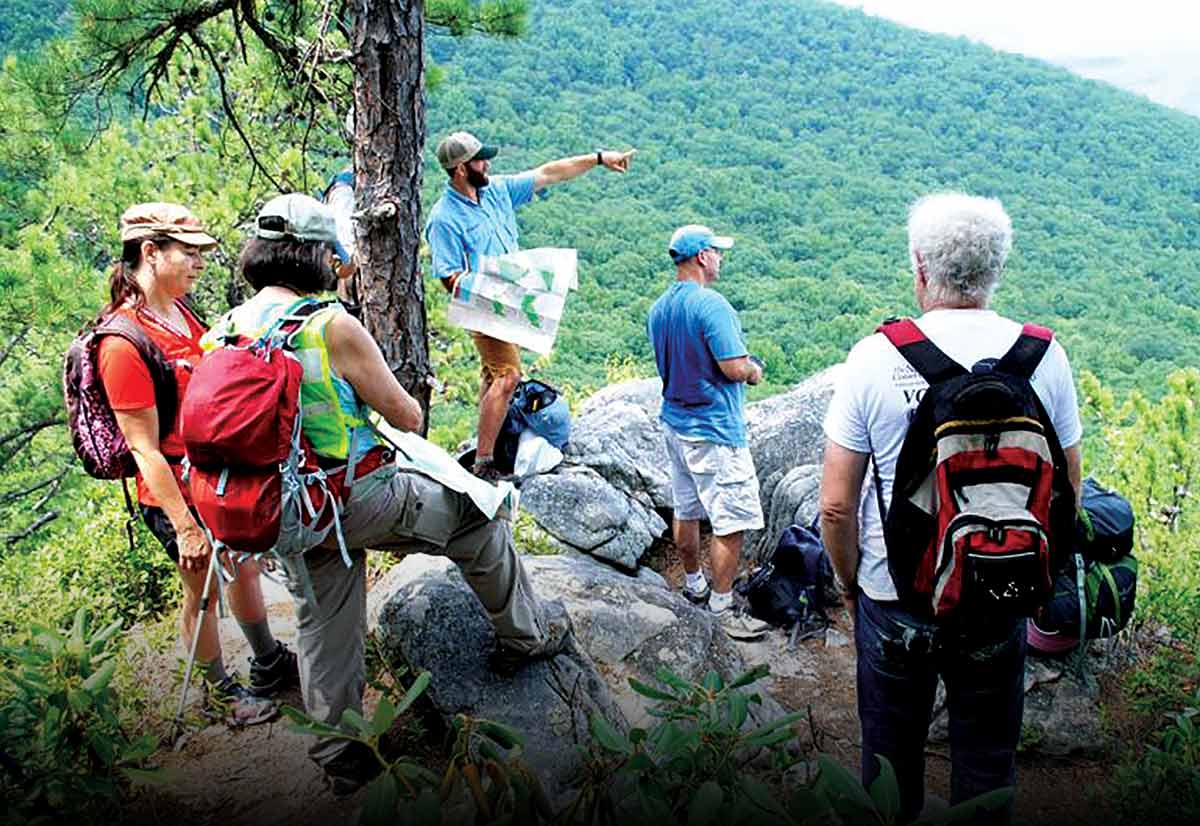
Photo by KATHRYN HERNDON-POWELL/ATC
To address these complex challenges, the Appalachian Trail Conservancy created the Experience pillar of its Centennial Campaign, a comprehensive five-year, $50 million fundraising to support essential operations and strategic growth.
Through expanded educational efforts and innovative approaches to sustainable infrastructure, the ATC aspires to reduce impacts, enhance safety, and ensure that all visitors to the Trail, regardless of skill level, are prepared for a positive experience that protects the A.T., its surrounding landscape, and its vast natural resources.
The ATC has identified the following Experience high- impact initiatives to advance this vision and guide the Trail toward a more resilient and sustainable future.
Ridgerunner Program
A proven model for on-the-Trail visitor education will be implemented at scale, enabling more real-time interactions between visitors of all kinds and knowledgeable, highly trained staff.
Visitor Education & Engagement Program
A multichannel, expansive approach to visitor education and engagement will enable those who step foot on the A.T. to get the most from their Trail experience and have the least impact on the treadway, A.T. facilities, and surrounding landscape.
Sustainable Overnight Sites Program (SOS)
All shelters, campsites, and group sites along the A.T. will be evaluated, designed, constructed, maintained, and managed to provide a sustainable, natural-appearing experience for overnight stays, while minimizing their environmental impact and potential misuse.
The Centennial Campaign’s Experience pillar and its initiatives offer a pivotal opportunity to strengthen all A.T. journeys for generations to come.


to the thousands of generous members, donors, volunteers, partners, and supporters who made the work of the Appalachian Trail Conservancy possible in 2025. Because of your ongoing investment in our mission, we were able to protect, manage, and advocate for the A.T. in 2025, and continue to work tirelessly on behalf of the Trail in 2026. Millions of visitors enjoy the A.T. every year, and you are part of making that possible.
We hope the stories in this magazine demonstrate that impact in every issue. In the following pages, you’ll find more information about our 2025 financials as well as a listing of our most generous supporters.
One of the most important gifts our members and supporters bestow upon us is their trust in managing the funds they donate. We take this responsibility very seriously and hold ourselves to the highest standards of financial accountability and transparency.
You can view our full audited financial statements on our website at appalachiantrail.org/transparency.


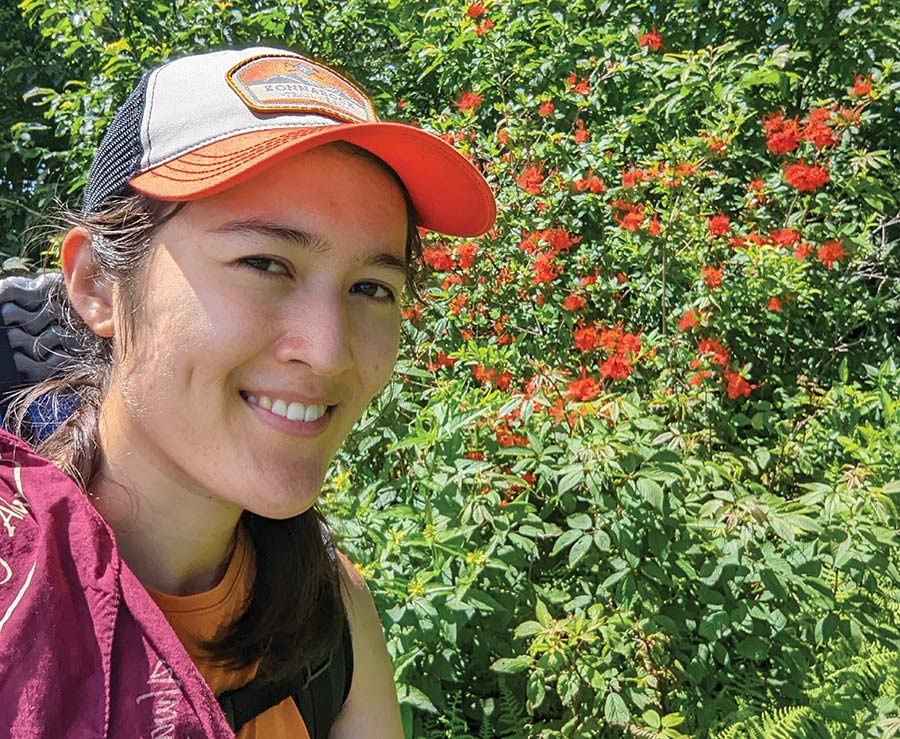
ALL PHOTOS COURTESY OF SARAH ADAMS/ATC
The Georgia & Nantahala area is one of the most heavily impacted sections of the A.T. due to its proximity to the greater metropolitan area of Atlanta and its location as the starting line for thousands of prospective northbound thru-hikers each spring. Many Trail projects and programs here are driven by capacity needs of the A.T., balanced with the goal of preserving natural resources and wilderness character. This is especially important since this section of the A.T. includes five different federally designated wilderness areas. There are also six designated A.T. Communities in this region, including Dahlonega, Georgia, where I am from originally.
Each week involves a combination of field work — such as scouting for future trail crew projects with A.T. partners —and office work to plan out projects and manage programs. Many projects are specialized, such as building new tent pads at an overnight site, and require at least five years of planning to secure funding, meet compliance needs, and scope projects in the field prior to work beginning on the ground.
Every February, I hire and train a team of four Georgia Ridgerunners and one Trail Education Specialist who works at Basecamp at Amicalola Falls State Park. They help educate incoming thru-hikers on best Leave No Trace practices and how to reduce resource impact on the Trail here. Dealing with hazard trees, visitor use management, and incident response are a few of the other areas that I might be involved in during a given week. Variety is the key word when it comes to this job!
I also work closely with my awesome Trail Specialist, Jayson Koscielniak, who works across the same geography and is currently wrapping up a comprehensive Trail conditions assessment of the area. The Trail conditions assessment is part of a larger effort in our Hurricane Helene recovery work on the A.T. and will be used to inform future projects. Both of us are part of the ATC’s Southern Regional Office, which is headquartered in Asheville, North Carolina.

I have always loved learning about environmental history and eventually majored in Environmental Studies with a concentration in Environmental Humanities during my undergraduate years at Yale University. My senior thesis examined the cross-cultural connections between the A.T. and the Shinetsu Trail in Japan, which was established in 2011 and modeled after the A.T. and its CMS. My parents were involved in facilitating the first Shinetsu Trail Club (STC) visit to the A.T. in 2003, and coordinated visits with the GATC, National Park Service, and the ATC. It was an honor to be able to facilitate the STC’s return to the A.T. 20 years later in 2023 and help continue to support the ongoing exchange of trail information and friendship.
If you’re interested in becoming more involved with the A.T., I encourage you to join your local A.T. Club, participate in a volunteer Trail crew program like the Konnarock Trail Crew, or visit the ATC’s Volunteer Engagement Platform (appalachiantrail.org/volunteer). Opportunities to contribute span areas beyond trail work, such as data management, ATC’s Stewardship Council, and involvement with A.T. Communities.

At the ATC, we are lucky to have Morgan Sommerville (Director of Visitor Use Management) and to work with key Club volunteers such as Marion McLean of the GATC. Both have worked on many Trail relocation projects in the southern region over the last four decades. Their patience and eye for trail design have shaped much of the southern region’s A.T. into what it is today.
While one can get relocation ideas by looking at a topography map — or, more recently, even using computer applications to digitally map out potential routes — it is still important to ground options by walking all over the area where you plan to reroute the Trail. Marion always says, “Do the 360.” This is true of any trail work. You can’t only look ahead or behind you. You must look up, down, and all around at the way water might be moving down an entire mountain or any potential opportunities to gain elevation in a trail layout, such as by using existing rock features in the landscape.
Many people assume laying out the Trail is done by simply walking a route that “feels good” underfoot, but we must combine using tools like a clinometer to measure percent grade with the art of looking at the entire landscape and its features. Like writing, it takes many drafts for a good Trail relocation to be complete. Even for a single 1.3-mile relocation project just completed in Georgia, it has taken many years’ worth of field visits to plot different flag lines, most of which were not used in the final version. But we still had to draft them in order to reach the route we have established today. The process requires a lot of patience but lays out new trail that is both sustainable and defined by unique character. I am still early in my journey of learning trail layout and design, but it has been a rewarding learning experience to work on projects with colleagues like Marion and Morgan.
Making a concerted effort to bring in and educate new stewards and Trail enthusiasts is equally important, so their involvement with the A.T. can be informed with some of the previous generation’s depth of experience. I encourage everyone to welcome new faces and consider listening to the fresh ideas they might have. The Appalachian Trail thrives on this vast community of thinkers, doers, and supporters. Thank you for being part of it!
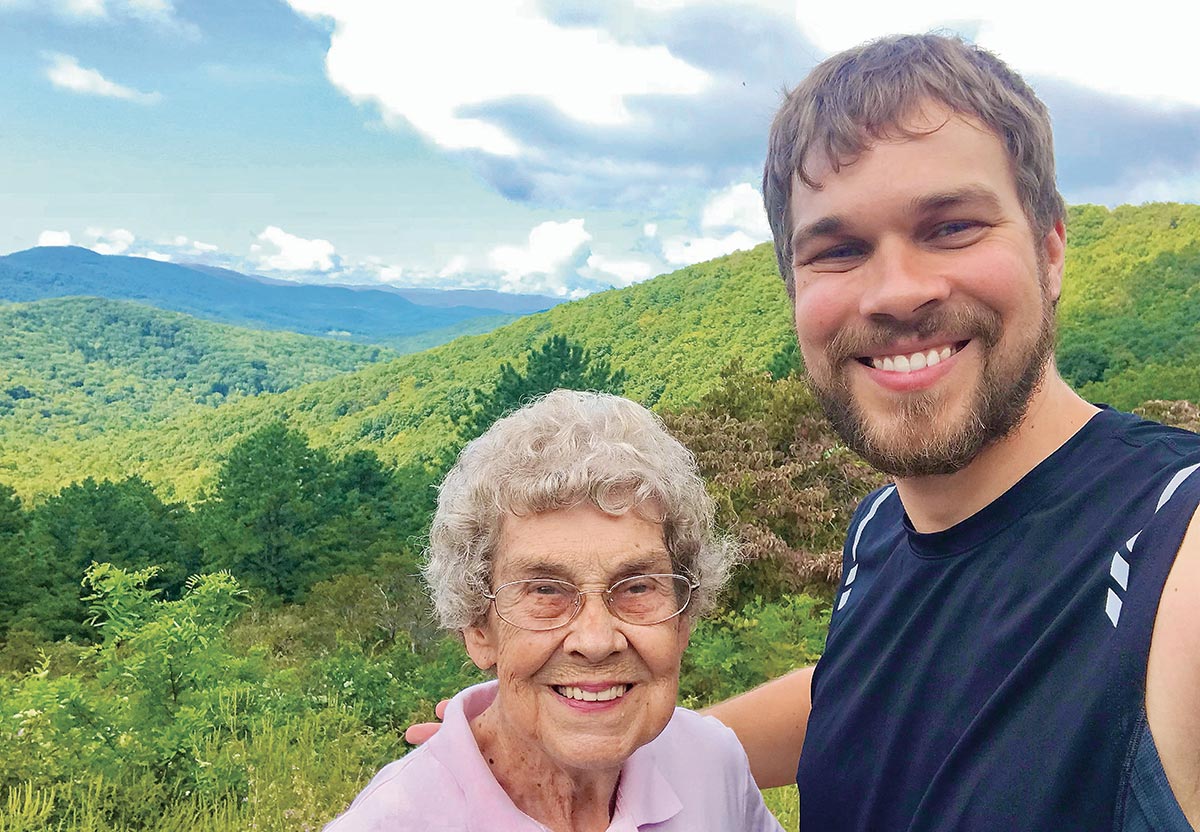
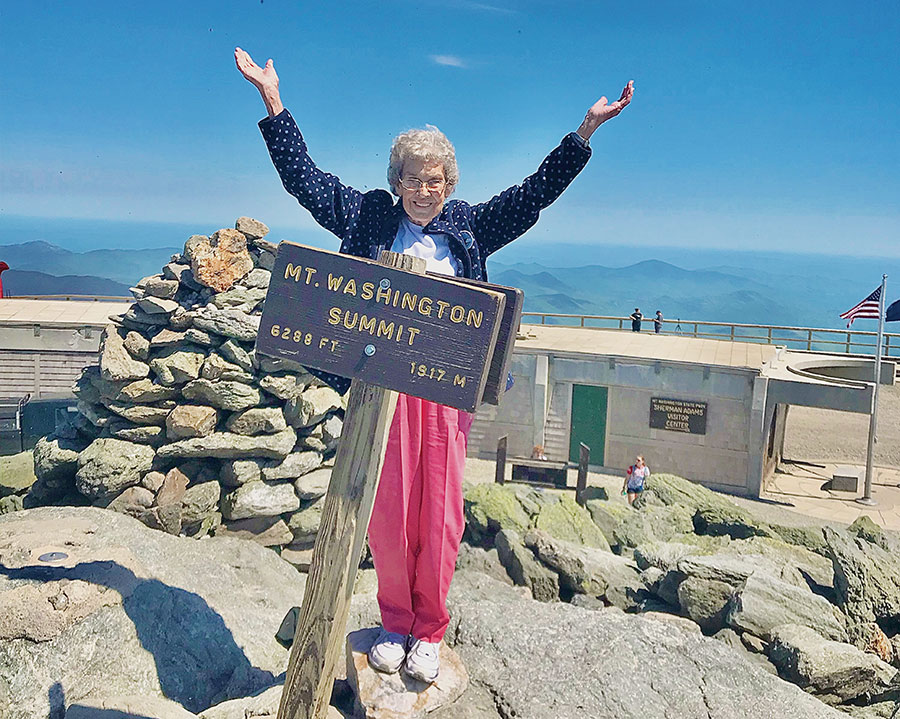
ALL PHOTOS COURTESY OF BRAD RYAN
Months earlier, at my sister’s wedding, I saw my paternal grandmother, Grandma Joy, for the first time in years. We had not spoken since my parents’ acrimonious divorce, and I had been warned she was now battling a mysterious illness. From her gaunt frame and unsure steps, I feared she was dying.
After the wedding, my father drove her to stay with my great-aunt Joan in Louisiana — ostensibly to die. That was the last I heard as I loaded up my backpack with 75 pounds of all the wrong gear and began trekking north to Maine.
The Ryans were virtuosos of grievance. We savored our grudges more than I savored a pot of noodles at the end of an 18-mile hiking day. But in the quietude of nature, along vast stretches of trail — my beard growing longer, my toenails blacker — I began to see I was poisoning my own well.
Filtering my water at the stream’s edge, I heard my inner child laughing giddily as I remembered holding firm to a crawdad contorting in every direction to get away while Grandma Joy smiled proudly beside me. My heart splintered with each passing day, knowing I would soon arrive at a hostel and learn that Grandma Joy was gone forever.
Looking back on my thru-hike, I now understand why I gravitated toward my elders on the A.T.: I was desperate to fill the void that estrangement had left behind.
One of the first friends I met on the A.T. was “Braid,” whose trail name came from the long gray plait extending down his back. He had a grizzled beard, gentle eyes, and a warm North Carolina accent. Though he never professed to be a sage, wisdom spilled from his mouth as naturally as his breath. At night, he played harmonica around the campfire with the quiet confidence of Woody Guthrie. For years, I carried the shame of having disappointed my father by not being athletic enough, tough enough, or man enough. “Braid” never asked me to be anyone other than myself. His friendship helped fill a void I had carried for years.

Hiking with “Braid” and “Spirit” forever changed the way I viewed aging — and myself. At a time when I was struggling to accept myself, they offered the acceptance and encouragement I so desperately needed. They taught me that the way we show up for our lives is a choice, shattering the notion that a life of adventure has an expiration date.
A few months after my thru-hike, I worked up the nerve to call Grandma Joy with the intention of reconciling. We returned to Ohio’s Blue Rock State Park where she had brought me as a little boy. I told her stories about the Appalachian Trail. When I described the view from Katahdin, she told me she had never seen a mountain. I vowed to widen her lens on the world.
Five years later, while in my clinical year of veterinary school, I invited Grandma Joy to see her first mountain. By that evening, we were headed south for Great Smoky Mountains National Park. Grandma Joy slept in a tent for the first time and hiked a section of the A.T. At 85, she not only saw her first mountain, but she climbed her first mountain too.
That single weekend marked the start of a seven-and-a-half-year journey to all 63 U.S. National Parks. Along the way, we revisited my favorite sections of the A.T., where I frequently felt the wisdom and inspiration of the elders I had met on my travels.
I thought my A.T. thru-hike would heal me completely, but it was merely my first healing journey. While the Trail has a southern and a northern terminus, I have learned that healing does not.
The A.T. didn’t heal me. Neither did visiting all the U.S. National Parks with my grandmother. But both journeys brought me closer to wholeness.
Now, with 165,000 white blazes in the rearview mirror, I recognize that life is an ever-unfolding healing journey — one trail forward, two steps back. Still, we shoulder our packs and greet the next sunrise with hope.
The conscious pursuit of healing is worth every step.
 Brad “Hellbender” Ryan is a veterinarian, writer, speaker, and 2009 Appalachian Trail thru-hiker. His memoir, Grandma Joy and Me: A Journey of Healing, One National Park at a Time (Simon & Schuster), chronicles the history-making journey he shared with his grandmother, Joy Ryan, to all 63 U.S. National Parks, revisiting sections of the A.T. along the way and making her the oldest person in the world to begin and complete the circuit. Learn more at doctorbradryan.com and simonandschuster.com/books/Grandma-Joy-and-Me/Brad-Ryan/9781668099261.
up in the 1970s, the environmental movement was everywhere — on the news, in classrooms, in the conversations adults whispered with worry. The images of polluted rivers and damaged landscapes struck me deeply.
The thought that we were harming the environment was hard to comprehend, and I felt an instinctive pull to protect the places that brought me peace. Exploring trails and being in nature shaped my worldview and taught me that balance — between people and nature, use and protection — is something we must actively maintain.
That belief eventually led me to pursue a master’s degree in environmental studies. At the time, I wasn’t sure how it would fit into my career in accounting, but the program expanded my understanding of ecosystems, geology, and the delicate thresholds that determine whether a system thrives or collapses. I learned that nature adapts until it can’t — and that both regulatory- and community-driven approaches are essential to restoring balance.
One of my postgrad courses included a weeklong A.T. backpacking trek through New Hampshire’s White Mountains. It was an impactful experience, to say the least. It helped me see the Trail not just as a footpath, but as a living, interconnected landscape. Ultimately, it drew me to my current role, and the experience and knowledge I gained guides my work at the ATC today.
The A.T. has taught me its own lessons about preparation and resilience. I often think of the hikers I’ve met — like the father and son in Shenandoah last summer, eagerly anticipating a reunion with their family to resupply. Their journey reminded me how much hikers rely on support systems, both visible and invisible. The Trail changes lives, but only because countless people work to protect it.
That’s why the ATC’s mission matters so deeply. With 16.9 million annual recreation visits, the A.T. is one of our nation’s most cherished public resources. Through the Centennial Campaign, we are investing in sustainable overnight sites, improved resource management, and programs like the Wild East Action Fund and our Ridgerunners. These are all key initiatives that strengthen the Trail’s ecological and experiential balance.
Financial stability is its own form of stewardship. Over the past two years, our team has navigated uncertainty with creativity and discipline, ensuring that our monetary resources remain as resilient as the landscapes we protect. Unrestricted support is especially vital; it gives us the flexibility to respond to emerging needs, invest in our people, and build a foundation strong enough to carry us into our second century.
To everyone who supports this work: thank you for standing with us. Your generosity safeguards a national treasure. The Trail’s next century begins with the choices we make today. With partners like you, its future remains bright, resilient, and in balance.

